Wellington + South Island in a week (via ferry)
Wellington and Picton: Interislander Ferry
Duration: 3.5h
Wellington as a gateway, not just a destination
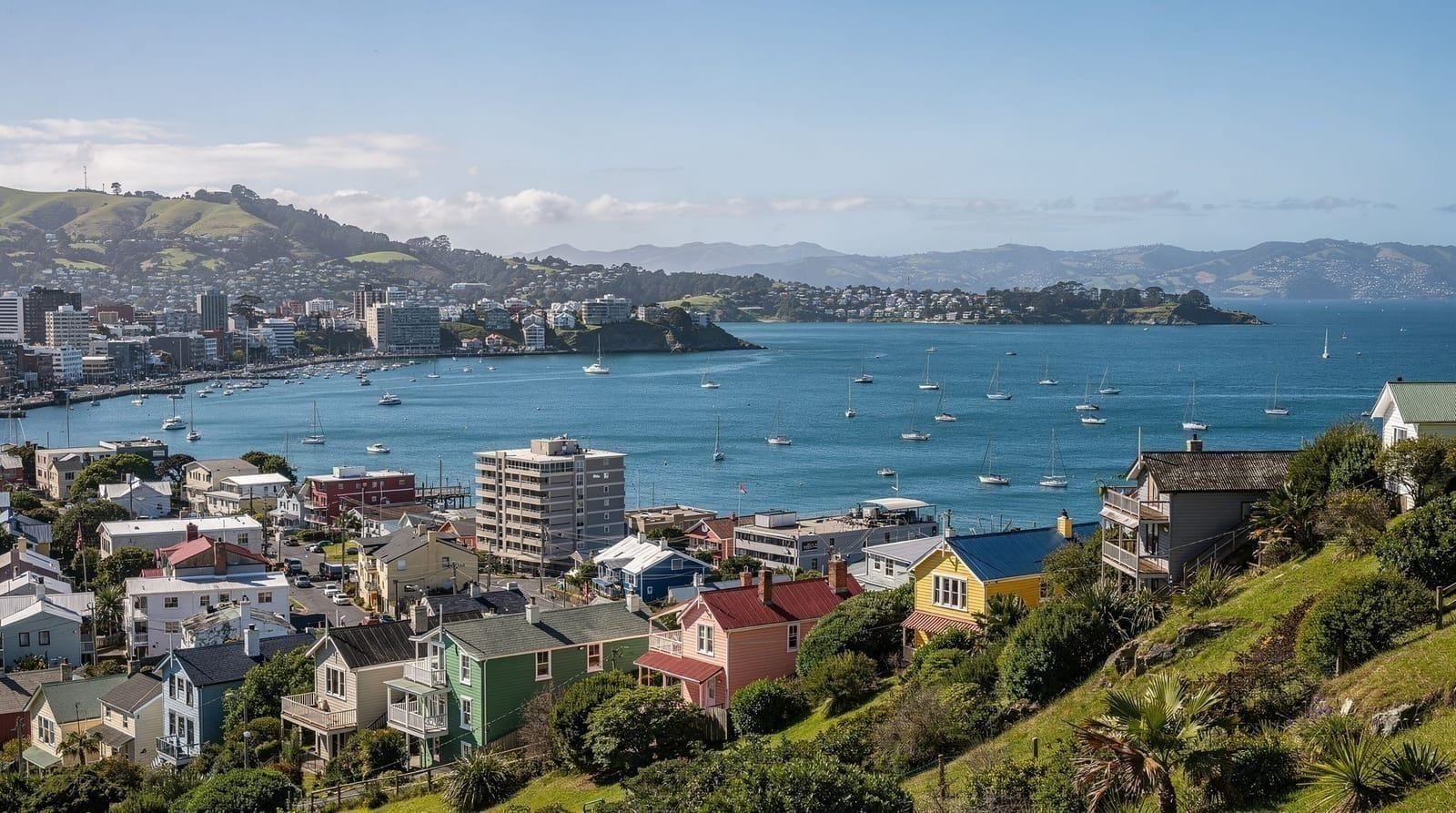
Most Wellington guides treat the city as a self-contained trip. This one treats it as what it actually is for a lot of travellers: the northern gateway to the South Island, connected by a genuinely scenic 3.5-hour ferry crossing to Picton. A week gives you three full days in Wellington, the ferry crossing itself (which is worth treating as an experience rather than dead transit time), and three more days across Marlborough Sounds, Blenheim’s wine country and Nelson — one of New Zealand’s most underrated small cities.
This is the itinerary for travellers who’ve decided Wellington deserves more than a flying visit but who are also heading south regardless, rather than flying between islands. If you’re staying purely on the North Island, look at Wellington + surroundings in 5 days instead; if the South Island leg is the whole point and Wellington is just the departure city, the shorter Wellington to the South Island: 5 days via ferry trims two days off the Wellington portion.
| Where | Wellington, Picton, Marlborough Sounds, Blenheim, Nelson |
| Cost | Around NZ$2,950–4,450 for two, excluding flights |
| Time needed | 7 days, requires a rental car |
| Getting there | Wellington Airport (WLG), 20 minutes from the CBD |
| Best time | Summer/autumn for calmer Cook Strait crossings |
Why treat the ferry as a destination, not a transfer
Flying between Wellington and the South Island’s main centres (Christchurch, Nelson, Queenstown) is faster and, on a pure time basis, often not much more expensive once car rental and fuel are accounted for. The reason this itinerary routes overland via the ferry instead is that the crossing itself — open Cook Strait water giving way to the sheltered Marlborough Sounds — is one of the more memorable few hours of a New Zealand trip, not simply a way to move a car from one island to the other. Travellers who’ve done it tend to rate it well above what “just a ferry” suggests; travellers who skip it in favour of flying rarely regret the time saved, but they do miss a genuinely distinctive experience that’s hard to replicate any other way. Whether that trade-off is worth a slower week is a personal call, but it’s worth making consciously rather than by default.
Before you go
Book your Interislander or Bluebridge ferry crossing as early as you can once travel dates are fixed, ideally as soon as your flight dates are locked in rather than waiting until closer to departure — sailings run multiple times daily but popular midday departures in summer sell out, especially with a car. Foot passenger fares run around NZ$55 with Interislander, cheaper with Bluebridge (NZ$29–55); a car adds NZ$135–220 depending on size and season. See Interislander vs Bluebridge for the full comparison, and Cook Strait ferry booking pitfalls for the mistakes worth avoiding — timing your Wellington check-out around the ferry’s frequently-shifting departure windows is the big one.
If you’re renting a car for the South Island leg, decide up front whether you’re picking it up in Wellington and taking it across on the ferry, or dropping it in Wellington and picking up a second rental in Picton. Taking one car the whole way is simpler logistically but costs more on the ferry itself; a two-rental approach can be cheaper overall if you’re not driving the ferry car across regardless. Either way, sort your NZeTA and International Visitor Levy before arrival — see NZeTA and IVL guide for Wellington visitors.
Packing for a mixed city-and-road-trip week
This week spans a fairly compact city stretch and a rural South Island road trip, so pack accordingly rather than for one or the other exclusively. Comfortable walking shoes cover the Wellington days and Nelson’s centre; sturdier footwear is worth having for any Marlborough Sounds walking or a Queen Charlotte Track detour. A light rain layer earns its place throughout, since both Wellington and the ferry crossing itself can turn windy and wet with little warning. If you’re self-driving any portion of the South Island leg, a phone mount and an offline map downloaded ahead of time are genuinely useful given how patchy mobile coverage can be through parts of the Marlborough backcountry.
Days 1–3: Wellington
Follow Wellington in 3 days closely for this stretch: Te Papa, the cable car, Cuba Street and Mount Victoria on Days 1–2, then Weta Workshop or Zealandia (or both, at a push) on Day 3. Base yourself centrally — the Bolton Hotel or QT Wellington both work well — and treat these three days as the genuine city portion of the trip rather than a rushed prelude to the ferry. See where to stay in Wellington for the neighbourhood comparison.
Use part of Day 3 to also confirm ferry logistics for the morning after: check in usually opens 60–90 minutes before sailing, and Wellington’s ferry terminal sits a short taxi or bus ride from the CBD, not within comfortable walking distance with luggage. If your crossing departs early, book accommodation on Day 3 close to the terminal side of town rather than deep in the CBD.
This three-day stretch is also where it’s worth deciding how much of Wellington’s regional depth — Martinborough, Kāpiti Island — you want to sacrifice for the sake of the week’s onward momentum. Fitting a Martinborough day into this exact seven-day plan is possible if you’re willing to trim a city day, but it makes for a busier week than the version described here. If Martinborough wine country genuinely matters as much as Marlborough’s, consider extending this trip by a day rather than compressing Wellington further — a rushed Martinborough half-day tends to undersell the region compared to giving it the full day it gets in Wellington + surroundings in 5 days.
Day 4: the Cook Strait ferry crossing
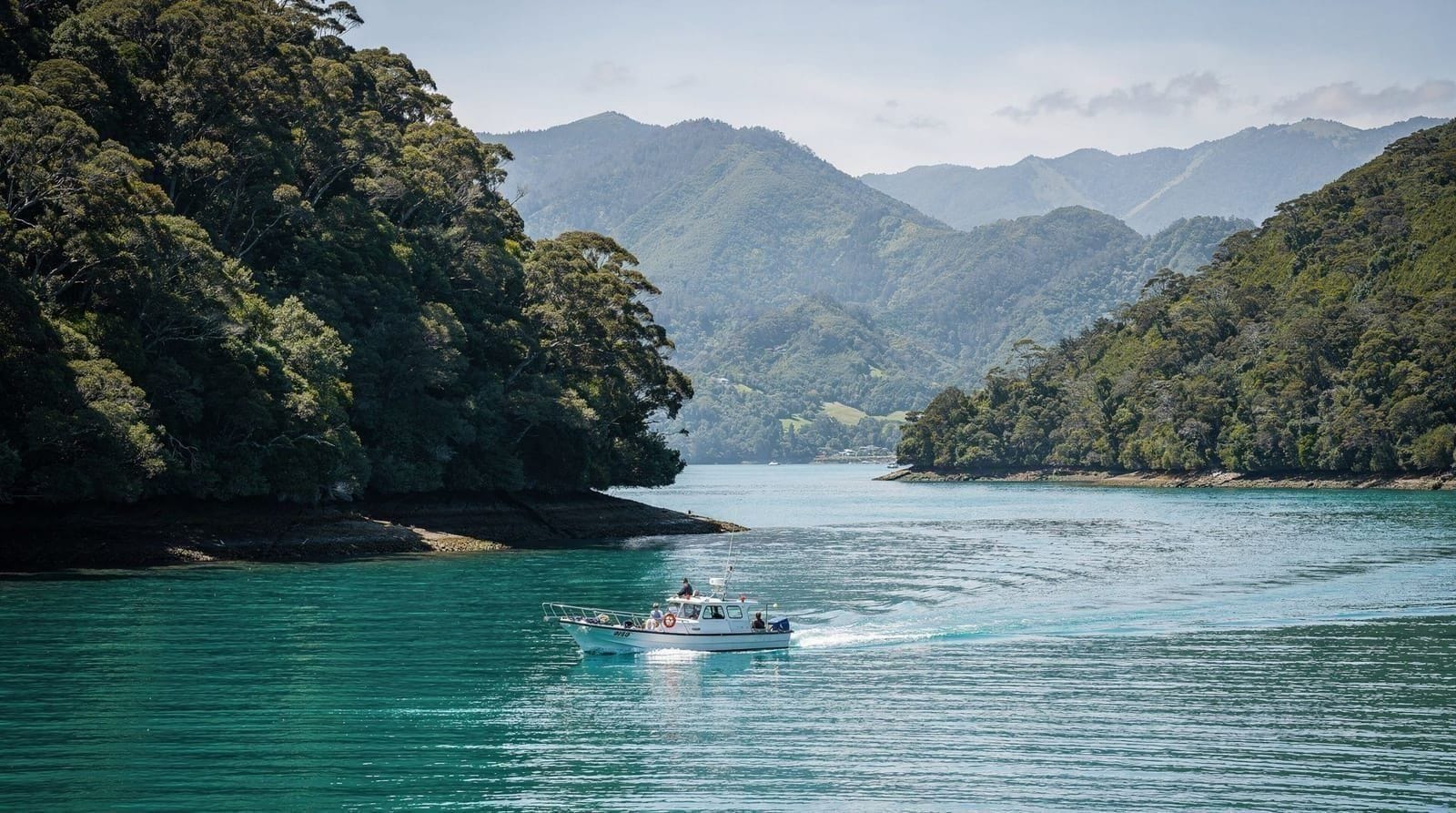
Morning departure. Book the Wellington and Picton Interislander ferry and treat this as a half-day activity in its own right rather than pure transit. The 3.5-hour crossing starts across open Cook Strait water before threading into the sheltered, fjord-like Marlborough Sounds for the final hour — genuinely one of the best scenic boat trips in New Zealand, and one that first-timers consistently underrate before they’ve done it. See the Cook Strait ferry as an adventure for what to expect and where to stand for the best views as you enter the Sounds.
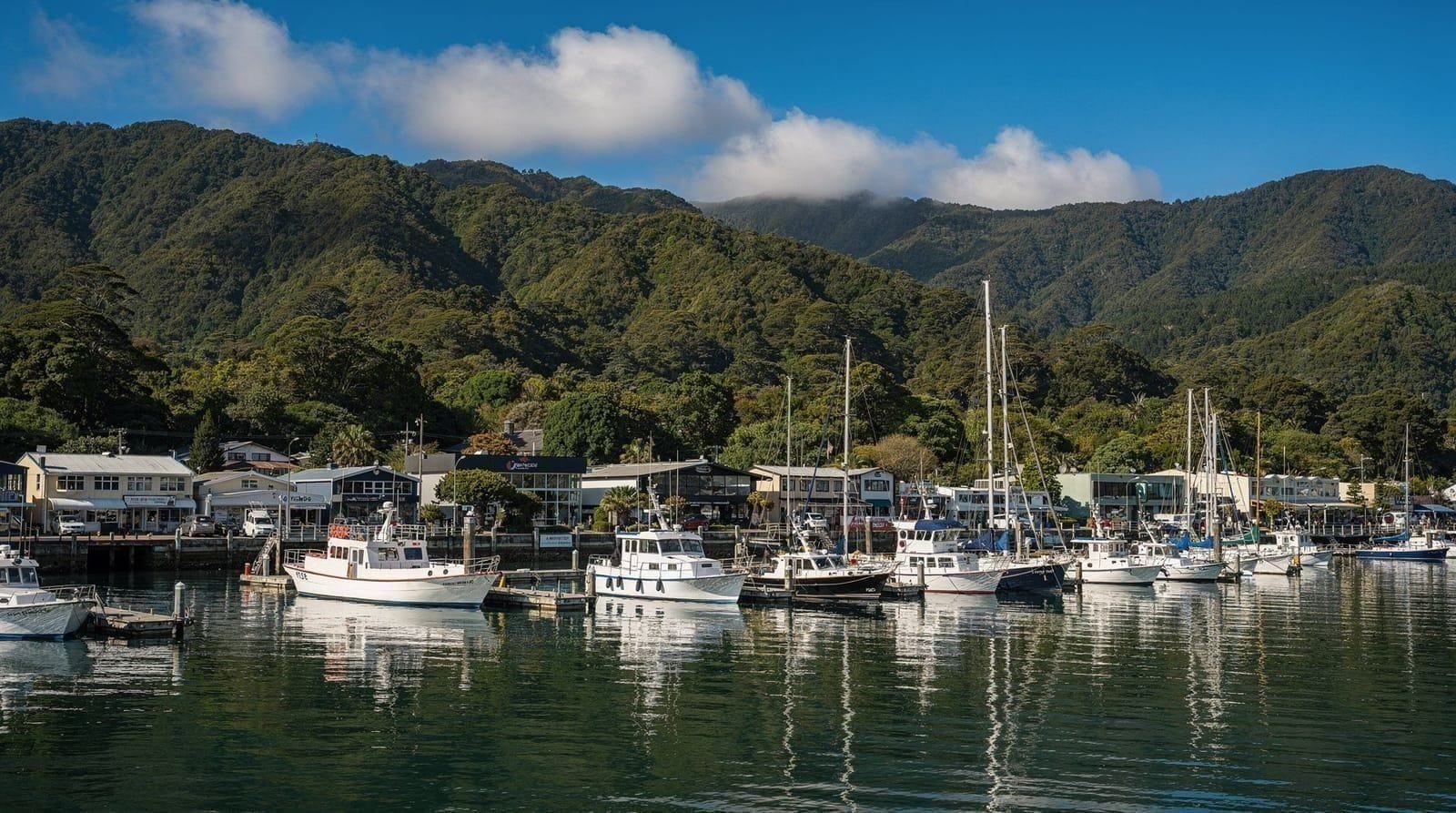
Arrival in Picton. Picton is a small, harbour-front town built almost entirely around the ferry terminal and the Marlborough Sounds’ boating and cruise trade. Spend the afternoon settling in — a walk along the waterfront, lunch at one of the harbour-front cafés — and use the remaining daylight for a short outing if energy allows. The Picton Marlborough Sounds and Ship Cove cruise runs a 3-hour scenic loop through the Sounds’ inner waterways and is a good half-day option if you arrive early enough in the day to fit it in, or a strong choice for Day 5 morning instead if the ferry arrival runs late.
Evening — Picton. Dinner at one of the waterfront restaurants; Picton’s dining scene is small but reliable, oriented around fresh seafood given the town’s fishing and aquaculture links. An early night is reasonable here since Day 5 heads further afield.
Day 5: Marlborough Sounds and Blenheim wine country
Morning — Marlborough Sounds. If you didn’t fit in the Ship Cove cruise on Day 4, do it this morning — it’s the single best way to appreciate the Sounds’ scale and quiet, something the ferry crossing only hints at from a distance. See the Marlborough Sounds cruise guide for route options, and Marlborough Sounds for the wider destination context, including options for kayaking or walking sections of the Queen Charlotte Track if you have more time than this plan allows.
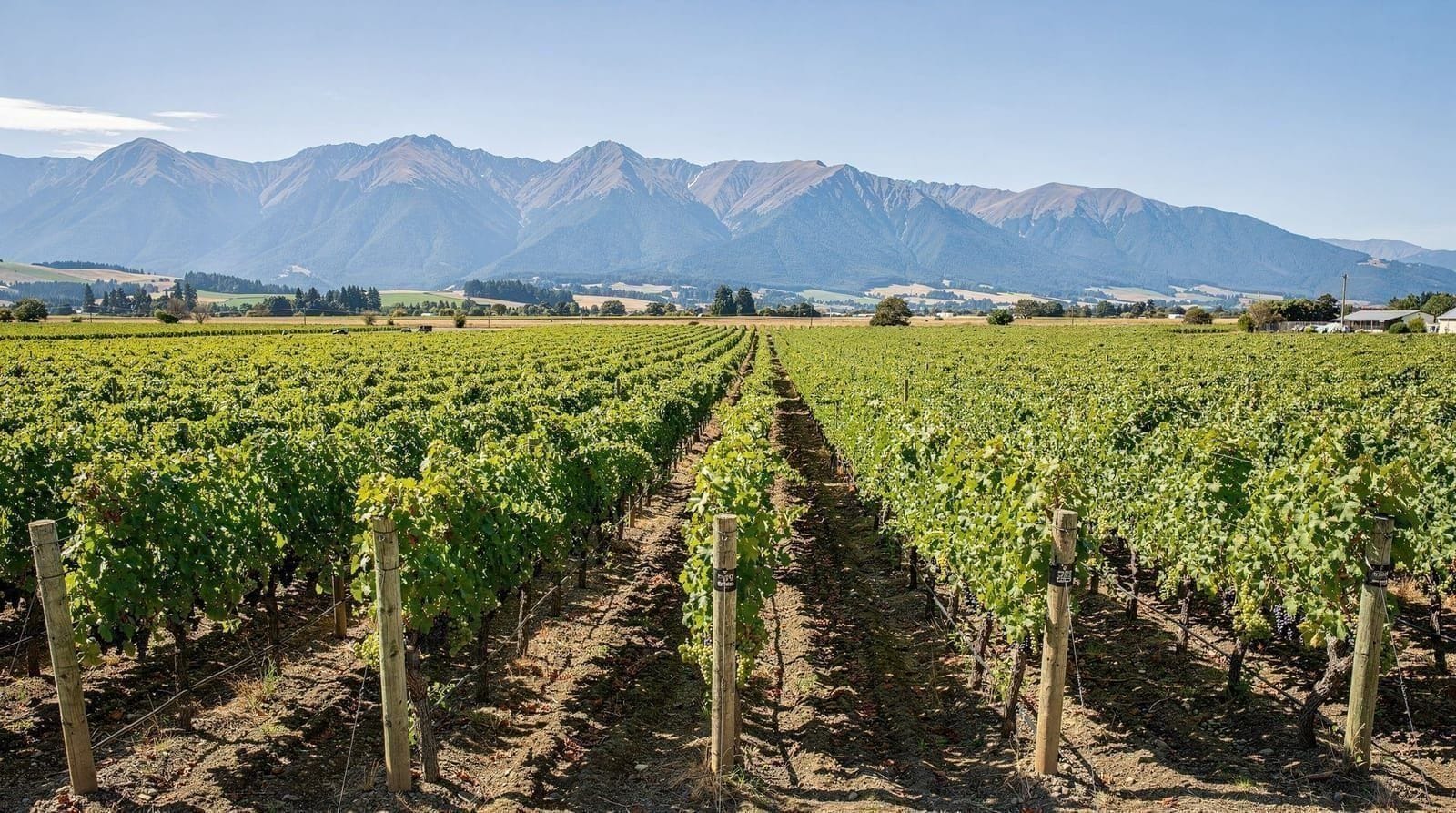
Afternoon — Blenheim and Marlborough wine. Drive or take a tour the 30 minutes south to Blenheim, the hub of New Zealand’s largest wine region and the source of most of the country’s internationally known sauvignon blanc. The Marlborough full-day wine tour covers several established wineries with tastings and usually a lunch stop, handling transport so no one in the group has to skip tasting to drive. Cloudy Bay is the best-known name internationally and worth the visit for the reputation alone; Wither Hills and Forrest Estate offer a slightly less crowded alternative with equally strong wine. See the Marlborough wine tour from Picton and the Marlborough sauvignon blanc story for the regional context, and Martinborough vs Marlborough wine if you did both regions on this trip and want the comparison spelled out.
Evening — back to Picton or Blenheim. Either base works for the night; Blenheim has slightly more choice of accommodation and dining if you’d rather not backtrack to Picton.
Day 6: Nelson
Morning — the drive to Nelson. Nelson sits roughly 1h30–2h west of Blenheim/Picton by road, through the Marlborough countryside and over a modest range before dropping into the Nelson Tasman region — one of New Zealand’s sunniest, most laid-back small cities, with a strong arts and craft-beer scene of its own. Settle into Nelson for the rest of the day; the compact centre is easily walkable.
Afternoon — Nelson wine and orchards. The Nelson wine tour with tastings and lunch covers the region’s wineries — smaller and less internationally known than Marlborough’s but well worth an afternoon, especially for producers working with aromatic varieties and a more boutique, hands-on style than the bigger Marlborough operations. Seifried Estate and Neudorf Vineyards are two well-regarded names in the region if you’d rather self-drive between cellar doors instead. Morrison Street Café in central Nelson is a reliable stop for coffee or a light lunch if you’re spending the day in town rather than out among the vineyards.
Evening — Nelson. Dinner in central Nelson; the city’s food scene punches above its size given the strength of the surrounding growing region.
Choosing between Interislander and Bluebridge for this specific route
Both operators run the Wellington–Picton crossing and either works for this itinerary, but the choice matters slightly more here than on a simple one-way transfer, since you’re planning the whole week’s structure around a single sailing time. Interislander runs more sailings daily, which gives more flexibility if Day 3 in Wellington runs long and you need a later departure than originally planned. Bluebridge is generally cheaper, particularly for early-morning or evening sailings, and suits this itinerary well if the week’s budget is already stretched by the rental car and the wine tours on Days 5 and 6. See Interislander vs Bluebridge for the fuller comparison, including current onboard amenities and how each handles vehicle bookings during the summer peak. Whichever you choose, confirm your Day 4 sailing time against the rest of the week’s bookings before locking anything else in, since the ferry is the one fixed point the entire route pivots around.
Day 7: departure
Use the final day for either a relaxed morning in Nelson before flying out of Nelson Airport (a genuine option if your return flight routes through there rather than back via Wellington), or an early drive back toward Picton for a return ferry crossing to Wellington and a flight out from there instead. Which makes more sense depends entirely on your onward travel plans — check flight availability from both Nelson and Wellington before committing to a return route, since Nelson’s smaller airport has fewer direct connections than Wellington’s.
Budget for a week
Mid-range budget for two people across seven days: accommodation NZ$910–1,400 (seven nights at NZ$130–200), food NZ$700–980, the ferry crossing with a car NZ$270–440 return, a rental car for the whole week NZ$420–630 plus fuel, Wellington city attractions NZ$150–250, the Marlborough Sounds cruise and wine tour NZ$300–450 for two, the Nelson wine tour NZ$200–300 for two. Total roughly NZ$2,950–4,450 for two people excluding flights. This is a genuinely more expensive week than a Wellington-only trip, largely because of the ferry-and-car cost and the added accommodation nights — see the Wellington trip cost and budget guide for how the numbers compare.
Extending or trimming this route
If you have more than a week, the natural extension is south from Nelson toward Abel Tasman National Park (roughly an hour further, and one of New Zealand’s most photographed coastal parks) or west toward Kaikōura for whale watching, though the latter is a longer detour that’s better handled as its own multi-day leg rather than a bolt-on to this route — see Kaikōura as a day trip: reality check for why rushing it tends to disappoint. Both Abel Tasman and Kaikōura are covered in depth elsewhere on this site if you’re building a longer South Island leg on top of this week.
If a week is more than you have, the tightest reasonable trim is dropping Nelson entirely and spending the freed-up day back in Marlborough instead, giving the Sounds and Blenheim’s wineries a more relaxed pace rather than a same-day turnaround. That version is essentially Wellington to the South Island: 5 days via ferry, which covers exactly this trimmed structure with its own day-by-day detail.
Seven days at a glance
| Day | Focus | Approx. spend (two people) |
|---|---|---|
| Days 1–3 | Wellington city essentials (Te Papa, cable car, Cuba Street, Weta/Zealandia) | NZ$150–250 |
| Day 4 | Cook Strait ferry crossing, arrival in Picton | NZ$270–440 (ferry with car) |
| Day 5 | Marlborough Sounds cruise, Blenheim wine tour | NZ$300–450 |
| Day 6 | Drive to Nelson, wine and orchards | NZ$200–300 |
| Day 7 | Departure from Nelson or Wellington | — |
Honest notes
The Cook Strait crossing is weather-dependent and occasionally cancelled or delayed in rough conditions, particularly in winter — build at least half a day of slack into your schedule around the crossing rather than a same-day onward flight or tight connection immediately after. Nelson and Marlborough are both genuinely worth the detour, but if time is truly tight, Marlborough alone (skipping Nelson) still delivers most of the wine-country payoff in a shorter week — see Wellington + Marlborough wine in 4 days for that trimmed-down version.
Another honest note: this itinerary front-loads Wellington and back-loads the South Island, which means the pace actually eases as the week goes on — Days 1–3 are the busiest, Days 4–7 progressively more relaxed as you settle into smaller towns with less to see and do per day than the capital. Some travellers prefer the reverse rhythm (a more relaxed start, a busier finish); if that’s you, there’s no structural reason you couldn’t fly into Nelson first and work backwards toward Wellington, though the ferry then becomes your final activity rather than a mid-trip highlight, which changes how it lands.
Fuel and driving distances are also worth setting expectations on. New Zealand’s rural roads are well-maintained but often single-lane in each direction with a lower average speed than equivalent distances might suggest on a map — a “90-minute” drive between Blenheim and Nelson can stretch if you’re behind slower traffic on a winding stretch, or if you stop for photos, which you will want to on this route. Build padding into arrival times rather than assuming motorway-speed averages throughout.
FAQ about Wellington + South Island in a week (via ferry)
Do I need to book the ferry with a car, or can I go on foot and rent separately in Picton?
Both work. Taking your car across is simpler if you’re driving the whole South Island loop; renting separately in Picton avoids the ferry’s per-vehicle surcharge but means arranging a second rental. For a week focused on Marlborough and Nelson specifically, taking one car across tends to be the less complicated option.
Is a week enough for Wellington plus the South Island properly?
It’s enough for a solid taste of both — three days in Wellington, three across Marlborough Sounds/Blenheim/Nelson. It is not enough to also reach Kaikōura, Abel Tasman or further south; those need additional days layered on top, not squeezed into this exact week.
What if the ferry crossing gets cancelled?
Both Interislander and Bluebridge rebook affected passengers onto the next available sailing at no extra cost, but this can mean losing the better part of a day. If your schedule has zero flexibility, build in a buffer day before any onward flights, particularly if travelling in winter when cancellations are more common.
Should I choose Interislander or Bluebridge for this trip?
Either works for this itinerary. Interislander runs more sailings daily and has a slightly more polished onboard experience with a proper restaurant and lounge; Bluebridge is generally cheaper, particularly for night sailings, and suits budget-conscious travellers happy to trade a little onboard comfort for a lower fare. See Interislander vs Bluebridge for a full side-by-side comparison before booking.
What happens to the Wellington days if we arrive jet-lagged?
Days 1–3 are the busiest stretch of the week, which can be a rough fit with jet lag straight off a long-haul flight. If your arrival is genuinely exhausting, consider swapping the order — a slower Day 1 built around Te Papa and the waterfront rather than the cable car and Mount Victoria, saving the more active stops for Day 2 once you’ve adjusted. See Wellington in 3 days for how the city portion is paced in more detail.
Is this itinerary better done north-to-south or could I reverse it, starting in Nelson?
The structure works either direction. This version assumes you’re flying into Wellington, which is the more common international entry point; if your flights route through Nelson or Christchurch instead, simply reverse the day order, ending in Wellington for your Cook Strait crossing back north before departure.
Top experiences
Bookable activities with verified prices and instant confirmation on GetYourGuide.