Marlborough Sounds cruise guide
Picton: Marlborough Sounds and Ship Cove Cruise
Duration: 3h
What's the best Marlborough Sounds cruise from Picton?
A half-day cruise around Queen Charlotte Sound and Ship Cove covers the most scenic and historically significant stretch of the Sounds, with dolphin sightings a real possibility along the way. Longer options add lunch at a lodge like Furneaux Lodge, or extend to the mail-boat run out of Havelock for a working-boat perspective on the wider Sounds network.
A drowned river valley network best seen from the water
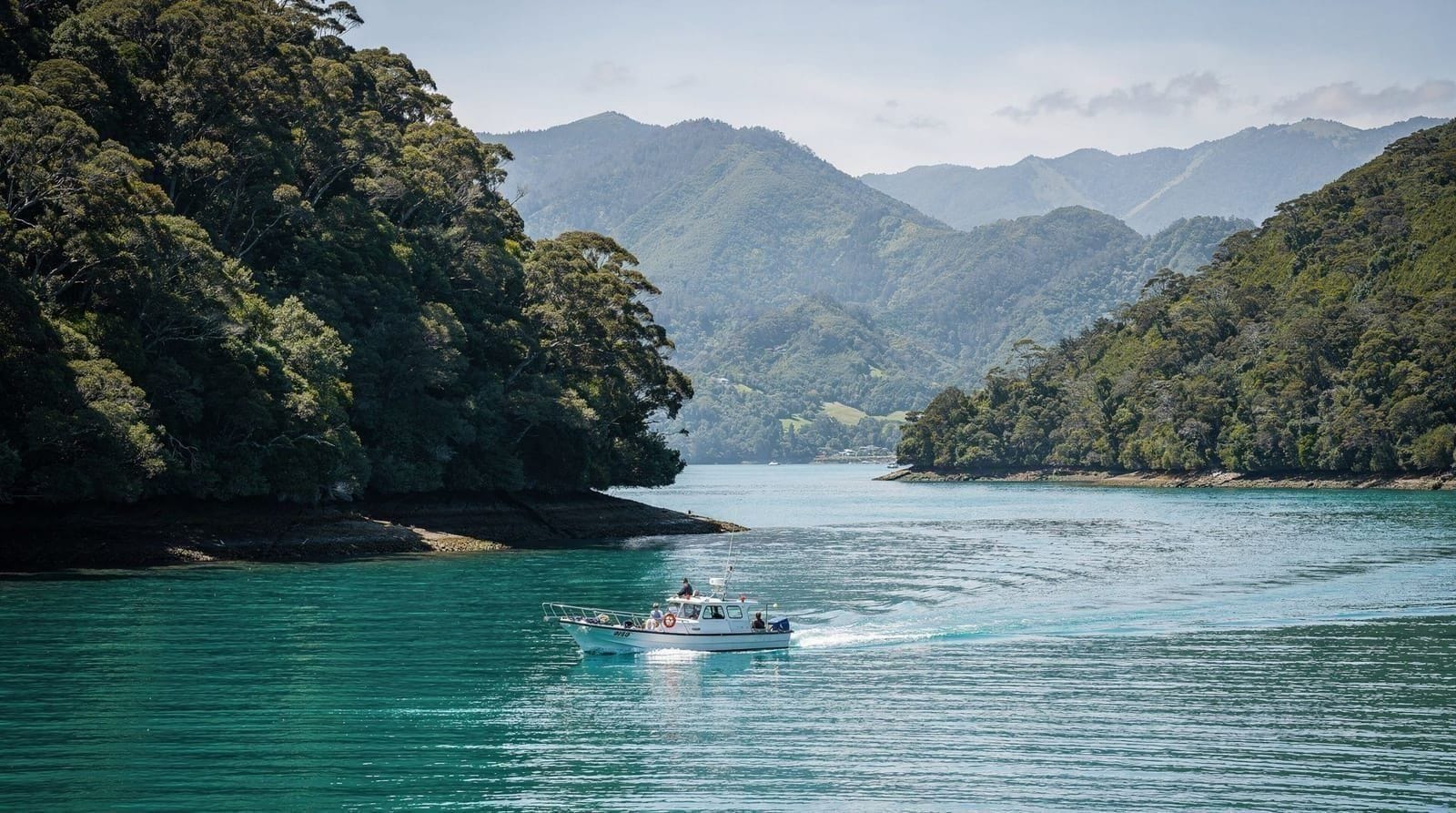
The Marlborough Sounds are a maze of sunken river valleys at the northern tip of the South Island, where rising sea levels over thousands of years flooded what were once inland valleys, leaving a coastline of deep, sheltered waterways, forested peninsulas and hundreds of small bays with no road access at all. It’s genuinely one of the more distinctive coastal landscapes in New Zealand, and because so much of it is only reachable by boat, a cruise isn’t just a nice-to-have activity here — for most visitors it’s the only practical way to see beyond the immediate Picton waterfront.
| Where | Departs Picton town wharf (mail boat departs Havelock) |
| Cost | Around NZD 130-180/person for a half-day; more with lunch included |
| Time needed | 3-4 hours (half-day) to 6-7 hours (mail boat, full day) |
| Getting there | Cook Strait ferry from Wellington to Picton, ~3.5 hours |
| Best time | Summer (Dec-Feb) for calmest conditions; book a few days ahead |
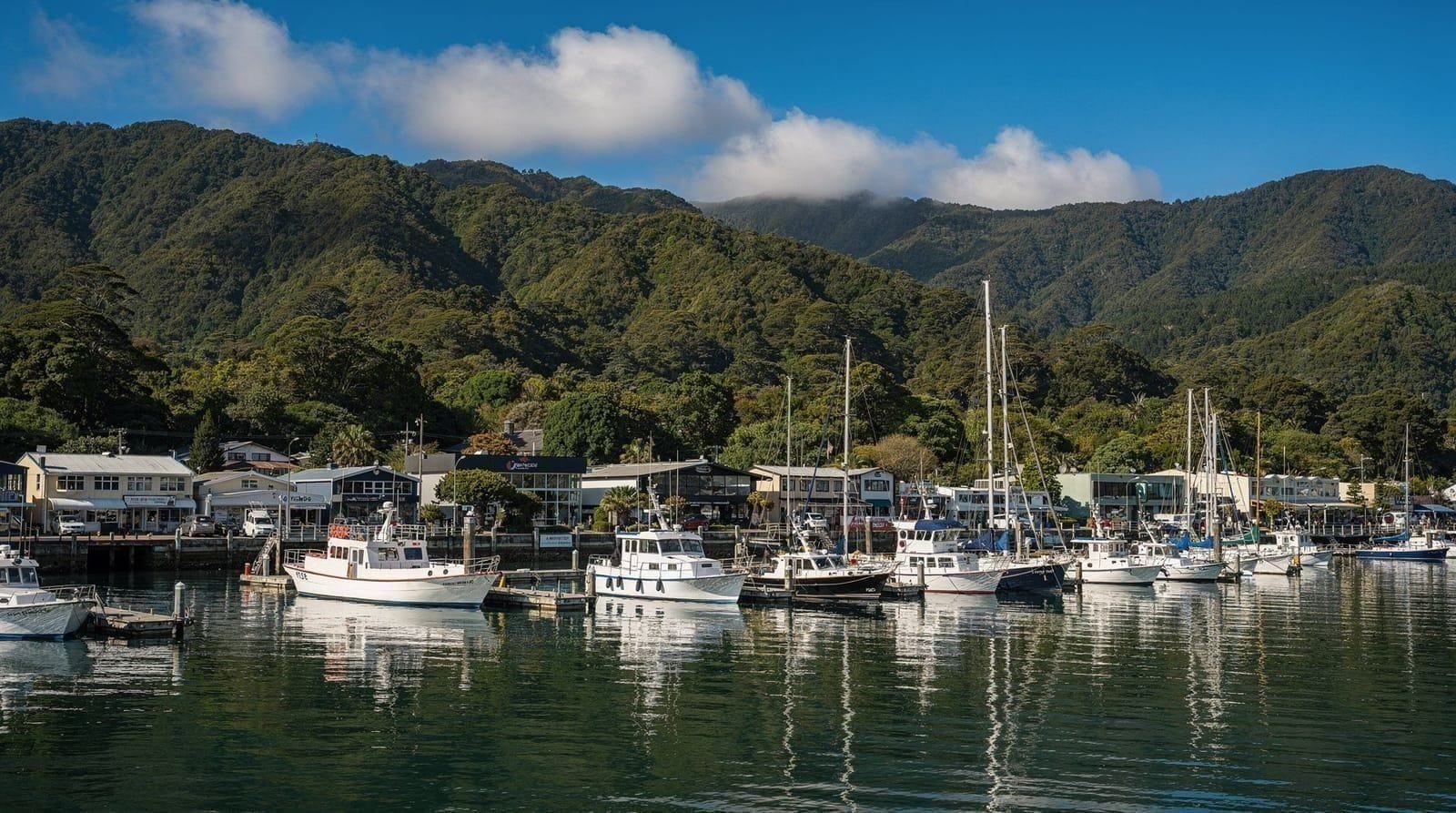
For Wellington-based travellers, the Sounds sit on the far side of the Cook Strait ferry crossing to Picton, which takes about 3.5 hours on either Interislander or Bluebridge. Once you’re there, the cruise options themselves are straightforward half- or full-day bookings departing directly from the Picton town wharf.
How the Sounds were formed
The Marlborough Sounds’ distinctive drowned-valley geography — long, narrow, deeply indented waterways rather than a straight coastline — results from rising sea levels over the last several thousand years flooding what were once river valleys cut into the region’s hill country. That geological history explains why the Sounds cover such a disproportionately long coastline relative to their overall land area: New Zealand’s total coastline length is dramatically inflated by the sheer number of bays, inlets and peninsulas packed into this one relatively compact region, and it’s also why road access here is so limited compared with most other scenic New Zealand coastlines — building roads along drowned valley walls is far more difficult than along a conventional coast, so boats have remained the practical way to move around large parts of the Sounds since long before European settlement.
Ship Cove and Queen Charlotte Sound: the core route
The Marlborough Sounds and Ship Cove cruise from Picton is the standard half-day option, running about three hours out through Queen Charlotte Sound to Ship Cove (Meretoto), the site where Captain Cook anchored on several of his voyages to New Zealand in the 1770s. The cove itself is a genuinely peaceful spot with historical markers explaining Cook’s visits and early contact with Māori in the area, and the cruise route along the way takes in forested headlands, salmon farms and, on a good day, dolphin activity near the Sound’s outer entrance.
For a version with a proper meal included, the Queen Charlotte Sound cruise with lunch at Furneaux Lodge extends the standard route with a stop at one of the Sounds’ well-regarded lodges for lunch on its waterfront terrace, turning a half-day cruise into more of a leisurely full-day outing. It’s a solid choice if you want a genuine break from the boat partway through rather than a straight there-and-back cruise.
Seafood-focused and mail-boat alternatives
If a working seafood culture interests you more than colonial history, the Marlborough Sounds cruise with seafood from Picton routes past the Sounds’ mussel and salmon farming operations, with a seafood-focused meal built into the itinerary — a good option for food-minded travellers who’d rather their cruise doubled as a meal than a scenic-only trip.
For a genuinely different angle on the Sounds, the mail-boat cruise departing from Havelock (rather than Picton, a short drive further west) follows the actual working mail-delivery route through Pelorus Sound, dropping off supplies and post at remote farms and lodges only reachable by water. It’s a longer day — typically six to seven hours — but it covers a wider stretch of the Sounds network than the standard Picton cruises and gives a more grounded sense of how genuinely isolated some of these communities are, rather than a purely scenic loop.
Comparing the cruise options
| Cruise | Length | Best for |
|---|---|---|
| Ship Cove / Queen Charlotte Sound | ~3 hours | First-timers wanting history + scenery in a half-day |
| Furneaux Lodge lunch cruise | ~5-7 hours | A leisurely full day with a proper meal stop |
| Seafood cruise | ~4-5 hours | Food-focused travellers, salmon/mussel farms |
| Havelock mail boat | ~6-7 hours | Repeat visitors wanting a working-boat, remote-Sounds angle |
Booking directly vs through a tour operator
Most of these cruises can be booked either directly through the operator’s own site or through a wider tour marketplace — the boats and departure points are the same either way, so the choice usually comes down to convenience and whether you want the booking bundled with other Marlborough activities. Booking a few days ahead is sensible year-round, but becomes genuinely important in summer (December-February), when cruise capacity fills alongside the peak wine-touring season in nearby Blenheim. Cancellation policies vary by operator — weather-related cancellations are typically rescheduled or refunded, but check the specific terms before paying in full, especially if your Sounds day is tightly wedged between ferry crossings.
How a Sounds cruise fits into a wider South Island trip
For most Wellington-based visitors, a Marlborough Sounds cruise is one element of a broader South Island stop rather than a standalone destination — it pairs naturally with a night or two in Picton, a visit to nearby Blenheim’s wine country, and, for those with more time, onward travel further south toward Nelson or Kaikōura for whale watching.
Building a full day around the cruise alone, without factoring in the ferry crossing time each way, is realistic for visitors already staying in the region; treating it as a same-day round trip from Wellington adds the full 3.5-hour ferry crossing twice on top of the cruise itself, which stretches an already full day into a genuinely exhausting one. See our week-long Wellington-plus-South-Island itinerary or the shorter 5-day South Island via ferry plan for how this fits into a fuller trip.
Wildlife you might see
Common and dusky dolphins are regularly sighted in the outer reaches of Queen Charlotte Sound, particularly near its entrance to Cook Strait, though no operator can guarantee an encounter on any given day. Little blue penguins and a range of native and introduced seabirds are visible along the forested shorelines, and New Zealand fur seals occasionally haul out on rocky points further from the main shipping channels. Salmon farms visible from several cruise routes aren’t wildlife in the wild sense but are a genuine point of local interest, since Marlborough’s aquaculture industry is a significant part of the regional economy.
Salmon and mussel farming in the Sounds
Marlborough’s sheltered, nutrient-rich waters support a significant aquaculture industry, and most cruise routes pass at least one salmon farm or mussel-growing operation — distinctive lines of buoys marking submerged growing lines are a common sight from the boat, particularly further into the Sounds away from the main Picton shipping channel. Some cruise operators, including the seafood-focused options, incorporate a stop or close pass at a working farm as part of the commentary, giving a genuine sense of how significant this industry is to the regional economy beyond the tourism most visitors come for. Marlborough is one of New Zealand’s largest producers of farmed king salmon and greenshell mussels, and the Havelock mail-boat route in particular passes through areas where this industry is most visible.
Accommodation for extending your stay
Picton itself has a reasonable range of accommodation from budget backpacker lodges to mid-range hotels along the waterfront, convenient for an early cruise departure the following morning after arriving on the ferry. For a more immersive Sounds experience, several of the private lodges reachable only by water — Punga Cove and Furneaux Lodge among the best known, both also serving as stops for some Queen Charlotte Track walkers — offer overnight stays with their own water taxi transfers included, letting you wake up genuinely within the Sounds rather than commuting out from Picton each day. This is a worthwhile upgrade for travellers with an extra day or two who want more than a single cruise’s worth of time on the water.
Weather and cancellations
The Sounds are considerably more sheltered than the open Cook Strait crossing, but conditions still shift with wind direction — a strong southerly can bring choppier water even inside the sheltered channels, while a still, clear day makes for genuinely calm cruising almost regardless of season. Operators generally make the call on cancellations the morning of departure rather than days ahead, so it’s worth keeping the day either side of a booked cruise flexible if your schedule allows, particularly in shoulder-season months (April-May, September-October) when conditions are more variable than midsummer.
Getting there and booking practicalities
All the standard cruise options depart from Picton’s town wharf, a short walk from the ferry terminal, which makes same-day connections from the Interislander ferry technically possible on an early sailing — see our Interislander versus Bluebridge guide for choosing between operators — though most visitors find it more comfortable to arrive the evening before and cruise the following morning without the pressure of a tight ferry connection. Bookings are worth making at least a few days ahead in summer (December-February), when cruise capacity fills alongside the peak wine-touring season in nearby Blenheim and Marlborough.
What to pack for a Sounds day
Layers matter more here than a single jacket choice, since temperatures on the open sections between sheltered bays can shift noticeably from the calmer inner waters near Picton. Sunscreen and a hat are worth applying generously regardless of cloud cover, since reflected light off the water intensifies New Zealand’s already-strong UV levels. A change of dry clothes is sensible if your cruise includes a shore stop with an option to swim, and a light rain jacket covers the genuine possibility of a passing shower even on an otherwise clear Marlborough day — this region’s weather is generally milder and drier than Wellington’s, but not immune to sudden changes.
Combining a cruise with wine tasting
Since most Sounds cruises depart from Picton and Blenheim’s wine country is only a short drive away, pairing a cruise with a day of wine tasting is one of the more efficient ways to build a South Island stop without excessive backtracking. A common pattern is a morning cruise followed by an afternoon transfer to Blenheim for tastings, or the reverse; either way, allow enough buffer between the two that a delayed cruise doesn’t force a rushed wine day. Our Marlborough wine tour from Picton guide covers the logistics of sequencing the two activities on a single South Island stop.
Photography tips for the Sounds
Morning light tends to flatter the calm inner waterways near Picton, when the water is often at its stillest before any afternoon breeze picks up, giving genuinely striking reflections of the forested hillsides. The outer stretches toward Ship Cove and Cook Strait offer more dramatic, open-water compositions, particularly on a partly cloudy day when light breaks through unevenly across the peninsula’s ridgelines. If dolphins are sighted, patience pays off — they tend to surface in groups and repeat patterns, so watching rather than only shooting in the first few seconds usually produces better results.
Honest take: which cruise should you pick?
For a first visit with limited time, the standard Ship Cove and Queen Charlotte Sound half-day cruise covers the most historically and scenically significant stretch of the Sounds without requiring a full day’s commitment. If you’re building a fuller day around the Sounds regardless — say, combining it with wine tasting the following day in Blenheim — the lunch-inclusive Furneaux Lodge option or the seafood cruise both turn the outing into more of a complete day rather than a half-day add-on.
The Havelock mail-boat trip suits travellers who’ve already done a standard Picton cruise on a previous visit, or who specifically want the “real working boat” angle over a purely scenic one — it’s a longer, more remote-feeling day, and arguably the most distinctive option of the group precisely because it isn’t built primarily around tourism.
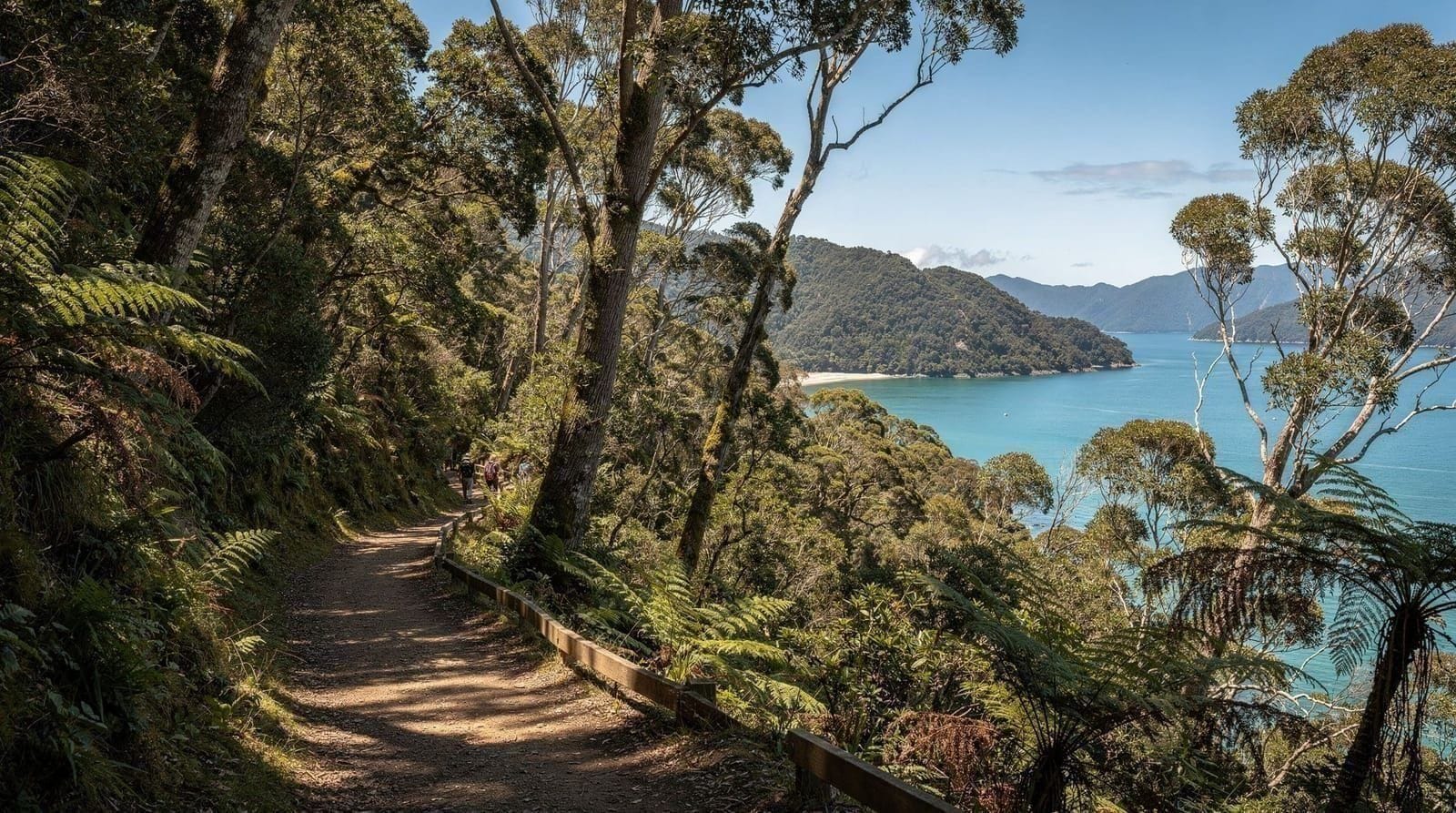
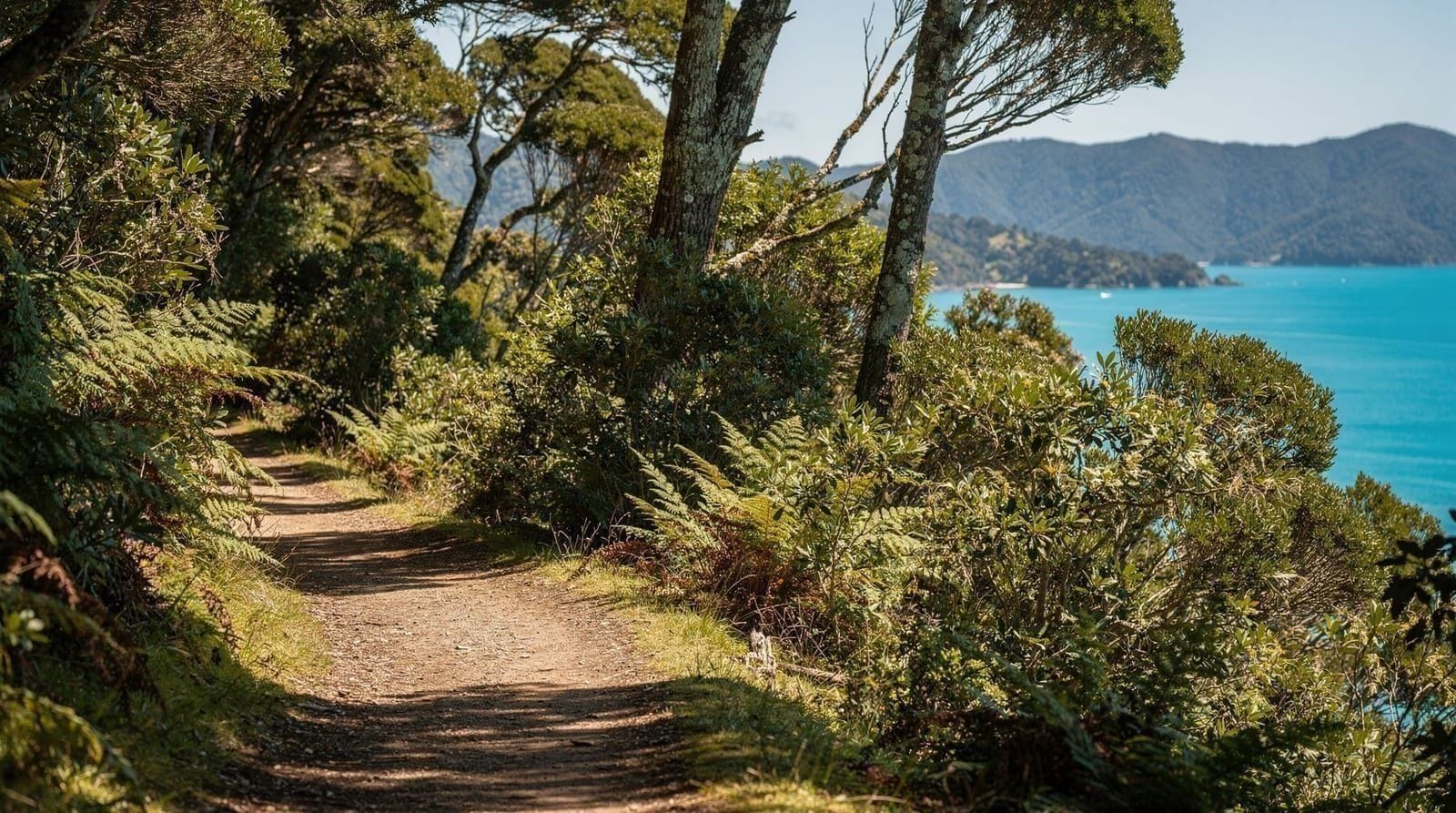
If walking rather than watching from a boat appeals more, our Queen Charlotte Track hiking guide covers the day-walk and multi-day options along the same peninsula these cruises pass by — the two activities pair naturally if you have more than a single day to spend in the Sounds.
Frequently asked questions about Marlborough Sounds cruise guide
How long does a Marlborough Sounds cruise take?
Standard half-day cruises around Queen Charlotte Sound run 3-4 hours, while full-day options with a lunch stop at a Sounds lodge typically run 5-7 hours including the meal. The Havelock mail-boat cruise, which covers a wider stretch of Pelorus Sound, is a full-day commitment of around 6-7 hours.Do Marlborough Sounds cruises depart from Wellington?
No — cruises depart from Picton (or Havelock for the mail boat), on the South Island, reached from Wellington via the Cook Strait ferry, about 3.5 hours by Interislander or Bluebridge. Plan the ferry crossing first; the cruise itself is a separate booking once you're in Picton.Will I see dolphins on a Marlborough Sounds cruise?
Sightings are common but not guaranteed on any given trip — common and dusky dolphins are regularly seen in the outer Sounds, particularly around the entrance to Queen Charlotte Sound near Ship Cove. Operators generally route toward areas with recent sightings when conditions allow, but wildlife encounters can't be promised on a cruise of this kind.What's the difference between a cruise and the Queen Charlotte Track?
A cruise keeps you on the water throughout with stops for photos, history and occasional short shore visits, while the Queen Charlotte Track combines a boat transfer with an actual multi-hour walk along the peninsula. See our Queen Charlotte Track hiking guide if walking is more your interest than a boat-based day.Is a Marlborough Sounds cruise worth it if I get seasick?
The inner Sounds are notably sheltered compared with the open Cook Strait crossing itself, so most cruises stay in calmer water than the ferry ride over. Conditions can still vary with wind and swell direction, so travellers prone to seasickness should consider standard precautions regardless of the sheltered route.
Top experiences
Bookable activities with verified prices and instant confirmation on GetYourGuide.