Interislander vs Bluebridge ferry guide
Wellington and Picton: Interislander Ferry
Duration: 3.5h
Which is better: Interislander or Bluebridge?
Interislander runs more sailings a day (around seven) and has a more polished onboard experience with a lounge and proper restaurant, at a foot-passenger fare from around NZ$55. Bluebridge is generally cheaper, especially on night sailings, with foot-passenger fares from roughly NZ$29-55, but runs fewer daily departures and a simpler onboard offer.
Two operators, one crossing, genuinely different experiences
Wellington’s role as the gateway to the South Island runs almost entirely through the Cook Strait ferry crossing to Picton, and for most of the route’s history that’s meant a choice between two operators: Interislander and Bluebridge. Both cover the same roughly 220km, 3.5-hour route through Cook Strait and the Marlborough Sounds, but they differ enough in price, schedule and onboard experience that it’s worth understanding both before booking. This guide compares them directly rather than simply recommending one.
| Route | Wellington to Picton, ~220km, ~3.5 hours |
| Cost | From ~NZ$29-55 foot passenger, NZ$135-220 with car |
| Sailings | Interislander ~7/day, Bluebridge fewer |
| Best for comfort | Interislander (restaurant, lounge) |
| Best for budget | Bluebridge (especially night sailings) |
| Booking | Weeks ahead in summer (Dec-Feb) for car spaces |
Interislander: the larger, more polished option
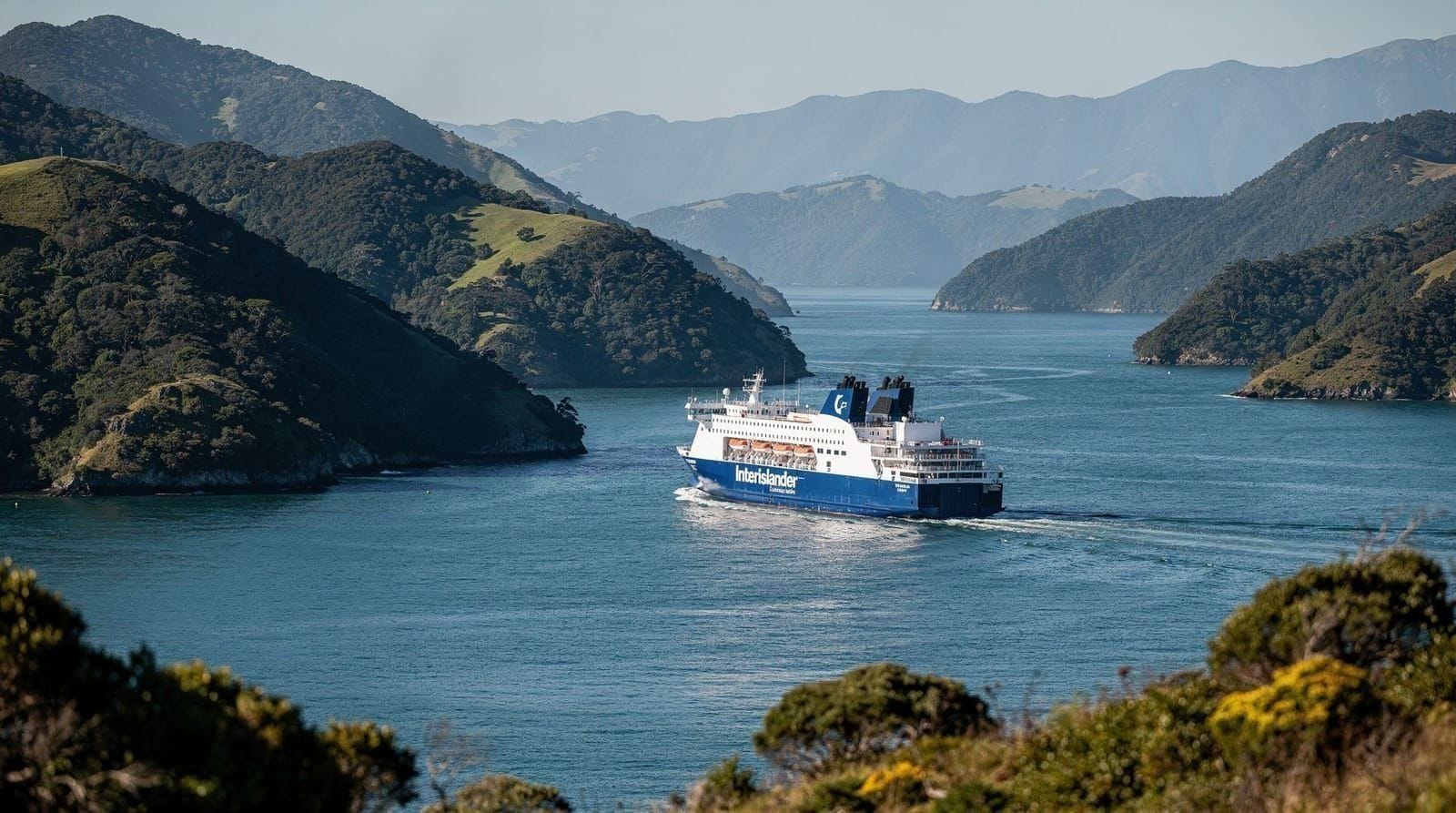
Interislander is the older and larger of the two operators, running around seven sailings a day between Wellington and Picton on newer, larger vessels with a proper onboard restaurant, a dedicated lounge, and more deck space for watching the Sounds scenery. Foot-passenger fares start from around NZ$55, with car fares typically NZ$135-220 depending on vehicle size, season and how far ahead you book. The larger fleet generally means more schedule flexibility if your first-choice sailing is full, and the more comprehensive onboard facilities matter if you’re travelling with kids or simply want a comfortable few hours rather than treating the crossing purely as transport.
Bluebridge: the budget-conscious alternative
Bluebridge runs fewer daily sailings than Interislander but is generally the cheaper option, with foot-passenger fares from around NZ$29-55 and a particular advantage on night sailings, which are meaningfully cheaper still — a genuine budget strategy if you don’t mind an overnight crossing and can save the cost of an extra night’s accommodation by travelling while you’d otherwise be asleep. The onboard experience is simpler than Interislander’s — a café rather than a full restaurant, less lounge space — but the crossing itself, the route and the scenery, is identical, since both operators sail the same stretch of water.
Comparing the two side by side
| Interislander | Bluebridge | |
|---|---|---|
| Daily sailings | ~7 | Fewer |
| Foot passenger | from ~NZ$55 | ~NZ$29-55 |
| Car | NZ$135-220 | Varies, often competitive |
| Onboard | Restaurant, lounge, larger decks | Café, simpler facilities |
| Best for | Flexibility, families, comfort | Budget travellers, night sailings |
Neither operator is meaningfully faster or covers a materially different route, so the decision usually comes down to your budget, how much you value onboard comfort, and whether a specific sailing time fits your onward plans in the South Island.
Booking in advance
Both operators’ fares rise and availability shrinks the closer you book to your travel date, particularly for car spaces in summer (December-February) and around public holidays. If your trip includes a car and falls in peak season, booking several weeks ahead is genuinely worth the effort — last-minute car bookings in January can be scarce or considerably more expensive than the same crossing booked in advance. Foot-passenger-only travellers generally have an easier time finding late availability, since the vessels have more capacity for people than for vehicles.
What the crossing is actually like
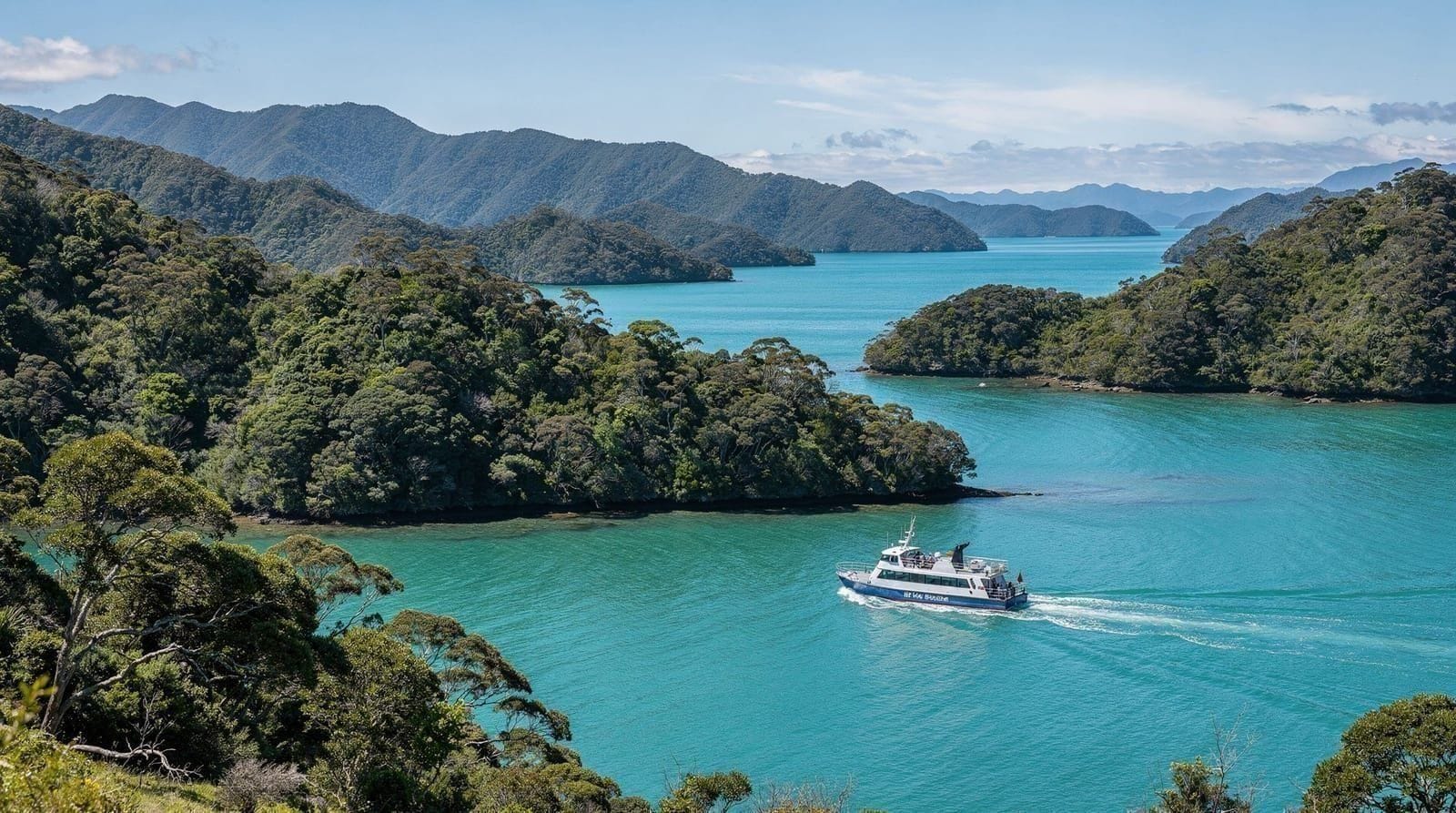
The 3.5-hour journey splits roughly into three phases: departure through Wellington Harbour and out past the harbour heads, the open-water crossing of Cook Strait itself, and the final approach through the sheltered, scenic Marlborough Sounds into Picton. The open-water middle section is where most motion sickness happens, since Cook Strait is a genuinely exposed body of water prone to unpredictable swell, particularly in winter (June-August) — travellers prone to seasickness should consider seasickness tablets taken well before departure rather than after symptoms start. The Sounds section at each end is calm and scenic by contrast, and worth being on deck for regardless of which operator you’ve chosen.
A booked package instead of a standalone ticket
If you’d rather not manage the booking directly with either operator, this Interislander ferry booking between Wellington and Picton bundles the crossing into a straightforward package, useful for travellers who want the ferry sorted alongside the rest of their South Island trip planning rather than booking separately through the operator’s own site. Our Interislander ferry review covers this option in more depth, including what to expect on the day.
Foot passenger versus driving on
Whether you need a vehicle booking depends entirely on your onward plans. Visitors continuing into the South Island with a rental car, or bringing their own vehicle, need to book a car space specifically, which costs considerably more than a foot-passenger fare and should be arranged well ahead in peak season. Foot passengers connecting to a South Island bus, train, or a booked day tour on the other side — for instance heading straight into a Marlborough Sounds cruise or picking up a rental car in Picton itself — can travel considerably cheaper without a vehicle booking at all.
Timing your crossing around Wellington plans
If you’re combining the ferry with a wider Wellington stay, an early-morning or midday sailing leaves enough of the day to explore Picton or continue toward Marlborough on arrival, while an evening or overnight sailing (particularly with Bluebridge’s cheaper night fares) suits travellers prioritising cost over daytime scenery. Our Wellington to the South Island in 5 days itinerary builds a specific sailing time into a full regional plan if you want a ready-made structure rather than working out the logistics yourself.
Cancellations and weather disruption
Cook Strait’s exposure to weather means both operators occasionally delay or cancel sailings in severe conditions, more common in winter than summer. If your onward plans are tight — a flight out of Christchurch the same evening, for instance — building in a buffer of a few hours, or choosing an earlier sailing than strictly necessary, protects against a same-day disruption cascading into missed connections. Neither operator can be blamed for weather-related delays, but it’s worth planning around the possibility rather than assuming a guaranteed on-time crossing.
Which operator should you choose?
For most visitors prioritising comfort, flexibility and a wider choice of sailing times, Interislander’s larger fleet and more comprehensive onboard facilities justify its position as the more popular of the two operators, particularly for families or anyone wanting a proper meal during the 3.5-hour crossing. Budget-conscious travellers, especially those able to take an overnight sailing and skip a night’s accommodation cost, often find Bluebridge the more sensible choice, since the crossing itself — the actual water, scenery and duration — is the same regardless of which company’s name is on the hull.
Where each ferry departs and arrives in Wellington
Interislander and Bluebridge use separate terminals in Wellington, a few kilometres apart, so it’s worth confirming which terminal your specific booking uses rather than assuming they share a single departure point. Interislander operates from a purpose-built terminal at Aotea Quay, a short taxi or shuttle ride from the CBD, while Bluebridge departs from a terminal closer to the central waterfront. Both terminals have their own parking and check-in facilities, and both recommend arriving at least an hour before a scheduled sailing given security and vehicle-loading procedures.
Check-in times and what to expect at the terminal
Foot passengers generally need less lead time than vehicles, since car loading takes longer and is sequenced ahead of departure, but both operators recommend checking in at least 60 minutes before sailing to allow for security screening and boarding. Missing the cut-off can mean being bumped to a later sailing, particularly in peak season when the next available crossing may be fully booked, so building in a buffer — especially if you’re also navigating Wellington’s CBD traffic or a rental car return beforehand — is worth the modest inconvenience of arriving a little early.
Food and facilities onboard
Interislander’s larger vessels include a full-service restaurant with hot meals, a café, a bar, and a dedicated children’s play area on some sailings, alongside a movie lounge on certain routes — genuinely useful for a family crossing or anyone wanting more than a basic snack over the 3.5-hour journey. Bluebridge’s onboard offering is simpler, typically a café serving light meals, snacks and drinks, without the full restaurant experience — adequate for the crossing but a clear step down in scale from Interislander’s larger vessels. Neither operator requires pre-booking a specific meal, though ordering isn’t instantaneous if the vessel is busy, so building in time before you’re genuinely hungry is sensible.
Loyalty programmes and multi-trip savings
Frequent South Island travellers occasionally find value in either operator’s loyalty or multi-trip schemes, though for most visitors making a single Wellington-Picton crossing as part of a broader New Zealand trip, this isn’t a meaningful consideration. It’s worth checking each operator’s current offers directly if your itinerary genuinely involves multiple Cook Strait crossings within a single trip — for instance, a loop that returns to the North Island partway through a longer visit.
Combining the ferry with a South Island day tour
Several tour operators offer packages that bundle the Cook Strait crossing with a same-day or next-day Marlborough Sounds cruise or wine tour on arrival in Picton, letting you make productive use of your first hours in the South Island rather than needing to separately plan onward transport after disembarking. Our Marlborough Sounds cruise guide covers one such option that departs directly from Picton, worth considering if you’re arriving mid-morning with a free afternoon ahead of you.
Environmental and vessel differences
Interislander has been progressively renewing its fleet with larger, more fuel-efficient vessels, part of a broader upgrade programme improving both capacity and onboard comfort, while Bluebridge operates a smaller, somewhat older fleet that keeps its cost base — and therefore its fares — generally lower. Neither difference affects the crossing’s duration or route meaningfully, but it does explain part of the price and comfort gap between the two operators.
Bringing a bike, motorhome or larger vehicle
Both operators accommodate bicycles, motorhomes and campervans alongside standard cars, though larger vehicles need to be booked specifically as such rather than under a standard car fare, and fares scale with vehicle length and height. Cyclists touring the South Island typically find a bike-only fare considerably cheaper than a car booking, and both operators handle bike loading routinely enough that it’s a well-established option rather than an unusual request.
Motion sickness: practical preparation
Beyond simply taking seasickness tablets ahead of departure, sitting in a more central, lower part of the vessel (rather than a high outdoor deck exposed to more motion) and keeping your eyes on the horizon during the open-water Cook Strait section both help manage motion sickness for travellers prone to it. Eating a light meal before boarding rather than an empty stomach, and avoiding excessive reading or phone use during the roughest section of the crossing, are similarly practical, low-effort precautions worth taking if you have any history of seasickness.
Luggage and vehicle loading logistics
Foot passengers carry their own luggage aboard, with luggage storage areas available near the main passenger decks, while vehicle passengers leave belongings in their car for the crossing (accessible again only after disembarking, since passengers don’t return to their vehicle deck during the sailing). This distinction matters if you need something specific mid-crossing — foot passengers have more flexible access to their bags than vehicle travellers do to their car.
Choosing a sailing time around Picton-side plans
Morning sailings from Wellington arrive in Picton with a full afternoon still ahead, useful if you’re continuing straight into a same-day Marlborough Sounds cruise or driving on to Blenheim’s wine country. Afternoon or evening sailings suit travellers planning to simply settle into Picton accommodation on arrival without same-day onward activity. Matching your sailing time to what you actually want to do on arrival, rather than booking whichever slot happens to be available, makes for a noticeably smoother transition into the South Island leg of your trip.
Refunds, changes and flexible fares
Both operators offer tiered fare types, with cheaper advance fares generally carrying more restrictive change or refund conditions and pricier flexible fares allowing free or low-cost date changes. If your onward South Island plans still carry some uncertainty at the time of booking, paying the modest premium for a more flexible fare can be worth it rather than risking a costly change fee later — particularly relevant for weather-dependent activities elsewhere in your itinerary that might shift your ideal crossing date.
Historical context: why two operators exist on this route
Interislander began as a state-owned rail-and-ferry service connecting the North and South Island rail networks, reflecting the crossing’s origins as much a freight and rail-linking route as a passenger service, while Bluebridge entered later as a private competitor focused more squarely on cost-competitive passenger and vehicle transport. This history explains some of the ongoing character difference between the two — Interislander’s larger, more institutional feel versus Bluebridge’s leaner, more budget-oriented operation — even though both now compete directly for the same passenger and vehicle market.
What first-time Cook Strait travellers are often surprised by
Visitors crossing Cook Strait for the first time are often surprised by how genuinely varied the crossing feels within a single journey — calm harbour waters at each end bookending a stretch of open water that can range from gentle swell to a noticeably rougher ride depending on the day’s conditions. This variability, more pronounced than many shorter or more sheltered ferry crossings elsewhere in the world, is worth mentally preparing for rather than expecting a uniformly smooth 3.5 hours throughout.
Combining the ferry crossing with a broader itinerary decision
Whether you choose Interislander or Bluebridge often ends up a secondary decision behind the more fundamental question of whether a Cook Strait crossing fits your itinerary at all — our Wellington to the South Island in 5 days and Wellington + South Island in a week itineraries both build a specific ferry-inclusive structure that can help clarify whether the crossing (and which operator) suits your overall trip shape before you commit to a specific booking.
Checking in online versus at the terminal
Both operators offer online check-in ahead of your sailing, which can shave a few minutes off the terminal process, though it doesn’t remove the recommended one-hour arrival buffer given that vehicle loading and security screening still need to happen in person regardless of whether you’ve checked in digitally beforehand. It’s a modest convenience rather than a way to arrive significantly later than advised.
Travelling with children or pets
Both operators welcome children, with play areas or family-friendly spaces more developed on Interislander’s larger vessels, which matters over a 3.5-hour crossing if you’re travelling with younger kids who need somewhere to move around beyond a fixed seat. Pets generally travel in a vehicle rather than the passenger areas on either operator, subject to each company’s specific pet policy — check directly when booking if you’re crossing with an animal, since conditions and any additional fee vary and aren’t always clearly listed alongside standard fares.
The bottom line
Interislander and Bluebridge sail the identical Cook Strait route in the same 3.5 hours, so the choice between them comes down to budget and onboard comfort rather than the crossing itself. Interislander’s larger fleet, more frequent sailings and fuller onboard facilities suit travellers prioritising flexibility and comfort; Bluebridge’s generally lower fares, especially on night sailings, suit those travelling on a tighter budget. Either way, book ahead in summer, expect some genuine motion in the open-water stretch, and treat the crossing itself as part of the trip rather than a logistical inconvenience to get through.
Frequently asked questions about Interislander vs Bluebridge ferry guide
How long does the Wellington to Picton ferry take?
Around 3.5 hours for either operator, covering roughly 220km across Cook Strait and into the Marlborough Sounds, though delays of an hour or more aren't unusual in rough weather.Is the Cook Strait crossing rough?
It can be. Cook Strait is known for unpredictable, sometimes significant swell, especially in winter (June-August); the Sounds section at each end is sheltered and calm, but the open-water middle stretch is where most motion sickness happens.Should I book a car or foot-passenger only ticket?
That depends entirely on your onward plans — if you're continuing into the South Island by car, you'll need a vehicle booking (NZ$135-220 with Interislander, varies with Bluebridge), while foot passengers connecting to a South Island bus, train or another tour don't need to pay the car fare at all.Do I need to book the ferry in advance?
Yes, especially in summer (December-February) and around public holidays, when sailings — particularly car spaces — sell out days or weeks ahead. Off-peak winter sailings have more last-minute availability but can still fill up around weekends.Which ferry has better views of the Marlborough Sounds?
Both operators sail the same route through the Sounds, so the scenery is identical; the difference is in onboard comfort rather than the view itself. Interislander's larger outdoor deck space and dedicated lounge give slightly more room to enjoy it.