Where to stay in Wellington
Where's the best area to stay in Wellington?
The CBD core around Lambton Quay, or the edges of Te Aro near Cuba Street, is the most practical base for most visitors — within walking distance of Te Papa, the cable car and the waterfront. Oriental Bay suits those prioritising a quieter, sea-facing setting a short walk or bus ride from the centre.
Choosing a base in a genuinely compact city
Wellington’s small footprint means that no accommodation choice within the CBD or its immediate neighbourhoods puts you truly far from the city’s main attractions, but the different areas do carry distinct character, price points and practical trade-offs worth understanding before booking. This guide matches Wellington’s key neighbourhoods to different trip types and priorities, building on our broader Wellington neighbourhoods guide with a specific accommodation lens.
| Best default | CBD core or the edge of Te Aro |
| Quieter option | Oriental Bay or Thorndon |
| Budget option | Newtown or a Te Aro hostel |
| Getting around | Walkable core; Metlink buses cover the rest |
| Booking timing | Book earlier for summer and festival weekends |
The CBD core and Lambton Quay: the practical default
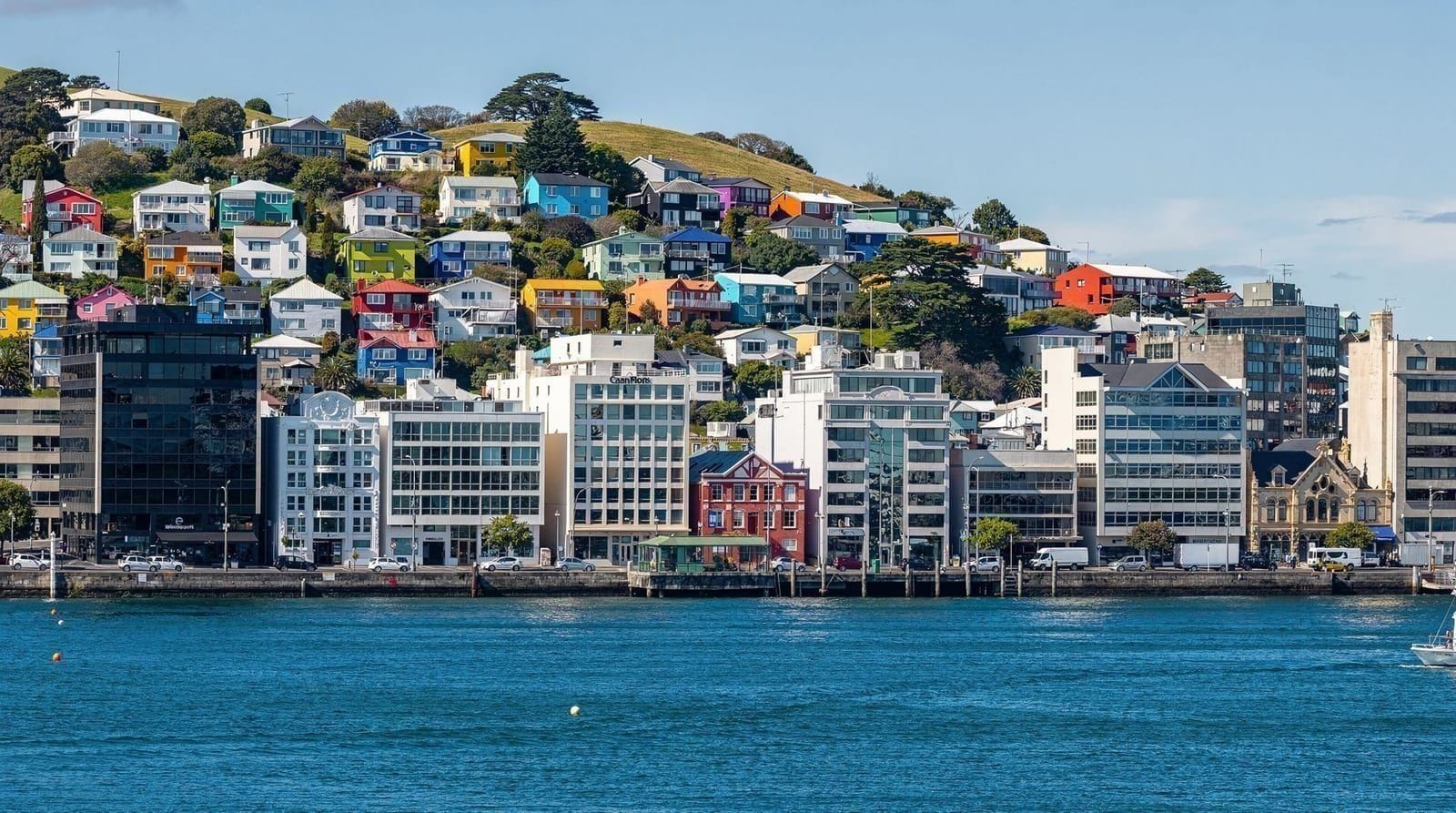
The CBD core, anchored by Lambton Quay, is Wellington’s most central and practical base — within easy walking distance of Te Papa, the cable car’s lower terminal, the railway station and most of the waterfront. It’s less atmospheric than Cuba Street or Oriental Bay, and accommodation here skews toward business hotels and serviced apartments rather than boutique character, but for a first visit or a short 2-3 day trip prioritising minimal transfer time between sights, it’s the strongest default choice.
Te Aro and Cuba Street: atmosphere over convenience
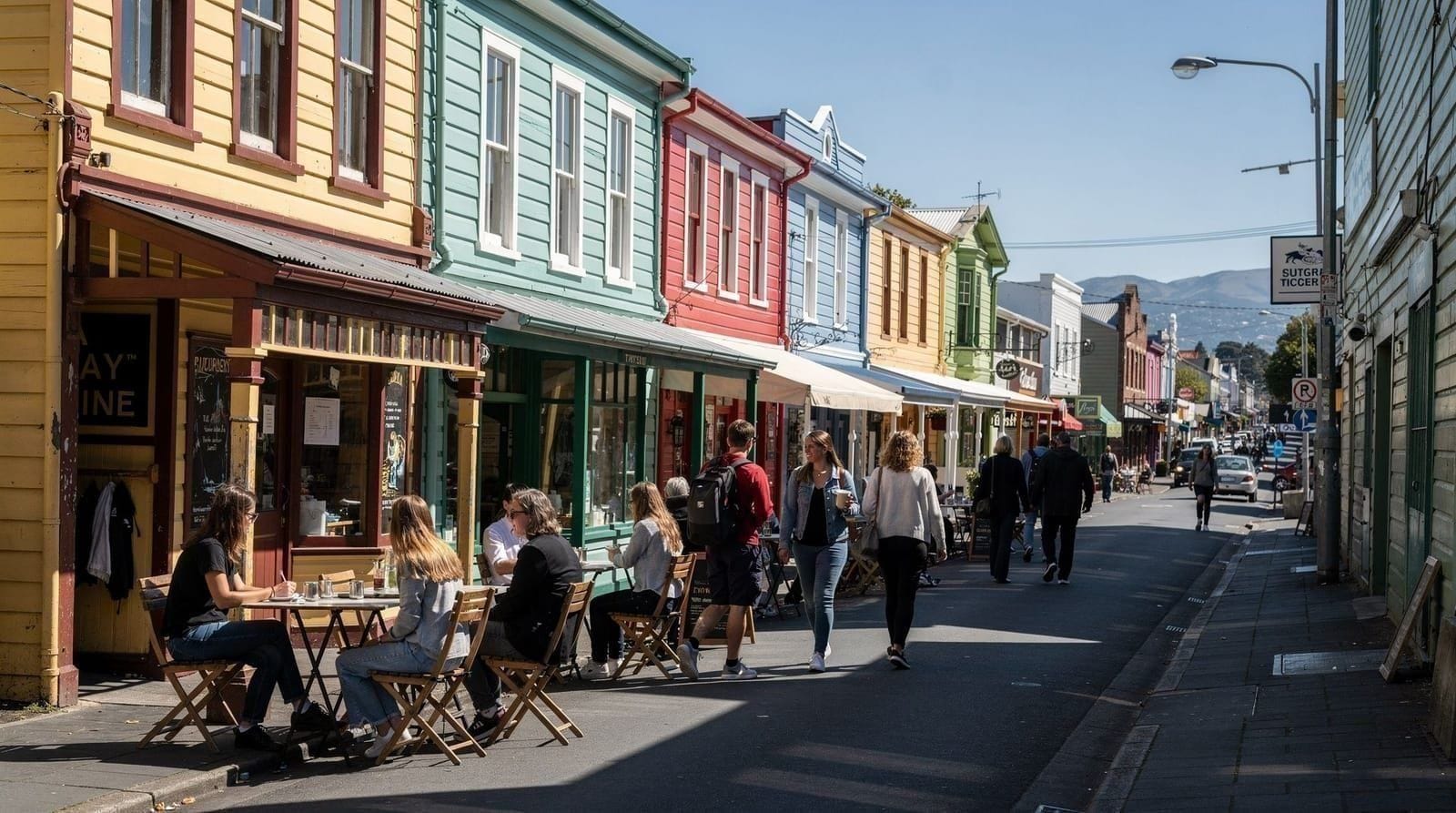
Staying near Cuba Street and Te Aro puts you in the middle of Wellington’s café, craft-beer and independent-retail scene, with a livelier, more bohemian atmosphere than the CBD core just a short walk away. It suits visitors prioritising food, drink and nightlife over quiet, and remains genuinely walkable to most of the CBD’s other attractions — Te Papa and the cable car are both a comfortable 10-15 minute walk from most Cuba Street accommodation.
Oriental Bay: quieter, sea-facing, slightly further out
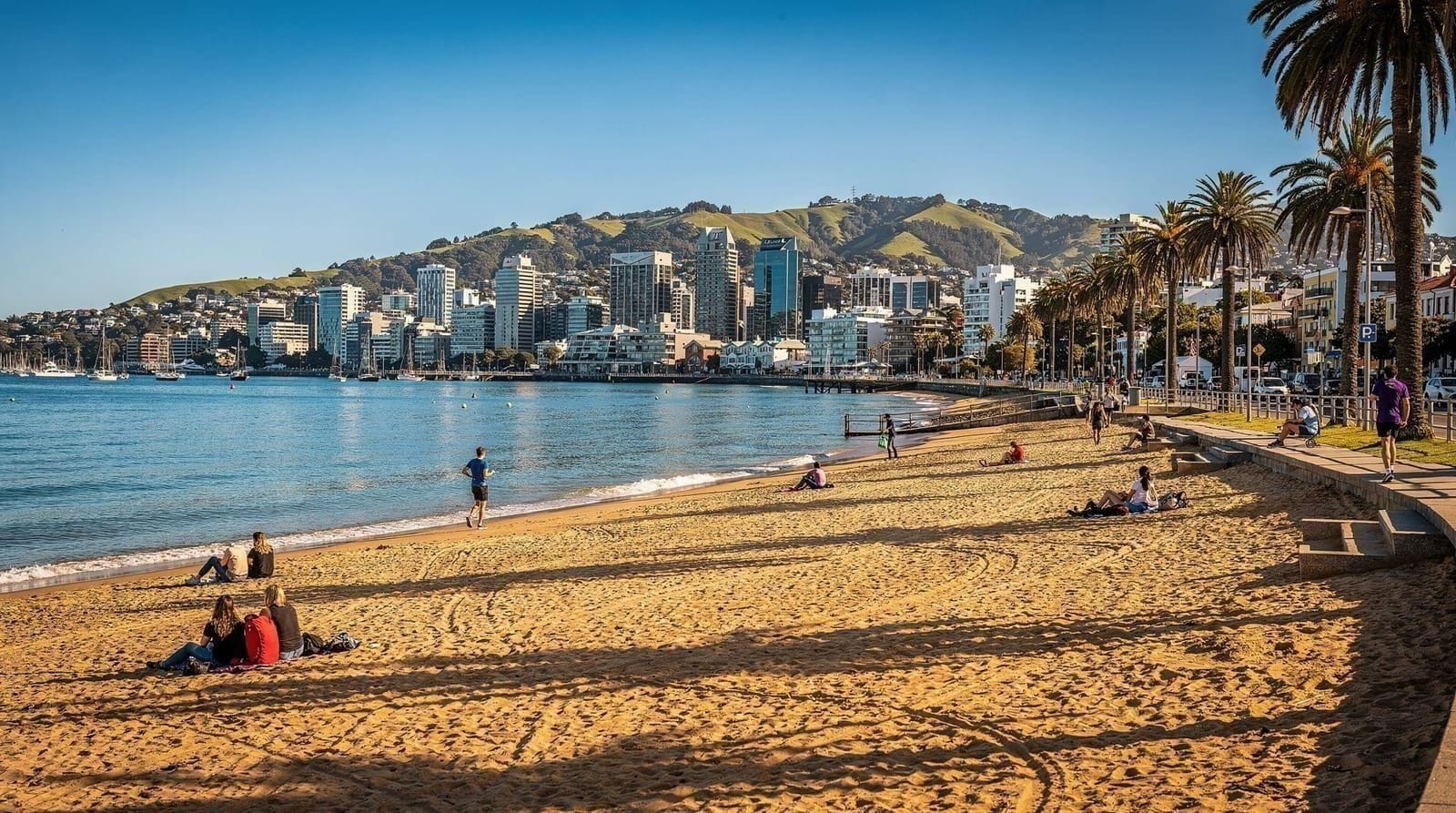
Oriental Bay offers Wellington’s closest equivalent to a beachfront setting, with a noticeably calmer atmosphere than Cuba Street’s livelier strip, at the cost of a slightly longer walk or short bus ride back into the CBD core each day. It’s a strong choice for couples or anyone prioritising a relaxed evening view over walking-distance access to every attraction, and works well combined with an evening stroll along the bay itself as part of the daily routine rather than a special-occasion outing.
Thorndon: heritage streets, quieter pace
Thorndon, just north of the CBD, offers a quieter, more residential base among nineteenth-century heritage streets, Parliament and the government precinct, with somewhat less accommodation choice than the CBD core or Te Aro but a genuinely different, calmer pace within still-easy walking distance of the centre. It suits visitors who want a quieter overnight base without sacrificing much practical convenience.
Miramar: only for a specific reason
Miramar, the city’s film-industry suburb, is further from the CBD core than the other neighbourhoods covered here and carries limited accommodation options relative to its distance from the centre. It’s worth considering as a base only for visitors with a genuinely strong, specific interest in immersing themselves in the Weta Workshop and film-heritage area — most visitors are better served staying centrally and visiting Miramar as a day excursion via our Weta Workshop guide rather than basing themselves there overnight.
Matching your base to trip length
For a short 2-day visit, the CBD core or Te Aro’s edge minimises transfer time and maximises the hours actually spent sightseeing rather than commuting to and from accommodation. For a longer 4-5 day stay, the novelty of a longer visit can better absorb a slightly less central base — Oriental Bay for a calmer daily rhythm, or Thorndon for its quieter heritage streets — without meaningfully compromising access to the city’s core attractions. Our 2 days vs 3 days in Wellington guide and Wellington in 2 days itinerary both assume a centrally located base as the default starting point.
Budget considerations by neighbourhood
Accommodation prices vary meaningfully by neighbourhood, with the CBD core and Oriental Bay generally commanding a premium over Newtown, the Hutt Valley or less central options, reflecting proximity and, for Oriental Bay, the sea view. Budget-conscious travellers willing to trade a few minutes of extra commute for lower rates often find worthwhile savings in Newtown or slightly further-out CBD-adjacent streets, still well within Metlink’s bus network. Our Wellington trip cost and budget guide covers the broader accommodation price bands (hostel through comfortable) that apply across these neighbourhoods.
Accommodation types available
Wellington’s accommodation mix runs from hostel dorms and budget hotels concentrated mainly in and around the CBD core and Te Aro, through mid-range hotels and serviced apartments across most of the central neighbourhoods, to a smaller number of boutique and higher-end options, particularly around Oriental Bay’s waterfront. Airbnb-style rentals are widely available across nearly all the neighbourhoods covered here, often offering better value than a comparable hotel room for stays of three nights or longer.
Getting between neighbourhoods once you’ve chosen a base
Whichever neighbourhood you choose, Metlink’s bus network connects it to the rest of the city, and the CBD core, Te Aro and the waterfront toward Oriental Bay are all comfortably walkable to each other regardless of which specific street you’re staying on. Only Miramar, Karori and Newtown require a genuine bus trip rather than a walk from most other neighbourhoods, worth factoring in if your accommodation sits in one of these more outlying areas.
First-time versus repeat visitors
First-time visitors get the most straightforward value from the CBD core or Te Aro’s edge, since these areas minimise the learning curve of navigating an unfamiliar city while maximising proximity to the essential sights. Repeat visitors, or those with a specific interest — wine, film heritage, a quieter pace — have more reason to choose a neighbourhood matched to that particular priority rather than defaulting to the most central option. Our things to do in Wellington guide covers the wider first-visit planning context if you’re weighing this decision as part of a broader itinerary.
Booking timing
Accommodation across all these neighbourhoods tightens and rises in price fastest for summer (December-February) travel, particularly around Christmas/New Year and any major festival weekends (WOW, CubaDupa, Beervana). Autumn and winter travel offers considerably more last-minute flexibility and lower base rates across every neighbourhood covered here, worth weighing against the seasonal weather trade-offs in our best time to visit Wellington guide.
Newtown as a budget-conscious alternative
Newtown, south of the CBD and home to Wellington Zoo, offers generally lower accommodation rates than the more central neighbourhoods, reflecting its slightly greater distance and less immediately touristy character, while remaining well connected to the CBD via a short, frequent bus route. It’s a reasonable choice for budget-conscious visitors comfortable with a short daily commute in exchange for meaningfully lower rates, and its genuinely diverse food scene is a real bonus rather than a compromise for visitors who make the trip.
The Hutt Valley as a base for a longer stay
For visitors on a longer trip with their own transport, or those specifically interested in the Hutt Valley’s craft-beer scene or Remutaka Rail Trail access, basing part of a stay in Lower Hutt or Petone offers noticeably lower accommodation costs than central Wellington, at the trade-off of a 20-30 minute commute into the CBD by train or car. This suits a specific minority of visitors rather than a general recommendation, given the extra daily travel time it adds for anyone prioritising the CBD’s core attractions.
Business travel considerations
Wellington’s role as New Zealand’s capital means the CBD core has a strong supply of business-oriented hotels geared toward government and corporate travellers, often with reliable weekday rates but genuine weekend discounts once the working week’s demand drops off — worth timing a leisure visit’s accommodation search around a weekend stay specifically if cost is a priority and your schedule allows it.
Booking platforms and what to expect
Wellington’s accommodation is well represented across major international booking platforms alongside a number of independent boutique properties, particularly around Oriental Bay and Thorndon, that may not always show up prominently on the largest aggregator sites. It’s worth checking a property’s own website alongside the major platforms for these smaller, more characterful options, particularly if you’re drawn to a specific area’s boutique character rather than a standardised hotel chain experience.
Noise and quiet considerations by area
Cuba Street and the wider Te Aro precinct, while offering the strongest food and nightlife scene, can be genuinely noisy at night given the concentration of bars and later-opening venues — worth factoring in if you’re a light sleeper, in which case a room a block or two off the main strip, or a base in the quieter CBD core, Thorndon or Oriental Bay, is a more comfortable choice. Oriental Bay and Thorndon are both considerably quieter after dark by comparison.
Matching accommodation type to trip length
For a short 2-3 day visit, a centrally located hotel or serviced apartment minimises setup time and maximises convenience. For a longer 5+ day stay, an Airbnb-style rental with basic kitchen facilities can genuinely save money on food costs by allowing some self-catering, alongside offering more living space than an equivalent hotel room — a meaningful comfort factor over a longer stay that a short visit wouldn’t need to consider.
A worked comparison: three travellers, three bases
Consider three different visitors: a solo backpacker on a tight budget, best served by a Te Aro hostel putting them within walking distance of both Cuba Street’s cheap eats and the CBD’s free attractions; a couple on a 3-day romantic break, better served by Oriental Bay’s quieter, sea-facing setting despite the slightly longer walk into the centre each day; and a family of four visiting mainly for Te Papa, the cable car and Zealandia, best served by a CBD-core apartment rental minimising daily transfer time with young kids in tow. Each of these profiles points to a genuinely different “best” neighbourhood, illustrating why there’s no single universal answer to where to stay.
| Neighbourhood | Vibe | Walk to CBD core | Best for |
|---|---|---|---|
| CBD core / Lambton Quay | Practical, business-hotel | — | First-timers, short stays |
| Te Aro / Cuba Street | Lively, bohemian | 10-15 min | Food, drink and nightlife |
| Oriental Bay | Quiet, sea-facing | 20-25 min or short bus | Couples, calmer pace |
| Thorndon | Heritage, residential | Short walk | Quieter overnight base |
| Newtown | Budget, local | Short bus | Budget-conscious travellers |
| Miramar | Film-industry suburb | Genuine bus trip | Dedicated Weta Workshop interest only |
If you’d rather start your stay with a guided orientation of the CBD core before choosing where to explore further on foot, a guided city tour with the cable car is a useful first-morning anchor regardless of which neighbourhood you’ve booked.
What “walking distance” actually means in Wellington
Because Wellington’s terrain is hilly rather than flat, a distance that reads as an easy 10-minute walk on a map can feel longer if it involves a genuine incline, particularly relevant when comparing CBD-core accommodation (mostly flat) against options slightly further out in Kelburn or parts of Mount Victoria (often involving a real climb). It’s worth checking a specific property’s elevation and approach, not just its straight-line distance from the CBD, before assuming two similarly-distant options offer an equally easy walk.
Accommodation and Wellington’s earthquake safety standards
New Zealand’s building codes, particularly following stricter seismic standards introduced after the Christchurch earthquakes, mean modern and recently-retrofitted Wellington accommodation meets rigorous earthquake-resilience requirements, a reasonable point of reassurance for visitors who might have some general awareness of the region’s seismic activity. Older heritage buildings, particularly in Thorndon, have in many cases been strengthened to meet current standards, though it’s a reasonable question to ask a specific property directly if this is a genuine concern for your stay.
Reading reviews with Wellington’s specific quirks in mind
When comparing reviews across accommodation options, it’s worth reading with Wellington’s specific character in mind — a review mentioning noise “from the street” in Te Aro is describing a genuinely known trade-off of that area’s lively character rather than a one-off problem with a specific property, while a review mentioning “steep walk” near Kelburn or upper Mount Victoria reflects the terrain rather than an unusual complaint about that particular listing. Filtering reviews through this local context helps distinguish genuine property-specific issues from predictable, area-wide characteristics that apply to any accommodation in that part of the city.
Accessibility considerations by neighbourhood
Visitors with mobility considerations generally find the CBD core the most level and accessible neighbourhood, with Oriental Bay’s waterfront path also largely flat and easy to navigate. Thorndon, parts of Kelburn and the approach to several Mount Victoria properties involve genuine gradient, worth checking specifically with a property before booking if step-free, level access matters for your stay. Newtown sits at a more moderate, mixed level of accessibility depending on the specific street.
What proximity to specific attractions actually looks like on foot
To make “walking distance” concrete: from most CBD-core accommodation, Te Papa is a 10-15 minute flat walk, the cable car’s lower terminal a similar distance, and the railway station closer still. From Te Aro/Cuba Street, add roughly 5-10 minutes to each of these compared with a CBD-core base. From Oriental Bay, budget 20-25 minutes on foot into the CBD core, or a 10-minute bus ride if you’d rather not walk it daily. These rough figures help translate a neighbourhood’s general reputation into a specific, practical sense of your actual daily commute to the sights you care most about.
Considering a two-base strategy for longer stays
For visitors staying 5 or more nights with a genuine interest in more than one part of the city’s character, splitting a stay across two neighbourhoods — a few nights centrally for the core sights, followed by a few nights in Oriental Bay or Thorndon for a change of pace — is a reasonable strategy that a shorter visit doesn’t have time to justify. This adds the minor inconvenience of moving luggage partway through the trip, but genuinely broadens the range of daily experience across a longer stay in a way a single fixed base can’t fully replicate.
A final practical tip: booking with your itinerary already sketched out
Before booking accommodation, it’s worth having at least a rough sketch of your daily plans — which attractions, which day trips, roughly how many evenings you’ll want to be out late versus in early — since this makes the neighbourhood trade-offs covered in this guide considerably easier to weigh concretely rather than abstractly. A traveller who already knows they’re prioritising a Martinborough day and an early Zealandia start, for instance, has a clearer case for the CBD core’s central convenience than one still deciding on their plans after booking.
How this decision connects to the rest of your planning
Your neighbourhood choice interacts with several other planning decisions covered elsewhere on this site — how many days you’re staying (see 2 days vs 3 days in Wellington), your overall budget (see Wellington trip cost and budget guide), and whether you’ll need Metlink or a car to get around. Treating accommodation as one piece of a connected plan, rather than an isolated booking decision, tends to produce a smoother overall trip.
A quick reference by traveller profile
First-time visitor, short stay: CBD core or Te Aro’s edge. Couple prioritising atmosphere: Oriental Bay. Budget-conscious solo traveller: a Te Aro or Newtown hostel. Family with young kids: a CBD-core apartment rental. Film-heritage-focused visitor: still base centrally, but treat Miramar as a dedicated day excursion rather than an overnight stay. Matching your specific profile to one of these starting points, then adjusting for budget and specific property reviews, is a faster path to a good booking than weighing every neighbourhood equally from scratch.
Pet-friendly and long-stay options
Travellers on an extended Wellington stay, or those bringing a pet, have somewhat narrower options than a standard short visit, and it’s worth checking a property’s specific policy rather than assuming standard hotel rules apply everywhere. Airbnb-style rentals across Te Aro, Newtown and the Hutt Valley are generally more likely to accommodate pets than CBD-core hotels, though availability varies property by property. For long stays of a week or more, negotiating a weekly rate directly with a property, particularly outside peak summer demand, is often worth the effort compared with booking a standard nightly rate through a major platform.
Checking in and out: practical timing
Most Wellington accommodation follows fairly standard check-in and check-out windows, but it’s worth checking a specific property’s policy if you’re arriving on an early flight or plan a late departure, since a compact city like Wellington makes it tempting to assume you can drop bags and start sightseeing immediately. Many CBD-core and Te Aro properties offer luggage storage even before check-in, which is genuinely useful given how walkable the core attractions are from most central accommodation — you can realistically start a Te Papa visit or the waterfront walk within minutes of arriving rather than waiting for a room to be ready.
Solo travellers and safety by neighbourhood
Wellington is a genuinely safe city for solo travellers by international standards, and neighbourhood choice matters less for safety specifically than for atmosphere and convenience. That said, solo travellers arriving late at night or walking back from Courtenay Place’s nightlife scene may find a CBD-core or Te Aro base more practical than Oriental Bay or Thorndon simply because it removes a longer walk or a late bus wait from the equation. Standard city-centre precautions apply regardless of neighbourhood — well-lit main streets, awareness of surroundings late at night — rather than any specific area requiring special caution.
The bottom line
For most visitors, particularly first-timers or those on a short trip, the CBD core or the edge of Te Aro near Cuba Street offers the most practical base — walkable to Te Papa, the cable car and the waterfront, with easy Metlink access to everything else. Oriental Bay suits those prioritising a quieter, sea-facing setting; Thorndon suits a calmer heritage-focused stay; and Miramar is worth considering only for visitors whose trip centres specifically on the city’s film heritage.
Frequently asked questions about Where to stay in Wellington
Is it worth staying near the waterfront?
The waterfront itself has limited standalone accommodation compared with the CBD core just behind it, but staying in that general area puts you within easy walking distance of Te Papa, the harbour walk and Courtenay Place's restaurants and nightlife.Should I stay in Oriental Bay instead of the CBD?
Oriental Bay offers a quieter, more relaxed sea-facing setting, at the cost of a slightly longer walk back into the CBD core each day — a reasonable trade for visitors prioritising atmosphere over walking-distance convenience to every attraction.Is Miramar a good base for accommodation?
Only really for visitors with a strong specific interest in Weta Workshop and the film district — it's further from the CBD core than the other neighbourhoods covered here, making it a less practical general base for a short visit.Do I need a car if I stay outside the CBD?
No — Metlink's bus network connects all of Wellington's key neighbourhoods to the CBD, so even a base in Newtown, Thorndon or Miramar remains workable without a rental car, just with a slightly longer commute into the centre each day.Which Wellington neighbourhood is quietest at night?
Oriental Bay and Thorndon are both considerably quieter after dark than Cuba Street and the wider Te Aro precinct, which is genuinely noisy at night given its concentration of bars and later-opening venues. Light sleepers should default to one of the quieter areas, or a room a block or two off Cuba Street's main strip.Is it better to stay near the cable car or near Te Papa?
Both sit within the CBD core's easy walking distance of each other, so the choice rarely matters much in practice — a CBD-core base puts you within 10-15 minutes of both. The bigger decision is CBD core versus Te Aro, Oriental Bay or Thorndon, covered throughout this guide.