The Cook Strait ferry as an adventure
Wellington and Picton: Interislander Ferry
Duration: 3.5h
Is the Cook Strait ferry crossing worth doing for its own sake?
Yes — the 3.5-hour Wellington-to-Picton crossing moves from open, sometimes rough Cook Strait water into the sheltered, fjord-like Marlborough Sounds, one of the more dramatic scenery changes on any regular ferry route in the world. Booking a daytime sailing rather than an overnight one is essential if the scenery is the point of your trip.
Treat it as a destination, not a commute
Most guides to travelling between Wellington and Picton describe the Cook Strait ferry purely as transport — a necessary 3.5-hour link between the North and South Islands. That undersells it. The crossing takes you from open, often boisterous Cook Strait water into the sheltered, fjord-like calm of the Marlborough Sounds, one of the more dramatic scenery transitions available on any short ferry route anywhere, and it’s genuinely worth building your schedule around rather than treating as dead time to sleep through.
| Where | Wellington to Picton, across Cook Strait |
| Time needed | About 3.5 hours dock to dock |
| Cost | From around NZ$52pp foot passenger; NZ$135-220 with a vehicle |
| Best time | Daytime sailing, any season — book ahead in summer |
| Highlight | Marlborough Sounds approach into Picton |
The Wellington and Picton Interislander ferry is the practical way to book this, with foot-passenger fares from around NZ$52 one-way and considerably higher rates for vehicles (roughly NZ$135-220 depending on vehicle size and season).
What the crossing actually looks like
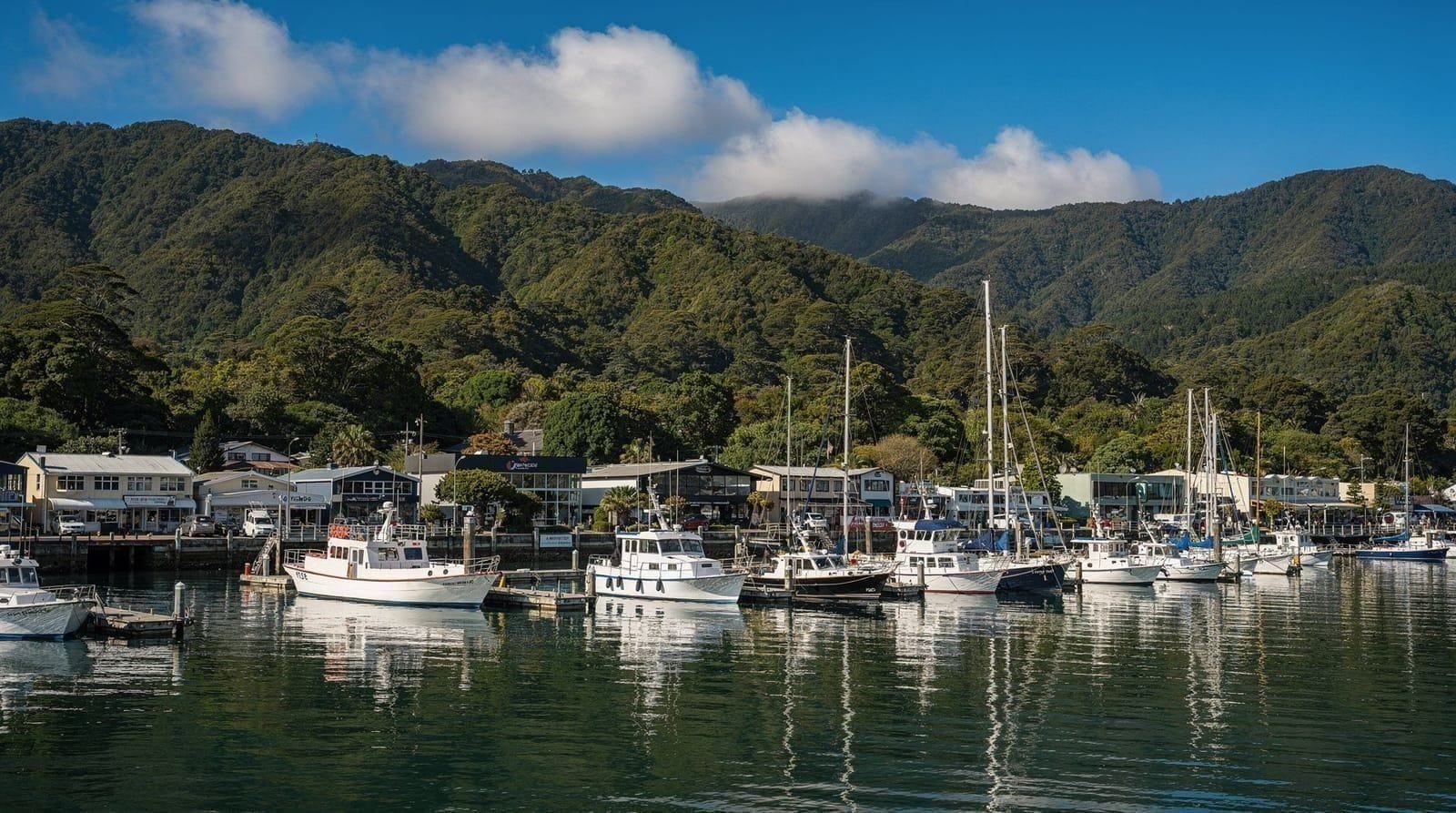
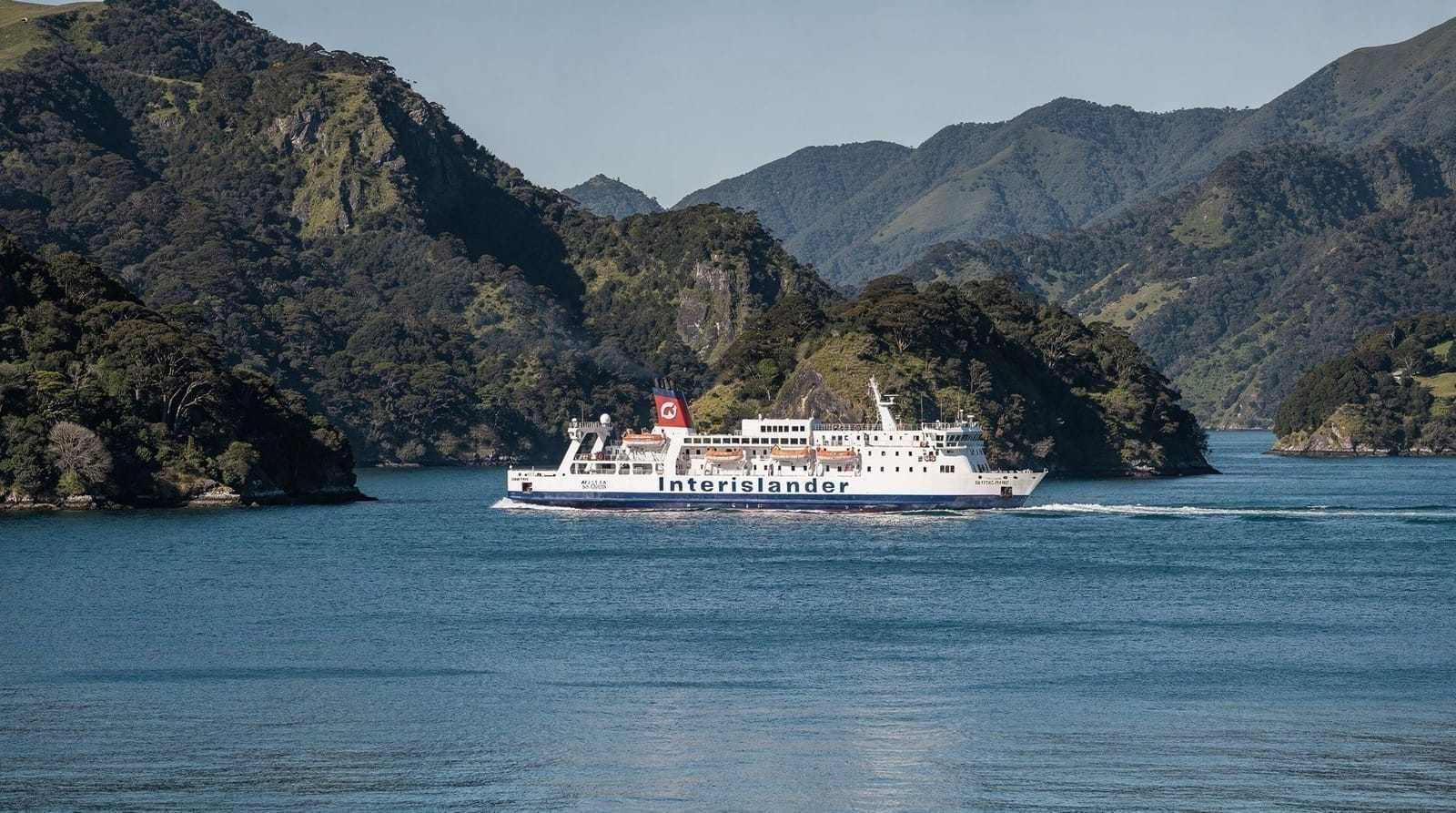
The first stretch out of Wellington harbour and across open Cook Strait — roughly the first hour or so — is where conditions can genuinely swing from mirror-flat to uncomfortably rough, since the strait sits exposed to swell rolling in from both the Tasman Sea and the wider Pacific. Once the ship enters the Marlborough Sounds, the water calms dramatically, and the remaining approach into Picton winds through forested, steep-sided inlets that feel like an entirely different body of water from the open strait behind you. This contrast — rough, exposed ocean giving way to glassy, sheltered fjord scenery — is the specific experience worth planning around.
Daytime sailings are non-negotiable for the view
If the scenery is the reason you’re reading this, book a daytime sailing without exception. Overnight crossings exist and genuinely save a night’s accommodation cost for budget-focused travelers, but they mean sleeping (or trying to) through the exact stretch of water that makes this crossing worth doing. Both Interislander and Bluebridge run multiple daytime departures, so there’s no real reason to default to an overnight sailing unless saving on accommodation specifically outweighs the view for your trip.
Interislander vs Bluebridge for this specific experience
Interislander generally offers a more comfortable onboard experience — larger ships, a proper restaurant and lounge areas, and more consistent outdoor deck access for photos of the Sounds — while Bluebridge tends to run cheaper fares, particularly on night sailings. For a trip specifically built around the scenic value of the crossing, Interislander’s larger vessels and more generous outdoor viewing areas make it the slightly better pick, though either operator delivers the same essential geography and the same dramatic shift from open strait to sheltered Sounds.
Weather realities: when it gets rough
Cook Strait has a genuine reputation for rough crossings, and it’s earned — winter months (June-August) see rougher conditions more often, though any season can produce an uncomfortable sailing if a weather system moves through at the wrong time. Passengers prone to seasickness should consider taking preventative medication before boarding regardless of the forecast, since conditions can shift during the crossing itself even when departure looked calm. On the roughest days, both operators occasionally cancel or delay sailings, rebooking passengers onto later crossings — a genuine possibility worth allowing a buffer day for if your onward South Island plans depend on a specific arrival time.
Where to stand for the best views
The open outdoor decks toward the stern and along the sides offer the clearest, least obstructed views once you’re into the Sounds section, away from the enclosed lounge windows which can pick up glare depending on the light. Bring a windproof layer regardless of the season — deck-level wind on a moving ship adds a genuine chill even on an otherwise mild day, and this is doubly true given Wellington’s baseline windiness carrying straight out into the strait.
Wildlife on the crossing
Dolphins are occasionally spotted riding the ship’s bow wave, particularly in the calmer Sounds section, and seabirds including albatross are a reasonably common sight over open water, though neither is guaranteed on any given crossing. It’s a genuine bonus rather than something to build expectations around, similar to the opportunistic nature of whale sightings much further south at Kaikōura.
Booking and timing tips
Both operators recommend booking ahead, particularly during peak summer months (December-February) and around public holidays, when sailings fill up and last-minute availability narrows considerably. Arrive at the terminal with a reasonable buffer before departure — check-in cutoffs apply, and missing one means waiting for the next available sailing rather than a quick rebooking at the gate.
Building it into a South Island trip
For visitors treating this as more than a day trip, our Wellington to South Island in 5 days itinerary structures a genuine multi-day South Island add-on around the crossing, rather than treating the ferry as an isolated there-and-back. Day-trippers considering Picton itself as a same-day return should also read our honest take on whether a rushed round trip is worth it versus staying overnight.
Is it worth prioritising over flying?
For travelers with time to spare and an appreciation for scenery, absolutely — a 3.5-hour ferry crossing through the Marlborough Sounds delivers a genuinely memorable experience that a 30-minute flight between Wellington and the South Island simply can’t replicate. For time-pressed travelers, flying remains faster and often not meaningfully more expensive once ferry fares, especially with a vehicle, are factored in — but treating the ferry purely as the cheaper, slower option misses what makes this specific crossing worth choosing on its own merits.
A brief history of the crossing
Cook Strait has been crossed by ferry in some form since the 1960s, when the original Interislander service began linking the North and South Islands as a deliberate piece of national infrastructure connecting the two halves of the country by rail-enabled ferry, allowing train wagons to be loaded directly onto the ships. That rail-wagon capability has since been phased out in favour of road-vehicle and freight transport, but the route’s origin as a genuinely nation-building piece of transport infrastructure is part of what gives the crossing its sense of occasion beyond simply being a tourist scenic cruise.
The freight and commercial side of the crossing
Beyond passenger traffic, the Cook Strait ferries carry a substantial volume of freight between the islands daily, and it’s common to share the crossing with a considerable number of trucks and commercial vehicles alongside passenger cars. This gives the sailing a genuinely different character from a purely tourist-oriented cruise — it’s real, working transport infrastructure that happens to pass through spectacular scenery, rather than a scenic cruise dressed up as transport, and that distinction is part of the crossing’s appeal for travelers interested in how the country’s logistics actually function.
Comparing the crossing to other famous ferry routes
Travelers who’ve done other well-known scenic ferry crossings — Norway’s fjords, British Columbia’s Inside Passage — will find Cook Strait holds its own by comparison, combining genuine open-ocean exposure with a dramatic final approach through sheltered, forested sounds in a way few other short ferry routes manage within a similar 3.5-hour window. It’s a reasonable point of comparison for travelers deciding how much priority to give the crossing within a broader New Zealand itinerary.
What to do if you get a rough crossing
If conditions turn out rougher than hoped, moving to a lower, more central part of the ship reduces the sensation of motion compared with higher decks or the bow and stern extremities, and fixing your eyes on the horizon rather than reading or using a phone screen helps most people manage mild seasickness. Ginger-based remedies, available at the ship’s shop, are a commonly used, non-drowsy alternative to medication for passengers who’d rather not take tablets preventatively.
The Marlborough Sounds from the water vs from land
Visitors who’ve only seen the Marlborough Sounds from a car window around Picton or Blenheim will find the ferry’s approach through the Sounds offers a genuinely different perspective — the crossing reveals just how extensively the drowned river valleys that form the Sounds wind back into the hills, a geography that’s considerably harder to appreciate fully from any single coastal road viewpoint. This is arguably the single best reason to prioritise a daytime sailing specifically, since it’s a view of the region that a purely road-based South Island visit wouldn’t otherwise deliver.
Choosing your seat or deck spot strategically
On Interislander’s larger vessels in particular, the layout offers a genuine choice between an enclosed lounge with panoramic windows and fully open outdoor deck space — arriving reasonably early after boarding to claim a good spot at either, rather than assuming space will be freely available once you’re well into the Sounds section, makes a meaningful difference on a busier sailing, particularly during peak summer travel when the ship carries a fuller passenger load.
A note on ticket flexibility
Both operators generally offer some flexibility to change sailing times ahead of departure, typically for a fee that varies by fare type and how close to departure the change is requested. Booking a slightly more flexible fare class is worth considering if your onward South Island plans depend on catching a specific crossing and you’d rather have the option to shift to an earlier or later sailing without a significant penalty if your schedule changes.
Traveling with children on the crossing
The 3.5-hour crossing is long enough that younger children benefit from some planning: bring snacks, a tablet or activity for the open-water stretch when the deck view is less compelling, and time a visit to the outdoor deck for the calmer Marlborough Sounds section, when the motion settles and the scenery is at its best. Both operators’ larger ships have enough indoor space to let kids move around rather than being confined to a single seat for the whole trip, which helps considerably compared with a shorter flight where everyone stays buckled in.
Food and drink on board
Interislander’s larger ships run a proper café and, on some sailings, a sit-down restaurant option, making it easy to build a meal into the crossing rather than eating beforehand at the terminal. Bluebridge’s offering is more limited, generally a smaller café-style setup, which is worth knowing if lunch on board is part of your plan. Either way, prices on board run at a typical travel-hub premium compared with Wellington CBD cafés, so grabbing a coffee or snack at the terminal beforehand is a reasonable way to save a little if budget matters.
Combining the crossing with a South Island day trip
Some visitors treat the ferry as a same-day return, crossing to Picton and back purely for the experience without staying overnight in the South Island. This works logistically, since daytime sailings run in both directions, but it makes for a genuinely long day — roughly 7 hours of ferry time alone before any time spent in Picton itself. Our Kaikōura as a day trip reality check covers a similar honest look at how far a rushed same-day South Island trip realistically stretches, useful context if you’re weighing a return crossing against an overnight stay.
Frequently asked questions about The Cook Strait ferry as an adventure
How rough is the Cook Strait crossing?
It varies considerably by day and season — Cook Strait is genuinely exposed to open ocean swell from both the Tasman Sea and the Pacific, and conditions can range from glassy calm to uncomfortably rough. Winter months (June-August) see rougher crossings more often than summer, though any season can produce a rough day.How long is the ferry crossing from Wellington to Picton?
About 3.5 hours dock to dock, with roughly the first hour or so in open Cook Strait water before entering the sheltered Marlborough Sounds for the final approach into Picton, where the water calms noticeably.Should you book a daytime or overnight sailing?
For the scenery, daytime sailings are essential — the Marlborough Sounds section is the visual highlight, and an overnight crossing means missing it entirely while asleep. Overnight sailings suit travelers prioritising a cheaper way to save a night's accommodation over the view.Do you need a car for the Cook Strait ferry?
No — both Interislander and Bluebridge carry foot passengers as well as vehicles, and foot-passenger fares are considerably cheaper than bringing a car across, from around NZ$52 one-way on Interislander.What happens if the crossing is cancelled due to weather?
Both operators occasionally cancel or delay sailings in genuinely severe conditions, rebooking affected passengers onto the next available crossing. This is rare rather than routine, but worth building a buffer day into your itinerary if a same-day onward connection depends on the ferry running on schedule.