Wellington day trip vs overnight in Marlborough
The question every Wellington-based South Island trip runs into
The Cook Strait ferry to Picton is one of Wellington’s biggest genuine differentiators — a 3.5-hour scenic crossing through the Marlborough Sounds that puts the South Island’s wine country within reach of a city break in a way few other North Island cities can match without a domestic flight. The question almost everyone planning this add-on runs into is whether to do it as a long day trip or commit to at least one night away, and the honest answer depends heavily on which specific version of “Marlborough” you’re picturing.
| Crossing time | Around 3.5 hours each way |
| Day trip cost | Around NZD 60–100 per person, ferry only |
| Overnight cost | Around NZD 250–350 per person, all-in |
| Best season | Autumn (March–May) for calmer crossings |
| Best for | Day trip: a taste of Picton; overnight: proper wine touring |
The maths of a day trip
Interislander and Bluebridge both run the Wellington-Picton crossing in around 3.5 hours each way, meaning a same-day return already consumes 7 hours of your day in transit before you’ve done anything in Marlborough itself — worth sitting with that number for a moment before committing to a day-trip plan, since it’s easy to underestimate how much of a 12-14 hour day gets eaten purely by the two crossings. Add check-in time, the walk or transfer from Picton’s ferry terminal into town or onward to Blenheim (roughly 30 minutes further by car), and a same-day round trip leaves realistically 3-4 hours on the ground — enough for a single winery visit and lunch in Picton itself, not enough to properly cover the Marlborough Sounds or Blenheim’s wine region in any depth. Our Picton and Marlborough day trip via ferry guide lays out exactly what fits into that window and what doesn’t.
What a day trip actually delivers well
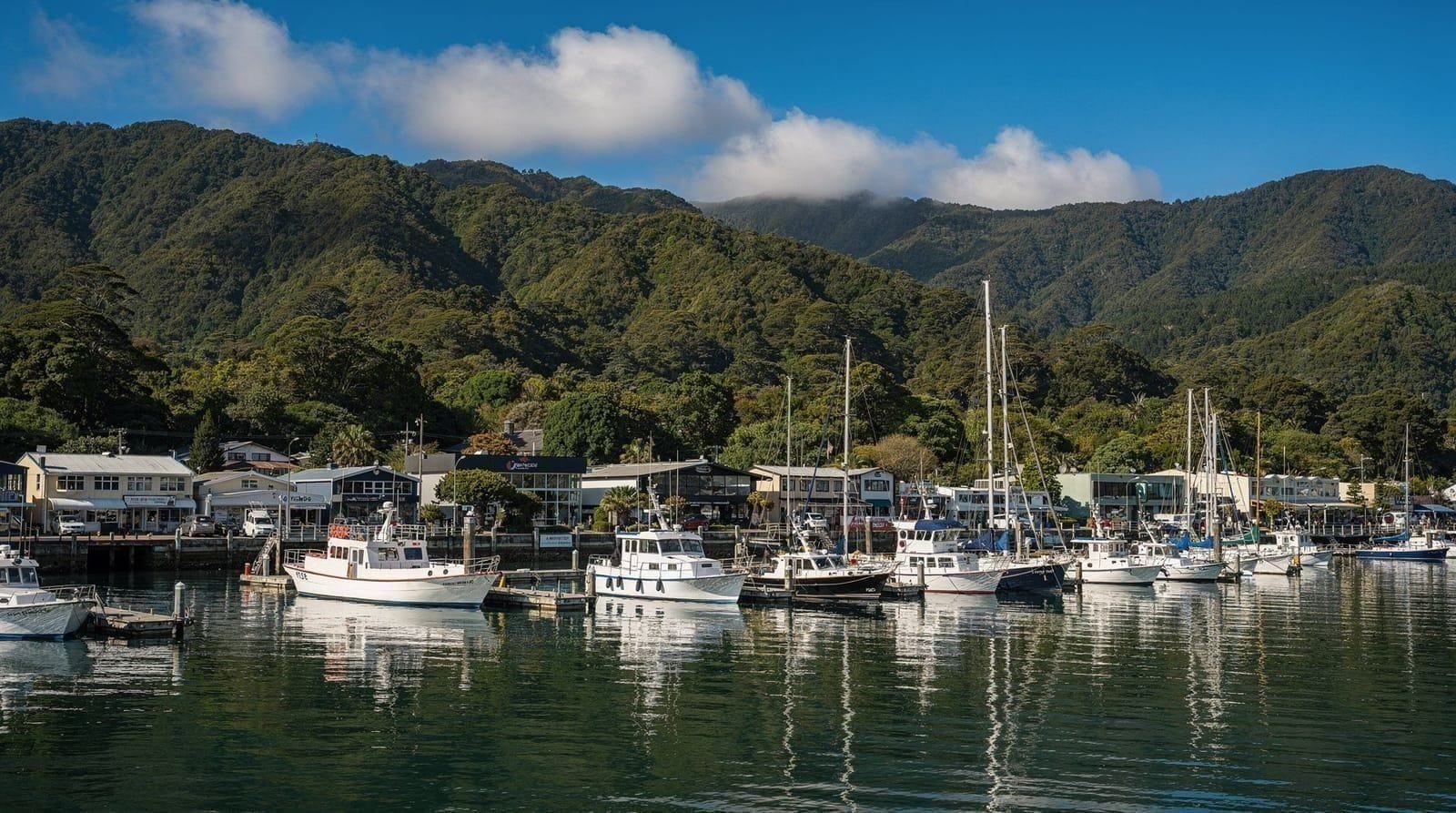
If your goal is simply “see the Marlborough Sounds and set foot in the South Island,” a day trip does that honestly and well — the ferry crossing itself is the main event, with genuinely spectacular scenery through the Sounds section that’s worth the trip on its own even without much time on land. A short Picton waterfront walk, one winery tasting near town, and the return crossing make for a complete, satisfying day without needing a hotel booking. It’s the same category of trade-off we’re honest about with Kaikōura as a day trip — worth doing if the journey itself is part of the appeal, not ideal if you need to tick off a long list of specific sights.
What genuinely needs an overnight
Blenheim’s wine region — Marlborough’s flagship, producing the sauvignon blanc the country is best known for internationally — deserves more than the 2-3 hours a day trip realistically allows once you’ve subtracted transit and lunch, and it’s genuinely a disservice to the region’s scale to try to compress it into an afternoon squeezed between two ferry crossings. A proper Marlborough wine day, visiting four or five cellar doors at a reasonable pace, needs closer to a full day on its own, which only works with at least one night in Picton or Blenheim.
The wider Marlborough Sounds — kayaking, the Queen Charlotte Track, boat cruises to more remote lodges — similarly reward an overnight stay far more than a rushed same-day return, since several of the more scenic cruise routes alone run three to four hours before you’ve even reached a destination worth stopping at. Our Marlborough Sounds cruise guide and Blenheim and Marlborough wine country destination page both assume at least one night away, not a day trip.
Weather and seasonal timing
The Cook Strait crossing can get genuinely rough in strong wind, and Wellington’s wind is a real factor here — a same-day return leaves far less room to reschedule around a poor forecast than an overnight stay does, since missing your return sailing on a day trip means scrambling for a late alternative or an unplanned overnight rather than simply shifting a booked second day. Our piece on why Wellington is called the Windy City explains why this matters more here than on most ferry routes elsewhere. Autumn (March-May) tends to bring the calmest crossings alongside Marlborough’s own harvest season, making it the strongest overall window for either version of this trip, while winter crossings are more prone to delay and cancellation in poor weather.
Booking logistics for either option
If choosing the day-trip route, book your return sailing at the same time as your outbound one rather than assuming a same-day return slot will be available — Interislander and Bluebridge both sell individual sailings independently, and a popular return time can sell out even when the outbound crossing has plenty of space. For the overnight version, book accommodation in Picton or Blenheim before the ferry itself if your dates are fixed, since the region’s limited room stock (particularly during Marlborough’s own wine-tourism peak) sells out faster than ferry capacity does. Vehicle bookings, if you’re bringing a rental car across, need earlier lead time than foot-passenger tickets on both operators, worth factoring in if your plan involves self-driving around Marlborough rather than relying on organised tours.
Cost comparison
A day trip’s main cost is straightforward — the ferry itself — with foot-passenger fares running roughly NZ$55 return on Interislander, cheaper on Bluebridge, with the Interislander ferry crossing the more comfortable of the two options for a long single-day round trip. An overnight adds accommodation (NZ$100-180 for a mid-range Picton or Blenheim room) but unlocks a proper wine day via something like the full-day Marlborough wine tour , which needs the extra day to make financial and practical sense rather than being rushed into a half-day slot.
Over a two-day, one-night version of the trip, you’re looking at roughly NZ$250-350 all-in per person versus NZ$60-100 for a bare-bones day trip — a meaningful gap, but one that buys a genuinely different (and for wine specifically, much better) experience, and one that’s easy to justify if Marlborough wine is a genuine highlight of your wider trip rather than an optional extra.
The ferry crossing itself: part of either version of the trip
Whichever option you choose, the crossing itself deserves to be treated as the centrepiece of the trip rather than a transit inconvenience to get through as quickly as possible. The route through the Marlborough Sounds — sheltered, fjord-like waterways lined with forested hills — is genuinely one of New Zealand’s more scenic ferry routes, distinct from the open-ocean stretch across Cook Strait itself that bookends the Sounds section on both approaches. Booking a daytime sailing rather than an overnight one is worth the trade-off even if it costs slightly more, since the overnight crossings run largely in darkness and miss the Sounds scenery entirely — fine if your priority is simply getting to the South Island efficiently, a real loss if the crossing itself is part of why you’re doing this trip. Both operators publish daytime and overnight sailing options on the same route, so it’s a straightforward choice at the booking stage rather than something you discover after the fact.
Side-by-side: which one actually suits you
| Factor | Day trip | Overnight (1+ nights) |
|---|---|---|
| Time on the ground | 3–4 hours | Full day or more |
| Wine touring | One cellar door, rushed | 4–5 cellar doors, unhurried |
| Sounds cruises/kayaking | Not realistic | Fits comfortably |
| Weather flexibility | Low — missed sailing is a real problem | High — can shift plans a day |
| Total cost per person | Roughly NZD 60–100 | Roughly NZD 250–350 |
| Best suited to | A taste of Picton, tight schedules | Wine lovers, Sounds activities |
If Kaikōura is also on your list
Some visitors weigh a Marlborough day trip against a similar day trip further down the South Island to Kaikōura for whale watching — the two aren’t really comparable in effort, since Kaikōura sits well beyond Picton and turns a long day trip into an extremely long one. Our Kaikōura as a day trip reality check and Kaikōura whale watching guide cover that specific trade-off if both destinations are competing for the same limited days on your itinerary.
What locals and repeat visitors actually choose
Wellington locals who make this crossing regularly for weekend trips tend to split roughly along the same line as the advice above: a day trip for a specific, narrow purpose (visiting family in Picton, a specific one-off event), an overnight or longer stay whenever wine, the Sounds, or Marlborough more broadly is the actual point of the trip rather than an incidental add-on to something else. It’s rare to hear a repeat visitor recommend cramming a serious Marlborough wine day into a same-day return once they’ve experienced how much more relaxed the overnight version feels — the rushed pace of a single-day round trip tends to be a first-timer’s mistake rather than a considered choice made with full knowledge of the alternative.
Our honest recommendation
If Marlborough wine country is a genuine priority rather than a box to tick on a broader New Zealand trip, build in at least one night — our Wellington + Marlborough wine in 4 days itinerary shows how this fits into a wider South Island add-on without derailing a Wellington-based trip. If you’re tight on time and mainly want the ferry crossing and a taste of Picton itself, a day trip is a legitimate, honest way to do that without over-committing days you don’t have on a wider New Zealand trip that already has plenty of other priorities competing for the same limited time. Our interislander vs Bluebridge comparison and Wellington + South Island in a week itinerary both help decide which version of this trip actually matches your available time.
Frequently asked questions about a Marlborough day trip vs overnight
Is a Marlborough day trip from Wellington actually worth it?
Yes, for a specific, narrower purpose — a taste of Picton and the scenic Cook Strait crossing itself — but it’s not enough time to properly cover Marlborough’s wine region, which needs at least one overnight to do justice.
What happens if I miss my return ferry on a day trip?
You’ll need to book the next available sailing, which may be later that day or the next morning depending on capacity — this is the single biggest risk of a day-trip plan, and it’s why building in a little schedule buffer or choosing autumn’s calmer weather window matters more here than on a typical day trip.