Why is Wellington called the Windy City?
It’s not a joke or an exaggeration
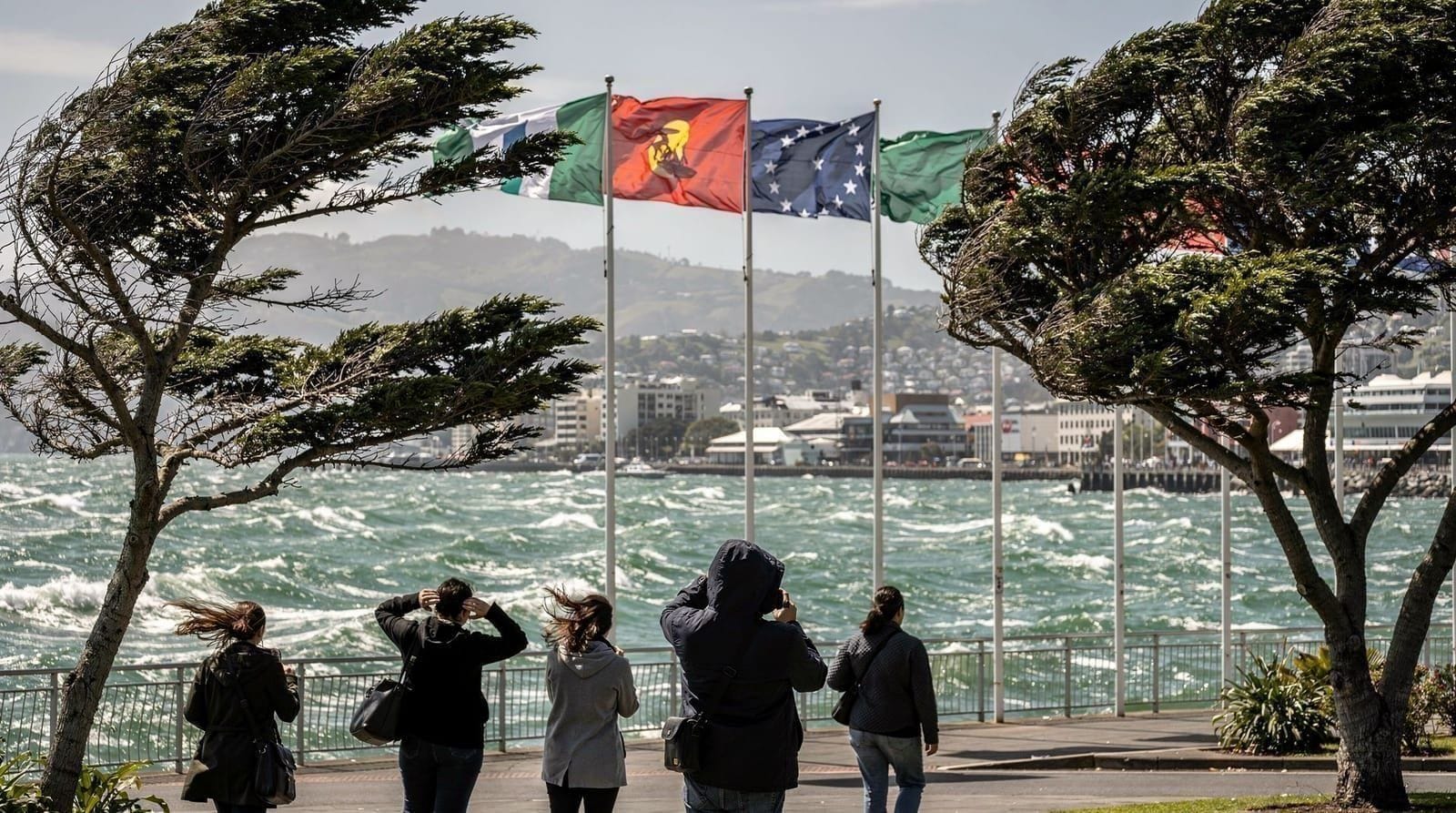
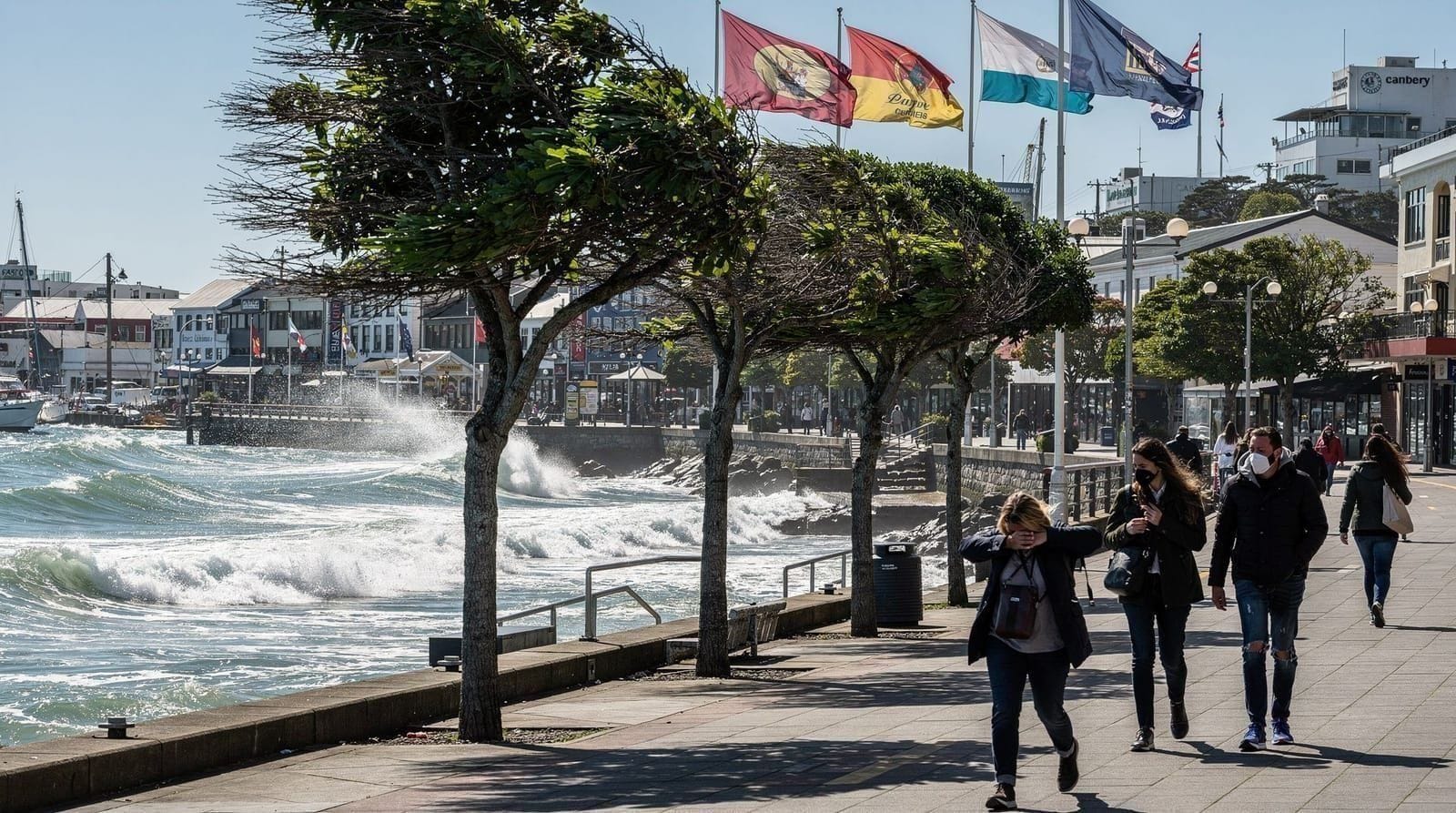
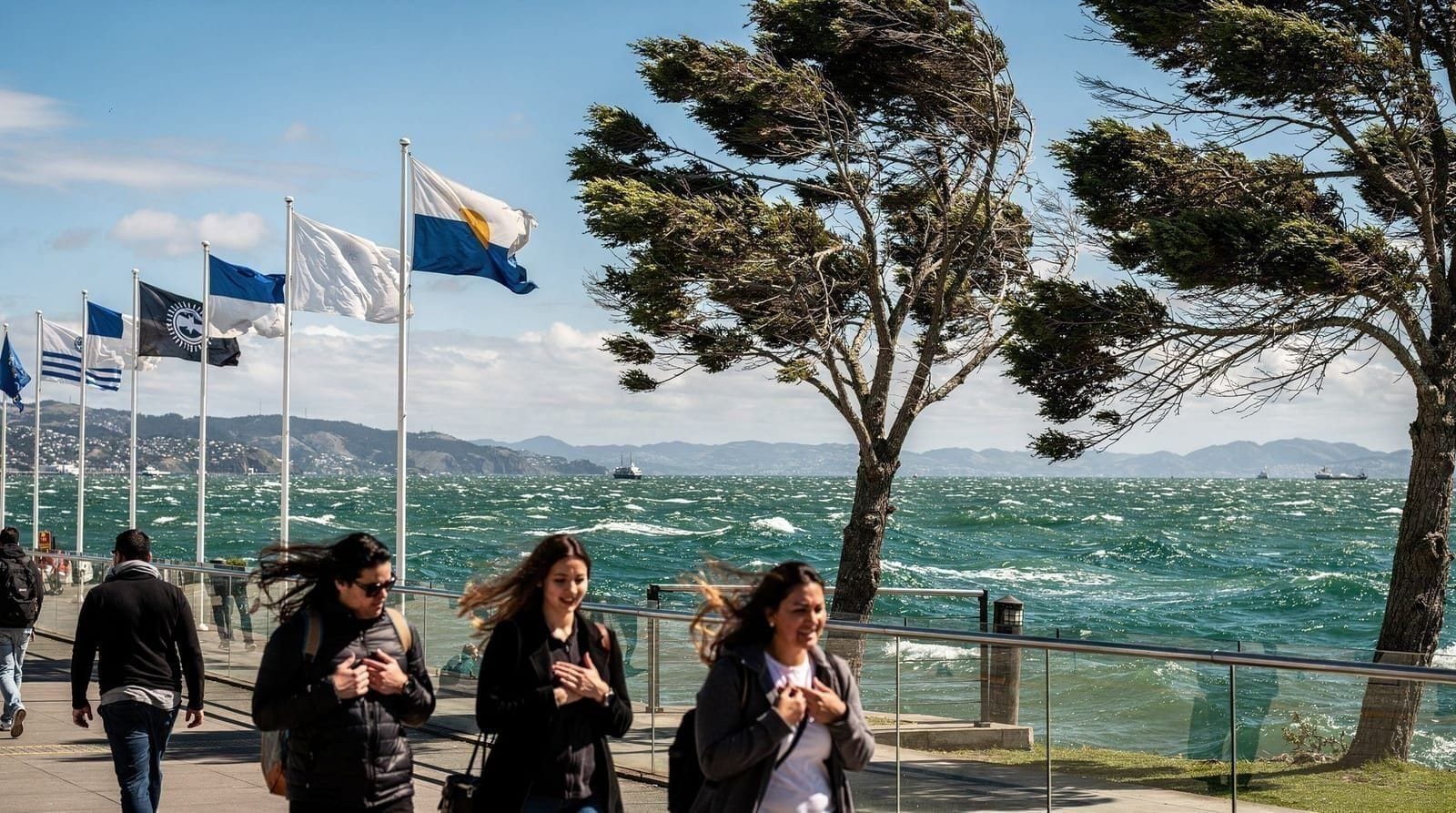
Wellington’s “Windy City” nickname gets thrown around often enough that visitors sometimes assume it’s a mild local in-joke, like Seattle’s rain reputation. It isn’t. Wellington regularly ranks among the windiest cities on earth by average wind speed, and the reputation is built on genuine, measurable geography rather than a marketing line — the city sits directly in the path of a natural wind tunnel that few other capital cities have to contend with. Locals rarely mention it with any real irritation; it’s simply treated as a known feature of living here, on the same level as knowing which bus route runs late or which cafe does the best flat white, rather than something worth complaining about on a daily basis.
| Average wind speed | Around 27 km/h |
| Gale-force days/year | One of the highest counts of any capital city globally |
| Windiest season | Spring (September-November) |
| Calmest season | Autumn (March-May) |
| Cause | Cook Strait’s wind-tunnel effect between two large landmasses |
Cook Strait: the geography that causes it
The core cause is Cook Strait, the 22 km-wide channel separating New Zealand’s North and South Islands, which sits immediately south and west of Wellington. Prevailing westerly winds sweeping across the Tasman Sea and the South Island get funnelled and compressed as they pass through this relatively narrow gap between two large landmasses, accelerating in the same way air speeds up moving through a narrow gap in any wind-tunnel effect.
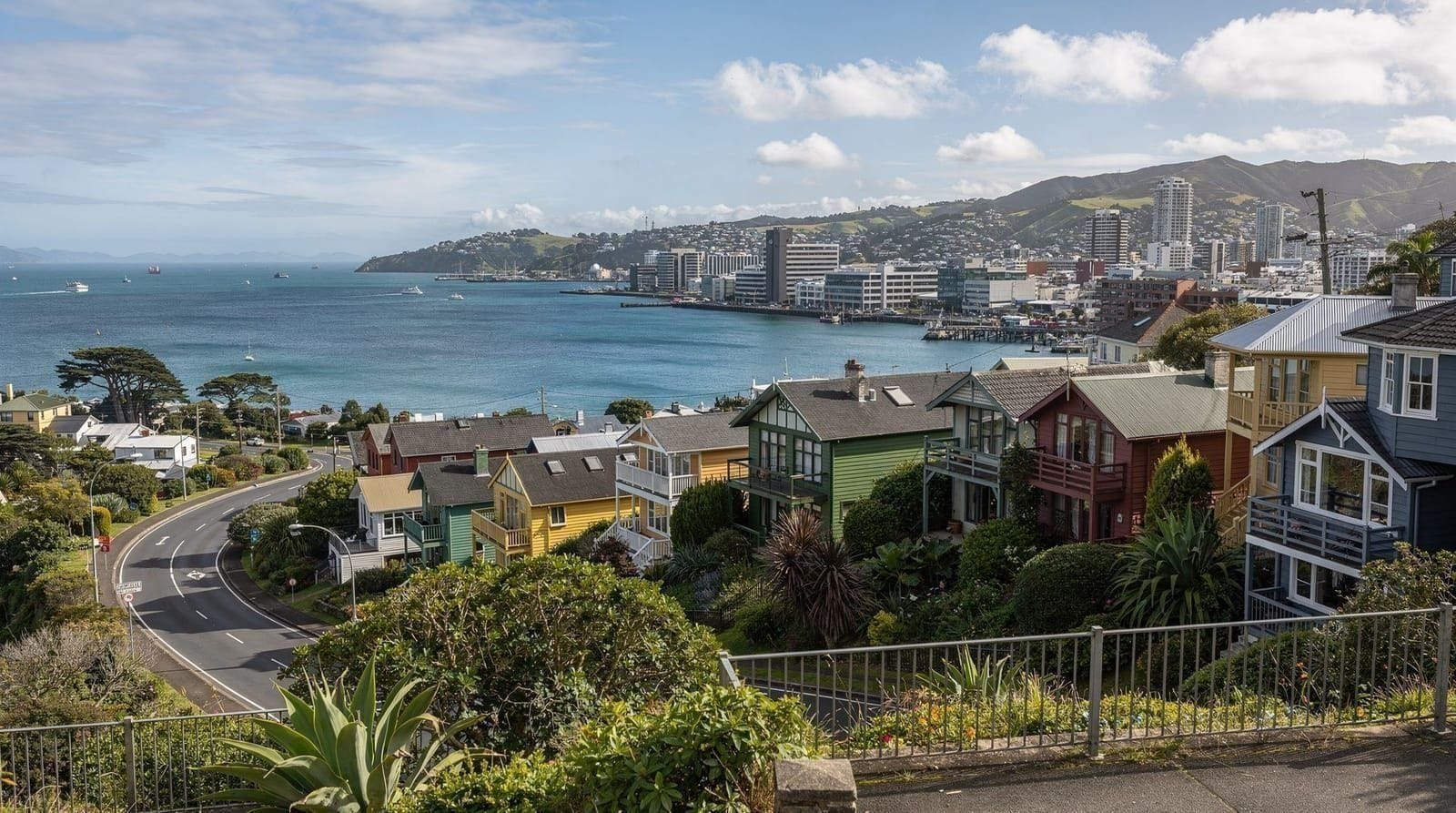
Wellington sits right at the northern mouth of that strait, on a harbour surrounded by hills that further channel the wind through specific corridors — the airport runway and the CBD’s main north-south streets both happen to align with the direction the wind is funnelled, which is part of why gusts feel stronger in those exact spots than elsewhere in the city. The two dominant wind directions locals talk about are the “southerly,” a cold blast straight up from the Cook Strait and, ultimately, the Southern Ocean beyond it, and the “northerly,” a warmer, drier wind that tends to build through a summer afternoon. Each behaves differently enough that Wellingtonians will often describe a day’s plans around which one is forecast rather than treating “windy” as a single undifferentiated condition.
The numbers behind the reputation
Wellington’s average wind speed sits around 27 km/h, and the city records winds over gale force (63 km/h and above) on a substantial number of days each year — one of the highest counts of any capital city globally. It’s genuinely stronger and more constant than most visitors expect from photos or general trip research, and it’s not confined to a single “windy season” — while spring (September-November) and the shoulder months tend to bring the sharpest gusts, some wind is a near-daily feature of the city rather than an occasional weather event.
How it compares to other cities with a wind reputation
Chicago’s own “Windy City” nickname is, famously, mostly about 19th-century political bluster rather than actual meteorology — Chicago’s average wind speed is unremarkable by international standards. Wellington’s case is the opposite: it’s one of the rare cities where the nickname is a literal, measured description rather than a folk name or marketing device, and international meteorological comparisons regularly place it among the top handful of windiest cities on the planet by average sustained speed, alongside places like Punta Arenas in Chile and Wellington’s own near-neighbour, the Cook Strait itself. Auckland, roughly 500 km north, doesn’t experience anything close to the same wind exposure despite sharing the same general climate zone and hemisphere, which is the clearest evidence that Wellington’s wind is a function of its specific harbour-and-strait geography rather than New Zealand weather broadly.
Why it matters more here than elsewhere
The wind doesn’t just make for a blustery walk — it shapes practical decisions in a way milder cities don’t require. Wellington Airport’s short runway, hemmed in by hills and exposed to crosswinds, has a higher rate of weather-related delays and diversions than most New Zealand airports, worth building buffer time around if you have a tight onward connection. The Cook Strait ferry crossing to Picton can get genuinely rough in high wind, and Interislander and Bluebridge both occasionally delay or cancel sailings in severe conditions — our Cook Strait ferry tips piece covers how to plan around this. Outdoor spots exposed to the harbour or open water — Oriental Bay’s beachfront, the Mount Victoria lookout, the waterfront promenade — feel the wind hardest, while inland, hill-sheltered spots like parts of the Botanic Garden or Cuba Street’s narrower blocks are noticeably calmer even on a blustery day.
How the city itself has adapted
Wellington’s building codes and urban design account for the wind more explicitly than most cities need to — awnings over CBD footpaths are near-universal along the main shopping streets specifically to shelter pedestrians, and several of the more exposed pedestrian crossings and plazas have been redesigned over the years after wind-tunnel effects between tall buildings made them genuinely unpleasant or unsafe to cross in a strong southerly. The waterfront promenade’s design, with strategically placed buildings and landscaping intended to break up the wind’s path along the harbour edge, is a direct response to how exposed that stretch would otherwise be. None of this eliminates the wind, but it’s a reminder that the city has been engineering around this specific challenge for well over a century rather than treating it as a recent inconvenience.
How locals actually deal with it
Wellingtonians don’t fight the wind so much as plan loosely around it — checking which day of a multi-day forecast looks calmer before locking in an outdoor activity like Zealandia’s trails or a harbour walk, layering rather than relying on one warm jacket, and treating a “occasionally gusty” forecast as entirely normal rather than a reason to change plans. Umbrellas are a lost cause here more often than not; a proper windproof (not just water-resistant) jacket does more work than rain gear alone. Our wind survival guide and packing list for windy Wellington go into the practical side of this in more detail.
Where the wind is worst, and where to escape it
If a particular activity or viewpoint matters to your itinerary, it’s worth knowing which spots take the wind hardest. Oriental Bay and the open harbourfront take the brunt of any southerly, as does the Mount Victoria lookout — both spectacular on a calm day and genuinely hard to stand still on during a strong blow. The airport and the direct approach roads share the same exposure, which is part of why the crosswind reputation follows the runway specifically. On the other side of the ledger, Wellington Botanic Garden’s tree-covered lower paths, the narrower blocks of Cuba Street, and most of the CBD’s awning-covered footpaths stay comfortably walkable even on the city’s blustier days, which is worth remembering if you’d rather reroute around a bad-wind forecast than power through it.
Is there a calmer season to visit?
Spring (September-November) tends to bring the sharpest, most frequent gusts, driven by the seasonal pressure patterns that intensify the Cook Strait funnel at that time of year, while autumn (March-May) is generally the calmest stretch alongside being the mildest and driest — one more reason our best time to visit Wellington guide consistently points to that window as the sweet spot. Summer (December-February) sits in between: warm and mostly dry, but with its own pattern of afternoon nor’westerlies that can pick up through the day even on an otherwise clear morning. Winter’s wind tends to arrive alongside rain rather than on its own, which is part of why a wet winter day here feels rougher than the same rainfall would elsewhere — see our Wellington in winter guide for what that combination is actually like to experience.
Does it ruin a trip?
No — and this is worth being clear about, because “Windy City” can sound worse in the abstract than it is in practice. Most days the wind is a background feature rather than a trip-altering event: noticeable, sometimes genuinely strong enough to make an umbrella pointless, but rarely bad enough to keep you indoors the way heavy sustained rain would. It adds a small amount of packing and planning overhead — pick windproof layers, have a backup plan for very exposed viewpoints, build slack into ferry and flight connections — but it doesn’t undermine the city’s other strengths, and locals will tell you the wind is part of what makes Wellington’s harbour setting as dramatic as it is.
Wind by season, at a glance
| Season | Wind character | What it means for a visit |
|---|---|---|
| Spring (Sep-Nov) | Sharpest, most frequent gusts | Build slack around exposed viewpoints and ferry crossings |
| Summer (Dec-Feb) | Warm, with afternoon nor’westerlies | Mornings often calmer than afternoons |
| Autumn (Mar-May) | Calmest and mildest overall | Best window if wind is a real concern |
| Winter (Jun-Aug) | Wind arrives alongside rain | Plan indoor fallbacks; see our rainy-day guide |
Does the time of day make a difference?
Mornings are generally calmer than afternoons for much of the year, particularly in summer when the nor’westerly tends to build through the day rather than starting strong — a genuine reason to front-load exposed outdoor plans like the Mount Victoria lookout or a harbour walk earlier rather than later if the forecast shows an afternoon pickup. It’s not a hard rule (a southerly can arrive at any hour), but checking an hourly rather than just a daily forecast is worth the extra minute if a specific viewpoint or activity matters to your day.
For a closer look at what “windy” actually feels like day to day, our piece on how windy Wellington really is breaks down the lived experience rather than just the statistics, and if a rainy or wind-heavy day derails your plans, our guide to what to do in Wellington when it rains covers the indoor fallback options.
Frequently asked questions about Wellington’s wind
Is Wellington windier than Chicago, the original “Windy City”?
Yes, by actual meteorology — Chicago’s nickname is mostly 19th-century political bluster with an unremarkable average wind speed, while Wellington’s reputation is a literal, measured description that regularly places it among the world’s windiest capital cities.
What’s the best season to visit Wellington if wind bothers you?
Autumn (March-May) is generally the calmest and mildest stretch; spring (September-November) brings the sharpest, most frequent gusts, so it’s the season to avoid if wind is a real concern.