What to do in Wellington when it rains
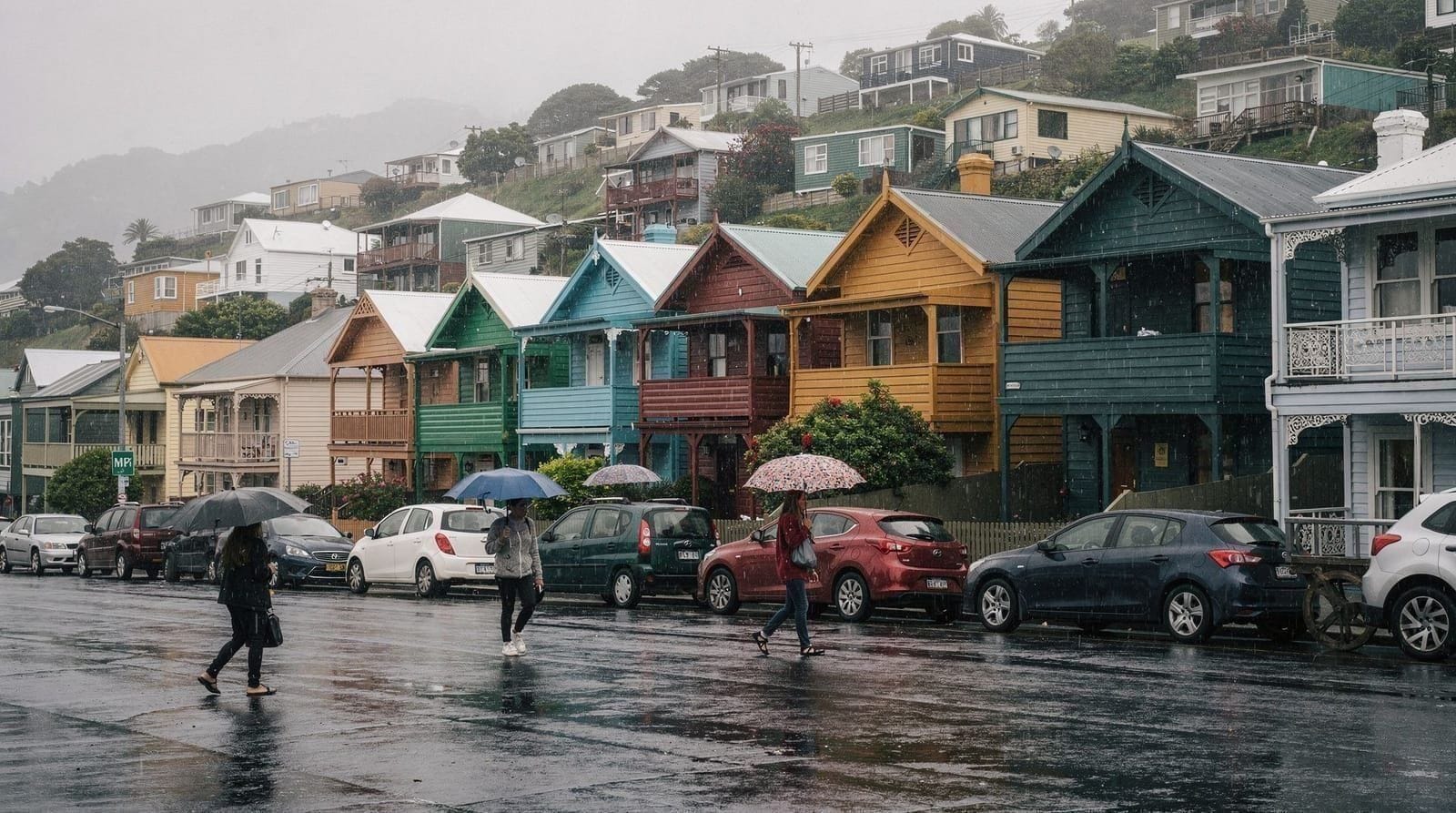
Rain here is a Tuesday, not a crisis
Wellington gets roughly 130 rain days a year, more in winter (June-August) than anywhere else in the North Island’s main centres, and the weather can turn from bright to sideways-rain in the time it takes to walk from the waterfront to Cuba Street. Locals don’t treat a wet forecast as a reason to cancel plans, and neither should you — the city has enough good indoor options, packed close enough together, that a rainy day in Wellington can still be a full day rather than a write-off. The trick is knowing which of the outdoor-leaning attractions (Zealandia’s trails, the Mount Victoria lookout, the harbour walk) to swap out, and which indoor options are actually worth the time rather than just a way to stay dry.
| Rain days/year | Roughly 130, heaviest June-August |
| Best free fallback | Te Papa (donation only), 10am-6pm daily |
| Best paid fallback | Weta Workshop, NZ$50-85 |
| Fully rain-proof zone | Lambton Quay arcades to the waterfront |
| Worst-hit outdoor spots | Mount Victoria lookout, Oriental Bay, harbour walk |
Te Papa: the obvious first move, and a genuinely good one
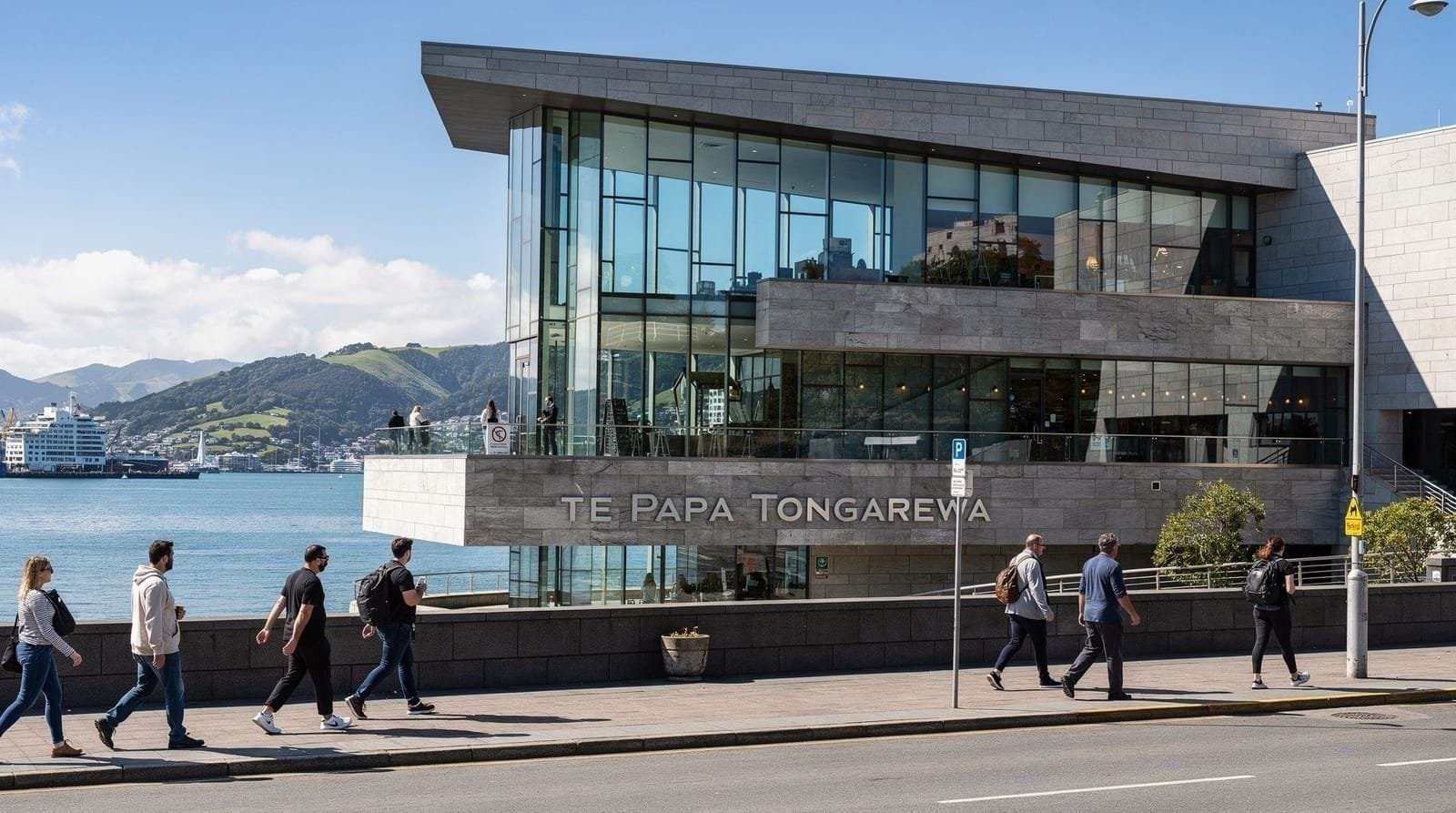
Te Papa Tongarewa, the national museum on Cable Street, is free to enter and open 10am-6pm daily, which makes it the default rainy-day plan for a reason — it’s not a consolation prize. The museum runs to six floors covering natural history, Māori taonga, an earthquake simulator (“Awesome Forces”) that’s a genuinely useful primer on why the ground here moves the way it does, and rotating art and pop-culture exhibitions. Budget at least two to three hours if you want to see more than the ground floor, longer if you’re doing it with kids who gravitate to the interactive natural-history sections. It’s also one of the only major attractions in the city with zero weather dependency at all, which is worth remembering if the forecast for your whole trip looks grim rather than just one afternoon.
Our Te Papa complete guide covers the floor-by-floor layout in more depth, and if you’d rather have context from a guide than work through the galleries solo, the guided Te Papa tour covers the highlights in about 90 minutes.
Weta Workshop: indoors, on a schedule, and rain-proof
Weta Workshop in Miramar runs behind-the-scenes tours through prop, costume and creature-design displays from Lord of the Rings, The Hobbit and other productions, priced roughly NZ$50-85 depending on tour length, open 8:45am-6pm most of the year (closed only on Christmas Day). It’s entirely indoors, which makes it one of the few paid attractions in the city that a downpour genuinely doesn’t affect. It’s a 20-25 minute bus or taxi ride from the CBD, so it’s worth combining with something else in Miramar rather than treating it as a standalone half-day. If film heritage isn’t your main interest, it’s a niche pick rather than a must — our Weta Workshop guide is honest about who it suits and who should skip it, and the Weta Workshop guided tour ticket is the standard way to book ahead, which matters more on a rainy day when everyone else has had the same idea.
Museums and galleries beyond Te Papa
The City Gallery on Civic Square runs contemporary art exhibitions and is free or low-cost depending on the show, and it’s a short, fully covered walk from Te Papa via the waterfront, making the two easy to combine into one wet-weather afternoon — our City Gallery Wellington guide covers what’s typically on. The Museum of Wellington, in the old Bond Store building on the waterfront, is smaller and more focused — maritime and city history rather than a national-scale collection — and works well as a 45-minute add-on rather than a destination in its own right, and pairs naturally with our Wellington maritime heritage guide if the harbour’s history interests you beyond the exhibits themselves.
Katherine Mansfield House, the writer’s childhood home in Thorndon, is a modest but genuine indoor option if you want something quieter and less crowded than the big attractions, and it rarely has queues even on a bad-weather Saturday. New Zealand’s Parliament and the distinctive Beehive building also run free guided tours most days, entirely indoors, and are an underrated wet-day option that most visitors overlook in favour of the bigger-name museums — see our NZ Parliament and the Beehive tour guide for how to book a slot.
Shopping and covered arcades
If you’d rather browse than queue for another exhibition, Wellington’s CBD has enough covered retail to fill a couple of rainy hours without getting wet at all. Lambton Quay and the adjoining arcades run almost entirely under cover between shopfronts, and the stretch from the Cable Car’s base station down to the waterfront is walkable via awnings and arcades for most of its length if you time your crossings between showers. Cuba Street’s mix of vintage stores, bookshops and design-led boutiques rewards a slow browse on a wet afternoon in a way it doesn’t on a sunny one, when most visitors are outside instead — our Cuba Street guide covers the specific shops worth a look. It’s a lower-key option than the ticketed attractions above, but it fills time productively without adding to your day’s budget, which matters if you’re also absorbing the cost of a changed outdoor plan elsewhere in your itinerary.
Cafes as shelter, done properly
Wellington’s cafe density is one of its real strengths, and a wet day is the best possible excuse to lean into it rather than treat coffee stops as an interruption to sightseeing. Cuba Street and the surrounding Te Aro grid have the highest concentration of independent cafes in the city, most with enough seating to comfortably sit out a heavy shower over a flat white (NZ$5.50-6.50) and something from the counter. The advantage over the touristy waterfront cafes — which our harbourside dining guide and the Cuba Street food guide both cover in more detail — is that Cuba Street’s cafes are built for all-day use by locals working or reading, not just quick tourist stops, so nobody minds if you camp out for an hour while the rain passes.
Zealandia’s visitor centre, if the trails are out
Zealandia’s 32 km of forest trails are obviously less appealing in heavy rain, but the ecosanctuary’s visitor centre and the covered aviary sections still run, and the night tours (Zealandia after dark, when the rain often matters less because you’re moving between covered viewing points with a guide and headlamp) are a reasonable wet-weather substitute for the full day walk. It’s not the same experience as a dry-day visit, so if Zealandia is a priority rather than a maybe, it’s worth checking the week’s forecast and moving it to a clearer day if your itinerary has any flexibility at all.
If your whole trip looks wet: winter timing
A single wet day is easy to route around, but if you’re travelling in Wellington’s winter (June-August), when the city sees its heaviest and most persistent rain alongside its strongest winds, it’s worth building more slack into your itinerary from the outset rather than treating every day as a dry-day plan with a rain contingency bolted on. Our Wellington in winter guide is honest about what that season is actually like — genuinely quieter and cheaper, but with a real chance of several consecutive wet days rather than a single passing shower, which changes how you should sequence indoor and outdoor plans across a multi-day stay.
What doesn’t hold up in the rain
Be honest with yourself about a few things: the Mount Victoria lookout and the harbour walk are genuinely diminished in heavy rain and wind (Wellington’s wind makes wet weather feel worse than the same rain would elsewhere), the cable car’s views from the top are pointless in low cloud even though the ride itself still runs, and Days Bay or Kāpiti Island day trips lose most of their appeal when visibility drops. If the forecast for a booked outdoor activity looks bad, it’s worth checking cancellation policies before you travel rather than after — most tour operators have some flexibility, but not all. This is worth planning around rather than discovering the morning of, particularly for anything involving a boat or a scenic flight, where wind rather than rain is usually the actual reason for a cancellation.
A practical rainy-day itinerary
A workable wet-day sequence: Te Papa in the morning (free, 2-3 hours), lunch and a long coffee stop on Cuba Street to wait out the worst of any afternoon system, then either Weta Workshop or the City Gallery depending on how much time is left, finishing with an early dinner somewhere covered rather than trying to salvage an evening walk. This is close to the structure in our rainy-day things-to-do guide, and if you’re travelling with kids, the rainy-day Wellington with kids angle adjusts the pacing for shorter attention spans.
When rain is most likely, month by month
Rain isn’t evenly spread across the year, which matters if you’re choosing dates rather than reacting to a forecast mid-trip:
| Season | Rain pattern | Planning note |
|---|---|---|
| Summer (Dec-Feb) | Driest, occasional afternoon showers | Lowest chance of a fully wet day |
| Autumn (Mar-May) | Mild, moderate rain | Best overall weather-to-crowd ratio |
| Winter (Jun-Aug) | Heaviest, most persistent rain | Build slack for consecutive wet days |
| Spring (Sep-Nov) | Wind-driven showers, changeable | Rain often shorter but more frequent |
Rainy days if you already have a rental car
A rental car doesn’t buy you much protection from a rainy Wellington day inside the CBD — most of the indoor options above are within easy walking distance of each other — but it does open up covered regional options if the city centre feels done, like a drive to Zealandia’s visitor centre or a Hutt Valley museum stop, without waiting on Metlink schedules between stops. Parking downtown adds cost on top of the rental itself, so weigh that against how much of your rainy day is actually spent in the CBD core versus further out.
Wellington’s compactness is the thing that saves a wet day here — everything above is within a 20-minute bus ride of the CBD, so a bad-weather day rarely means a wasted one, just a rearranged one. For the bigger picture on why the city gets weather like this in the first place, our piece on why Wellington is called the Windy City covers the geography behind it.
Frequently asked questions about rainy days in Wellington
Is Te Papa really enough to fill a whole rainy day?
Yes, comfortably — budget at least two to three hours for the main galleries, longer with kids, and it’s free, so pairing it with a covered walk to the City Gallery or a long Cuba Street coffee stop easily fills a full day.
Does rain affect the Cook Strait ferry or Wellington Cable Car?
The cable car keeps running in rain, though the harbour view from the top is pointless in low cloud; the Cook Strait ferry is more affected by wind than rain specifically, and can delay or cancel sailings in severe conditions — see our Cook Strait ferry tips piece.