Abel Tasman day-trip guide
Abel Tasman National Park: Day Trip with 1.5-Hour Cruise
Can you visit Abel Tasman National Park as a day trip?
Yes, but only realistically from Nelson, about an hour's drive away — a day cruise combined with a short beach walk covers the highlights in around 6-7 hours. From Wellington it requires the Cook Strait ferry plus the Nelson drive first, so it works best as part of a South Island stay rather than a single day trip from the capital.
New Zealand’s smallest national park, and its most photogenic coastline
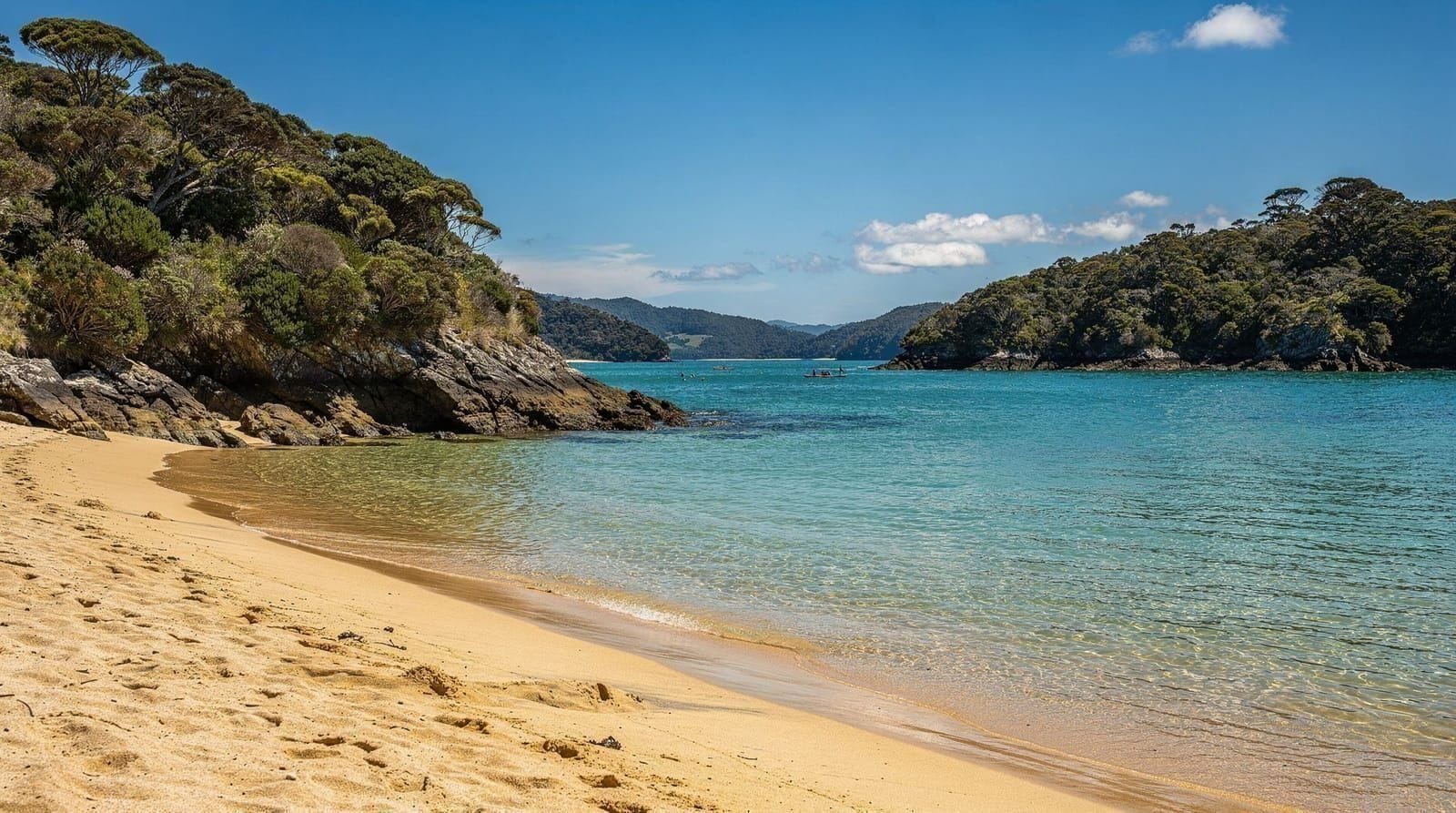
Abel Tasman National Park sits at the top of the South Island, a narrow strip of coastline defined by golden sand beaches, granite headlands and unusually clear, turquoise-tinted water — a look that surprises a lot of first-time visitors expecting more of New Zealand’s typical grey-green coastal scenery. It’s the country’s smallest national park by area but arguably its most postcard-famous stretch of coast, and it’s reached from the Nelson-Tasman region rather than directly from Wellington, which matters for how you plan a visit around it.
For Wellington-based travellers, Abel Tasman isn’t a same-day round trip in the way a Martinborough wine day is — it sits on the far side of both the Cook Strait ferry crossing and a further drive to Nelson or the park gateway towns, making it realistically a South Island add-on rather than a day trip from the capital itself.
| Where | Nelson-Tasman region, South Island (day trip from Nelson; multi-day add-on from Wellington) |
| Cost | Around NZD 100-150/adult half-day cruise; more for full-day or walking combos |
| Time needed | 6-7 hours from Nelson; a full extra day if coming via the Cook Strait ferry |
| Getting there | Ferry to Picton + drive to Nelson, or fly Wellington-Nelson |
| Best time | December-March for warm water; October-November or April for fewer crowds |
The park’s namesake, briefly
Abel Tasman National Park takes its name from the Dutch explorer Abel Janszoon Tasman, the first European to sight New Zealand in 1642, though Tasman himself never landed here — his brief, tense encounter with local Māori further north ended in violence and he sailed on without setting foot ashore anywhere in the country. The park itself wasn’t established until 1942, three hundred years after Tasman’s voyage, created specifically to protect the coastline’s distinctive granite formations and forest from further development after decades of small-scale farming and logging had already altered parts of the original landscape. That relatively late protection is part of why some sections of the park’s forest are regenerating bush rather than untouched original growth — worth knowing if the “pristine wilderness” framing in some tourism material feels a little overstated in places.
Getting there from Wellington
The standard route is the Cook Strait ferry from Wellington to Picton (roughly 3.5 hours on Interislander or Bluebridge), followed by a drive of about two hours west to Nelson, or continuing further to Kaiteriteri or Marahau, the two main boat-departure towns for Abel Tasman. Flying from Wellington to Nelson cuts the travel time substantially if your itinerary allows it, landing you within about an hour’s drive of the park’s boat departure points rather than a half-day of ferry-plus-driving.
Once you’re based in Nelson itself, Abel Tasman becomes a genuine day trip — about an hour’s drive to Kaiteriteri, followed by a half-day or full-day boat trip along the coastline. This is the realistic version of an “Abel Tasman day trip” that most operators and this guide refer to: a day trip from Nelson, not from Wellington.
Cruise, water taxi, or walking — how to actually see it
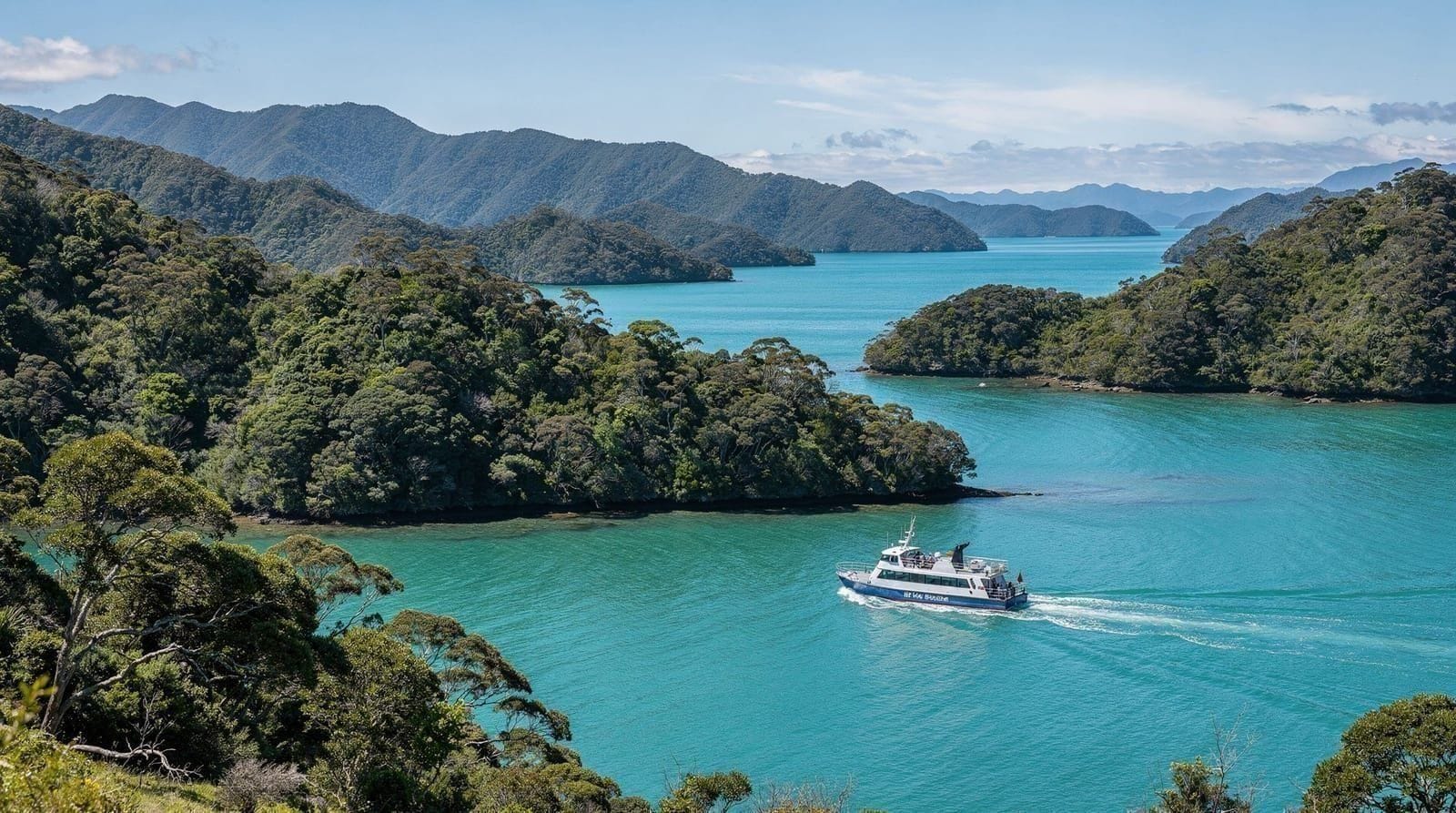
The park’s beaches and bays aren’t linked by road, so seeing them means either walking the Abel Tasman Coast Track (one of New Zealand’s Great Walks, typically 3-5 days end to end) or getting there by boat. For a single day, the Abel Tasman day trip with a 1.5-hour cruise is the most straightforward option — a scenic cruise along the coastline taking in the granite formations, split apple rock and several of the park’s best-known bays, with time built in for a swim or beach stop depending on the specific itinerary.
For a version that adds a walking element without committing to the full multi-day track, the sea shuttle cruise and walking tour combo drops you at one end of a well-formed section of the coast track — commonly between Anchorage and Torrent Bay — for a 2-4 hour walk through native bush and along beach frontage, before a boat picks you up further along the coast. This gives a genuinely good sense of the park on foot as well as from the water, without the logistics of hut bookings or a multi-day pack.
What the beaches are actually like
Anchorage and Torrent Bay, two of the most accessible and frequently visited bays, both feature the wide, pale-gold sand and shallow, clear water the park is known for — genuinely swimmable in the December-March window when water temperatures peak, noticeably cooler outside it. Split Apple Rock, a distinctive granite boulder split neatly in two just offshore near Kaiteriteri, is one of the more photographed single features along the route and worth watching for from the boat rather than a dedicated stop in most itineraries.
Further into the park, quieter bays like Bark Bay and Awaroa see considerably fewer day-trippers, since they sit further from the main departure towns and require either a longer boat trip or a substantial walk to reach — worth knowing if a crowded beach isn’t what you’re picturing.
The Abel Tasman Coast Track for those with more time
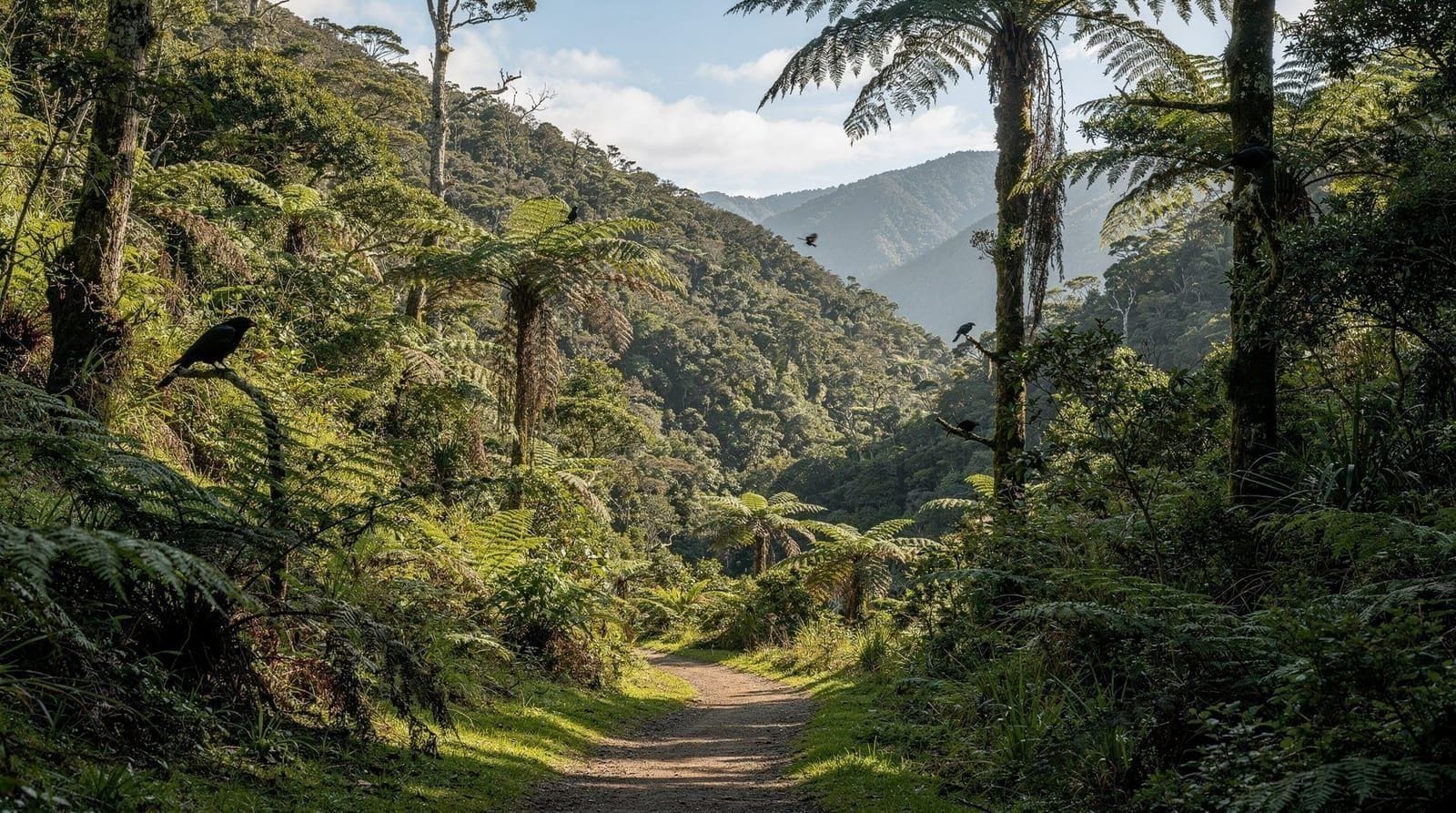
For trampers with three to five days to spare, the Abel Tasman Coast Track is one of New Zealand’s official Great Walks, running the length of the park’s coastline with a mix of Department of Conservation huts, campsites and privately run lodges along the way. It’s rated among the easier Great Walks in terms of terrain, with well-formed track and relatively gentle elevation change compared with alpine options like the Milford or Routeburn tracks, which makes it a genuinely accessible multi-day option for walkers without serious mountaineering experience. Tidal crossings at a couple of points along the route need timing against tide tables, since some estuary sections are only safely crossable within a window either side of low tide — a detail DOC’s track notes cover in full, and one water taxi operators are used to working around for day-trippers as well.
Most day-trippers won’t attempt the full track, but combining a short section of it — as the sea shuttle and walking combo does — gives a genuine, if abbreviated, taste of what the multi-day version offers, without the logistics of hut bookings, tide-dependent scheduling across multiple days, or carrying a full pack.
Wildlife and what to look out for
Little blue penguins nest along parts of the coastline, and dusky or common dolphins occasionally join boats in the outer waters near the park’s northern end, though sightings aren’t guaranteed on any given trip. Weka, a flightless native bird, are commonly spotted around the beach campsites and picnic areas, and are notoriously bold around unattended food — keep bags zipped if you’re stopping for a beach lunch.
Nelson and Kaiteriteri: choosing a base
Most Abel Tasman boat trips depart from either Kaiteriteri or Marahau, two small coastal settlements about 15-20 minutes apart by road, both roughly an hour’s drive from Nelson itself. Kaiteriteri has the busier, more developed departure point with a wider range of operators and a genuinely pleasant golden-sand beach of its own worth a look if you have time before or after your boat trip; Marahau sits slightly closer to the park boundary and functions more as a functional gateway town than a destination in its own right.
Basing yourself in Nelson rather than staying overnight at either coastal town gives easier access to the wider Nelson-Tasman region’s wineries, craft breweries and arts scene on the days you’re not out on the water, and it’s the more practical base if your Abel Tasman visit is one part of a broader South Island stay, perhaps alongside a Marlborough Sounds cruise further east, rather than a dedicated multi-day park trip.
Practical costs and what a day actually runs
A standard half-day cruise typically runs somewhere in the NZD 100-150 range per adult, with full-day options and the combined sea-shuttle-and-walking tours generally landing higher, reflecting the longer time on the water and the added walking-guide element. Water taxi transfers for independent trampers wanting to walk a section without a guided tour cost less per leg but require more of your own planning around timing and pickup points. Factor in lunch, since most boat trips don’t include a meal — either bring your own for a beach stop, or budget for a café meal in Kaiteriteri or Marahau before or after the water.
Best time of year to go
December through March is peak season, bringing the warmest water and the most reliable dry weather, but also the busiest boats and the highest prices — book well ahead if travelling in this window. Shoulder season (October-November and April) trims the crowds substantially while still offering decent weather, and is generally the better-value time to visit if your schedule allows flexibility. Winter (June-August) sees noticeably fewer visitors and cooler water, though the coastal scenery and walking tracks remain genuinely pleasant on a clear day.
Honest take: is a day trip enough?
For a first taste of Abel Tasman, a single day cruise or cruise-and-walk combo genuinely does deliver the coastline’s highlights — the golden beaches, the clear water, a reasonable stretch of the coast track on foot. It won’t, however, give you the full character of the park the way spending a night or two at one of the beach lodges or campsites does, and if you’re already making the effort to cross the Cook Strait and drive out to Nelson-Tasman, it’s worth seriously considering an overnight stay to justify the travel involved rather than treating it as a rushed single-day stop squeezed into a broader South Island itinerary.
Pairing an Abel Tasman day with time in Nelson itself — its own wine region, arts scene and craft breweries — makes for a more balanced few days than treating the park as an isolated day-trip box to tick, and fits naturally into a broader nature and wildlife-focused itinerary that also covers Zealandia or Kāpiti Island back near Wellington, or a week-long Wellington-plus-South-Island trip for those covering more ground. A shorter walking or cruise day around the Queen Charlotte Track near Picton makes a reasonable comparison point if you’re deciding which South Island coastal walk to prioritise.
Fitting it around the ferry crossing
Because the Cook Strait ferry is the main bottleneck for Wellington-based travellers, it’s worth planning the Abel Tasman day around the crossing rather than the other way round. Booking an early morning Interislander or Bluebridge sailing gets you into Picton by late morning, leaving enough of the day to drive to Nelson and settle in before an Abel Tasman cruise the following morning — trying to cram the ferry, the Nelson drive and a same-day boat trip into one day is technically possible but leaves very little margin if the ferry runs late, which happens often enough in rough Cook Strait conditions to plan around rather than risk.
Comparing Abel Tasman with a Marlborough Sounds day
Travellers deciding between Abel Tasman and a Marlborough Sounds cruise from Picton are really choosing between two different coastal characters rather than one being definitively better. Abel Tasman’s golden beaches and clearer water suit travellers prioritising swimming and classic postcard scenery; the Sounds’ sheltered, forested waterways suit those more interested in wildlife-watching and a quieter, less beach-focused day on the water. Since the Sounds are reached directly from Picton without the extra drive to Nelson, they’re the more time-efficient choice if your Wellington-South-Island trip is short, while Abel Tasman rewards the extra travel if beaches are the priority.
Frequently asked questions about Abel Tasman day-trip guide
How do you get to Abel Tasman from Wellington?
Take the Cook Strait ferry (about 3.5 hours) from Wellington to Picton, then drive roughly 2 hours to Nelson or Kaiteriteri, the main gateway towns for Abel Tasman boat trips. Flying from Wellington to Nelson is the faster alternative if the ferry-and-drive combination is too much for your itinerary.What's the best way to see Abel Tasman in one day?
A day cruise from Kaiteriteri or Marahau covers the coastline's golden beaches and turquoise water by boat, typically with one or two stops for a short beach walk or swim. Combining a cruise leg with a walking leg — the sea shuttle and walking combo — gives a mix of both without needing to plan an independent multi-day tramp.Do you need to book Abel Tasman boat trips in advance?
Yes, especially in summer (December-February) when boats and water taxis run at capacity and popular sailings sell out days ahead. Shoulder-season visits (October-November, March-April) are more flexible for last-minute bookings.Is Abel Tasman good for swimming?
Yes — the park's beaches have some of the clearest, calmest water in New Zealand, and summer sea temperatures are comfortable for swimming, particularly in sheltered bays like Anchorage and Torrent Bay. Water stays noticeably cooler outside the December-March window.How does Abel Tasman compare to the Marlborough Sounds?
Abel Tasman has golden sand beaches and warmer, clearer water, while the Marlborough Sounds (accessed from Picton) offer more sheltered fjord-like waterways with less beach and more forested coastline. Both are reached via the Cook Strait ferry crossing from Wellington, just in different directions once you're on the South Island.Is Abel Tasman doable as part of a week-long Wellington trip?
Yes, if you build in the Cook Strait ferry crossing and Nelson drive as their own travel days rather than treating them as free time. A realistic version fits an Abel Tasman day alongside a night or two in Nelson within a week-long Wellington-plus-South-Island itinerary, rather than trying to squeeze it into a shorter Wellington-only stay.What should I pack for an Abel Tasman day trip?
Swimwear and a towel if you're hoping to swim, sturdy sandals or light walking shoes for any beach or track walking, sun protection (the exposed coastline gets strong summer sun with little shade on the water), and a light layer for the boat, since it's noticeably cooler once moving even on a warm day.
Top experiences
Bookable activities with verified prices and instant confirmation on GetYourGuide.