Film-fan LOTR itinerary (3 days)
Wellington: Lord of the Rings Filming Locations Tour
Wellington is where Middle-earth was actually made
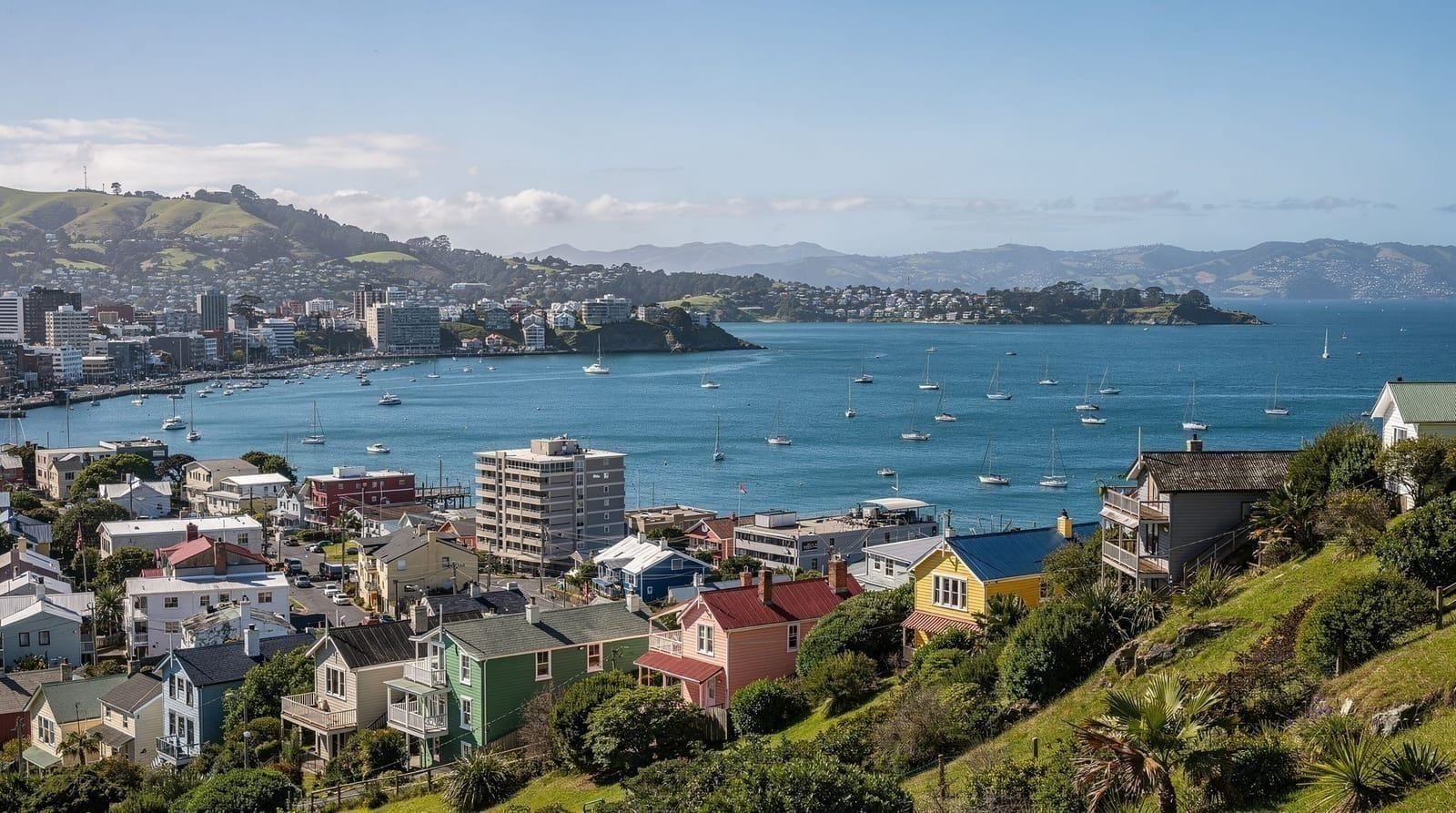
Auckland gets more general tourist traffic, but Wellington is where Peter Jackson’s Lord of the Rings trilogy, The Hobbit films and a long list of subsequent Weta Workshop and Weta FX productions were actually designed, built and shot. Weta Workshop and Stone Street Studios still operate out of Miramar today — as of mid-2026, Weta remains in active production on Andy Serkis’s Hunt for Gollum, with principal photography underway. For a genuine film-fan trip, three days is the right amount of time: one full day at Weta Workshop and Weta Cave, one day tracing filming locations around the city and the wider region, and a half-day exploring Miramar’s quieter, more residential film-industry streets before a slower final afternoon.
This itinerary assumes you already know your Lord of the Rings lore and are here specifically for the production history rather than picking it up as a side interest — if film heritage is just one of several things you want to see in Wellington, the lighter touch in Wellington in 3 days covers Weta Workshop in half a day instead of building an entire trip around it.
| Where | Miramar, Mount Victoria, Kaitoke Regional Park |
| Cost | Around NZ$1,080–1,690 for two, excluding flights |
| Time needed | 3 days; Kaitoke requires a car, taxi or included tour |
| Getting there | Wellington Airport (WLG), 20 minutes from the CBD |
| Best time | Book Weta Workshop’s earliest slot well ahead, any season |
Why three days specifically
A single day covers Weta Workshop and Weta Cave comfortably but leaves no room for the wider filming-locations story — Mount Victoria’s scouting history, Kaitoke’s Rivendell setting, the broader Miramar streetscape. Two days is workable if you’re willing to skip Kaitoke or compress the locations tour into a half-day. Three days gives each element proper room without turning the trip into a sprint between sites, and it leaves a genuine half-day of slack on the final afternoon for anything that ran long or anything you want to revisit — Weta Cave’s shop in particular rewards a second, less rushed look once you understand what you’re seeing after the full workshop tour.
Setting expectations honestly
Wellington’s film-tourism offering is genuinely strong but narrower than some visitors expect. There’s no theme park, no walk-through Hobbiton-style set (that’s near Matamata, on the North Island but a long way from Wellington) — what Wellington offers is the production side: workshops, studios, a handful of location-scouted landscapes, and knowledgeable guides. If you’re expecting a immersive, built-for-tourists film experience on the scale of Hobbiton, temper that now; if you want to understand how the props, creatures and miniatures were actually built, Wellington delivers that better than anywhere else on Earth. See is Weta Workshop worth it for a calibrated take before you book.
Booking logistics worth sorting before you fly
Weta Workshop’s tour slots are genuinely capacity-limited and the earliest morning departures — the ones this itinerary recommends — sell out first, particularly in summer and around any anniversary or franchise-related publicity that spikes interest. Book as far ahead as your travel dates allow rather than assuming you can walk up. The filming-locations tour and Weta Cave’s specialised SFX session are less likely to sell out completely but still benefit from a few days’ notice, if only to guarantee your preferred time slot rather than whatever’s left. If you’re combining this with international travel, also confirm your NZeTA and International Visitor Levy are sorted well ahead — see NZeTA and IVL guide for Wellington visitors — since neither Weta Workshop nor any of the tours above substitute for the entry requirements every visitor needs regardless of itinerary theme.
Packing for a production-focused trip
Bring comfortable walking shoes for the Miramar streets and Mount Victoria’s uphill stretches, and a light rain layer regardless of season — Wellington’s weather turns quickly and neither Weta Workshop’s queue area nor most of the filming-locations tour’s outdoor stops offer much shelter. If Kaitoke is on the plan, sturdier footwear matters more there specifically, since the riverside forest paths can be muddy well outside any obvious wet-weather period. A dedicated bag or day pack for merchandise picked up at Weta Cave is worth having too, since some pieces (replica weapons, larger maquettes) aren’t practical to carry loose for the rest of a walking-heavy day.
Where to stay
Base yourself centrally in Wellington rather than in Miramar itself — Miramar is a 15–20 minute bus or taxi ride from the CBD and has limited accommodation options, while a central hotel keeps you close to the CBD’s own filming-adjacent sights (Mount Victoria, various city-centre locations) and to dinner options each evening. The Bolton Hotel or Cambridge Hotel both work well, at NZ$130–200/night mid-range — see where to stay in Wellington for the fuller comparison.
Day 1: Weta Workshop and Weta Cave
Morning — Weta Workshop guided tour (1.5–2 hours, NZ$50–85). Book the Weta Workshop guided tour for the earliest available morning slot — groups are smaller and guides tend to have more time for questions before the day gets busy. The tour walks through prop and costume displays, miniature-effects demonstrations and a genuine look at the practical-effects techniques behind LOTR, The Hobbit, King Kong and more recent Weta FX work. Photography rules vary by exhibit, so check current restrictions on booking rather than assuming you can shoot everything.
Midday — Weta Cave. A short walk from the workshop, Weta Cave is the public-facing retail and small-museum space — free to browse, with actual props and maquettes on display and a shop selling official merchandise you won’t find replicated cheaply elsewhere. For a deeper technical dive into the SFX and make-up side specifically, the Weta Cave SFX make-up workshop and movie effects tour runs a more specialised session than the general workshop tour, worth adding if prosthetics and creature design are your particular interest. See Weta Cave vs Weta Workshop for how the two actually differ, since first-timers often assume they’re the same stop.
Afternoon — Miramar streets. Spend an hour or two simply walking Miramar’s low-key film-industry streets — Weka Street and Manuka Street house Weta’s working studios, and Stone Street Studios (still an active sound-stage facility) sits nearby, though none of these are open for general public tours since they’re working production facilities, not museum sites. The Miramar film tour guide maps what’s actually visible and photographable from public streets versus what requires a private, pre-arranged tour, and the Miramar & the Weta film district destination page rounds out the neighbourhood’s wider context.
Evening — dinner in Miramar or back in town. A handful of casual cafés and takeaway spots serve the local Miramar crowd if you want to eat before heading back; otherwise return to the CBD for a proper dinner — Ortega Fish Shack or Logan Brown on Cuba Street both suit a first-night meal after a long day of walking.
Day 2: filming locations around Wellington
Morning — a guided filming-locations tour. The Wellington Lord of the Rings filming locations tour is the most efficient way to cover multiple sites in a single morning, since many of the actual filming locations sit outside easy walking distance and a knowledgeable guide adds context that a self-drive tour won’t — which specific shots were filmed where, what’s changed since production, and what’s simply inaccessible to the public today. Expect stops around the wider Wellington region rather than a single walkable cluster; the Lord of the Rings filming locations in Wellington guide gives the full site-by-site rundown if you want to understand what you’re looking at before you go.
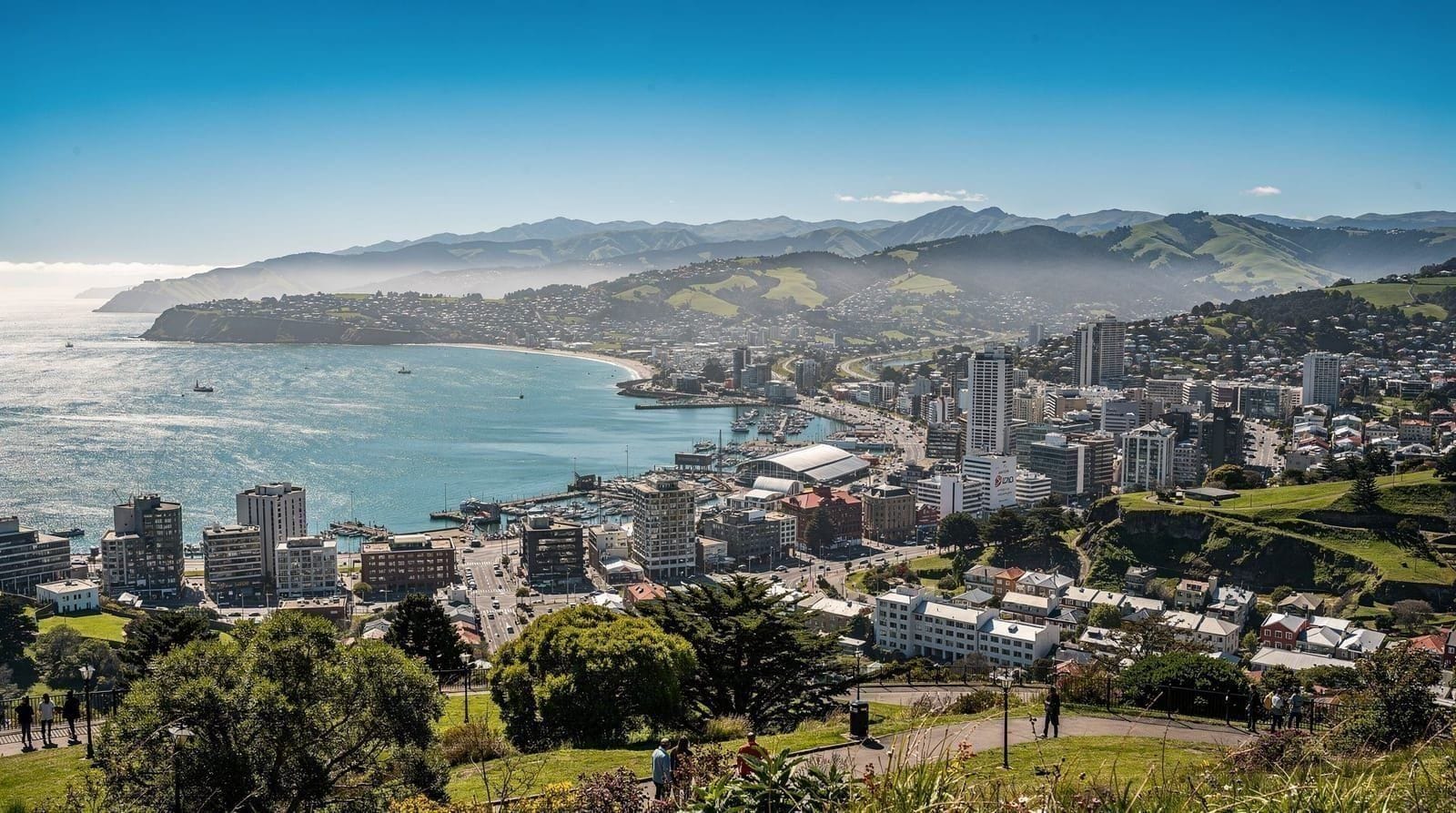
Midday — Mount Victoria. Several key location-scouting shots used Mount Victoria’s forested slopes, standing in for various Middle-earth settings during pre-production scouting even where the final on-screen footage was later filmed elsewhere. It’s a 30–45 minute walk up from the CBD, or a stop built into most guided location tours, and doubles as the best harbour viewpoint in the city regardless of the film connection.
Afternoon — Kaitoke Regional Park (Rivendell), if time and transport allow. Kaitoke, about 40 minutes’ drive north of the CBD, was the on-screen location for Rivendell — the film sets themselves are long gone, but the forest and riverside setting remain, and it’s a genuinely worthwhile stop for committed fans willing to arrange transport (there’s no direct public transport link, so this requires a rental car, taxi or a locations tour that includes it). There’s no dedicated GYG product for Kaitoke as a standalone booking, so this stop is best folded into a private tour or a self-drive add-on rather than expected as part of a standard package — see Kaitoke Regional Park (Rivendell) for what’s actually left to see on-site and whether the drive is worth it for your level of interest.
Evening — a themed dinner. Cuba Street’s Matterhorn restaurant has its own small piece of LOTR trivia — cast members reportedly frequented it during the original trilogy’s production — making it a fitting, low-key way to close out a location-focused day without anything more elaborate than a good dinner in a bar with genuine history attached.
Day 3: deeper cuts and a slower finish
Morning — the wider Weta and Hollywood story. If your interest extends beyond just Lord of the Rings, spend the morning exploring how Weta’s work has extended into Avatar, Hunger Games and other major franchises — the Weta and Hollywood: Avatar, Hunger Games & beyond guide covers the broader production history, and it’s worth a read even if you don’t have a specific site to visit for it, since it reframes Weta as an ongoing, still-active studio rather than a one-trilogy operation frozen in the early 2000s.
Midday — the Wellywood sign. A low-key, slightly tongue-in-cheek stop: the Wellywood sign overlooking the airport approach is worth a quick look if you’re passing that way, more a photo opportunity and a piece of local humour than a major attraction — see the Wellywood sign guide for exactly where to see it and why it’s more contested locally than visitors might expect (some residents have pushed back on the sign over the years).
Afternoon — reflect on 25 years since the trilogy. If timing coincides with any anniversary programming or exhibitions, check what’s on — Wellington leans into its Lord of the Rings connection periodically with special events. Otherwise, use the afternoon for anything missed earlier in the trip: a second look at Weta Cave’s shop, a re-read of Lord of the Rings, 25 years on over coffee, or simply more time in the CBD before departure.
Evening — final dinner. Close the trip with a relaxed dinner back in the CBD — this itinerary has been genuinely full for three days, and a low-key final evening suits the pace better than trying to cram in one more location.
Budget for three days
Mid-range budget for two people: accommodation NZ$390–600 (three nights at NZ$130–200), food NZ$300–420, Weta Workshop NZ$100–170 for two, Weta Cave’s specialised SFX tour if added NZ$60–100 for two, the filming-locations tour NZ$150–250 for two, transport to Kaitoke (taxi or rental car for a half-day) NZ$80–150. Total roughly NZ$1,080–1,690 for two people excluding flights. This runs a little higher than a general city-focused three days, mostly due to the two dedicated film tours and the Kaitoke transport cost.
Three days at a glance
| Day | Focus | Approx. spend (two people) |
|---|---|---|
| Day 1 | Weta Workshop, Weta Cave, Miramar streets | NZ$160–270 |
| Day 2 | Filming-locations tour, Mount Victoria, Kaitoke | NZ$230–400 |
| Day 3 | Weta and Hollywood story, Wellywood sign, slower finish | NZ$40–80 |
Combining this with the wider film-history story
Fans who want more context than the workshop tours alone provide benefit from reading around the trip rather than treating each stop as isolated — the Weta and Hollywood guide covers how the studio’s work extended well beyond the original trilogy, and revisiting Lord of the Rings, 25 years on before Day 1 rather than only on Day 3 gives useful context for what you’re seeing at Weta Workshop itself, since several current exhibits reference the trilogy’s 25th-anniversary retrospective directly. This kind of reading-around costs nothing and meaningfully changes how much you get out of the paid stops, which is worth doing on the flight over if nothing else.
Photography and merchandise realistically
Photography rules inside Weta Workshop’s guided tour vary by display and change periodically depending on what’s currently on show — some rooms allow it freely, others (particularly anything tied to unreleased or in-production work) restrict it entirely, so don’t plan a visit around getting a specific shot without confirming on booking. Weta Cave’s shop is the more reliable spot for photos, since it’s a retail space rather than a working production area, and it’s also where most fans end up doing the bulk of their merchandise shopping — official pieces here tend to be better made and more accurately licensed than anything found in general Cuba Street souvenir shops, which occasionally stock lower-quality unofficial LOTR-themed items at a similar price point.
Committed fans with more than three days sometimes ask about extending into a broader New Zealand film-locations road trip — much of the trilogy was filmed across the South Island’s mountains and plains, well beyond Wellington’s reach. That’s a genuinely different, longer trip involving Queenstown, the Southern Alps and the Mackenzie Country, not something this Wellington-based itinerary can extend into without a fundamentally different structure; treat Wellington as the production-history leg of a film-fan trip and any South Island filming-locations leg as a separate undertaking with its own logistics.
If three days feels like too much dedicated film time for your travel companions, a lighter version folds Weta Workshop into a broader Wellington visit rather than building the whole trip around it — see Wellington in 3 days for that balanced structure, which pairs Weta Workshop with Zealandia rather than a second and third day of film-specific content. Couples where one person is a committed fan and the other is along for the ride tend to do well splitting the difference: one full Weta Workshop and locations day together, then a day each pursuing separate interests before reconvening for dinner.
Honest notes
Weta Workshop’s ticket price is worth setting expectations on too — at NZ$50–85 for roughly 90 minutes, it’s a premium experience relative to its length, and some visitors compare it unfavourably to a full afternoon at Te Papa (free) or Zealandia (NZ$55 for several hours). For a dedicated film fan, the value case is straightforward: this is genuinely the best window into how the trilogy’s props, creatures and miniatures were built, and no other attraction in the world offers the same access. For anyone lukewarm on the franchise, it’s a harder sell, and this entire itinerary probably isn’t the right fit regardless of the individual stops’ merits.
Kaitoke Regional Park is the one stop on this itinerary most likely to disappoint casual fans — there’s genuinely very little built infrastructure left from the original film set, and what remains is mostly forest and a riverside setting rather than anything resembling the on-screen Rivendell. Committed fans tend to find it worthwhile anyway for the atmosphere and the fact of simply standing where filming happened; casual fans on a tighter schedule might reasonably skip it in favour of more time at Weta Workshop or Weta Cave, both of which deliver a denser, more tangible experience per hour spent.
FAQ about Film-fan LOTR itinerary (3 days)
Is this itinerary suitable for someone who’s only a casual LOTR fan?
It’s built for committed fans. Casual fans will likely find two of the three days (Weta Workshop plus one filming-locations morning) sufficiently satisfying, with the remainder better spent on general Wellington sightseeing — see Wellington in 3 days for that more balanced version.
Do I need a car for this itinerary?
Not for Days 1 and most of Day 2, but reaching Kaitoke Regional Park does require a car, taxi, or a tour that includes it, since there’s no direct public transport link. If Kaitoke isn’t a priority for you, the rest of this plan is fully walkable or bus-reachable.
Can I visit Hobbiton from Wellington?
No — Hobbiton is near Matamata on the North Island, several hours’ drive or a domestic flight away from Wellington, and isn’t a realistic day trip from this itinerary. Wellington’s film-tourism strength is the production side (Weta, filming locations, Miramar), not the built movie sets — see the Weta Workshop guide for what that production-side experience actually involves.
Is Weta Workshop still active, or is it purely a tourist attraction now?
Very much still active — as of mid-2026, Weta continues production work on new projects, including Andy Serkis’s Hunt for Gollum. The tour operates around a genuinely working studio rather than a museum built after the fact, which is part of why access to certain areas (the studios themselves, as opposed to the public workshop tour) remains restricted.
What’s the single best-value stop on this itinerary?
Weta Cave, without much competition — it’s free to enter, holds real props and maquettes, and gives a strong sense of the studio’s scale and history without needing to book a paid tour slot at all. It pairs naturally with either paid tour on Day 1 but stands on its own if budget is tight.
Should we base ourselves in Miramar instead of central Wellington?
Not recommended — Miramar has limited accommodation options and is a 15–20 minute bus or taxi ride from most of the CBD’s dinner options and the wider filming-locations tour’s pickup points. A central hotel keeps this itinerary’s logistics simpler; see where to stay in Wellington for the fuller reasoning behind that recommendation.
Top experiences
Bookable activities with verified prices and instant confirmation on GetYourGuide.