Wellington Botanic Garden guide
Is the Wellington Botanic Garden worth visiting?
Yes, and it's free — 25 hectares of native bush, formal gardens and forest trails on the hill above the CBD. Most visitors ride the cable car up (NZ$9-11 return) and walk back down through the garden in about 1.5-2 hours, though the full trail network takes half a day if you want to see all of it.
25 hectares of hillside between the cable car and the city
The Wellington Botanic Garden sits on a steep, forested hillside directly above the CBD, stretching from the Kelburn cable car terminus at the top down to Bolton Street Memorial Park near Lambton Quay at the bottom. It’s one of the very few genuinely free attractions in a city where most headline experiences — Weta Workshop, Zealandia, harbour cruises — carry a ticket price, and it rewards more time than the average visitor gives it. Most people treat it as a 20-minute afterthought tacked onto the cable car ride; the garden is actually large and varied enough to fill half a day if you walk its full length rather than just the paved section near the top.
Founded in 1868, the 25-hectare garden mixes formal Victorian-style plantings — rose gardens, a begonia house, seasonal bedding displays — with genuine native forest reserve on the steeper, less-visited slopes. That combination is unusual: most city botanic gardens are entirely cultivated, but a meaningful chunk of Wellington’s is regenerating native bush with self-guided trail markers, giving it a wilder character than the neatly clipped sections near the entrances suggest.
| Cost | Free (cable car up is optional, NZ$9-11 return) |
| Time needed | 1.5-2 hours for the main walk; half a day for the full network |
| Best entrance | Kelburn (cable car terminus) for the scenic downhill route |
| Best season | Autumn (Mar-May) for colour; summer for roses |
| Facilities | Café and toilets at the Treehouse Visitor Centre (Kelburn end) |
A brief history worth knowing
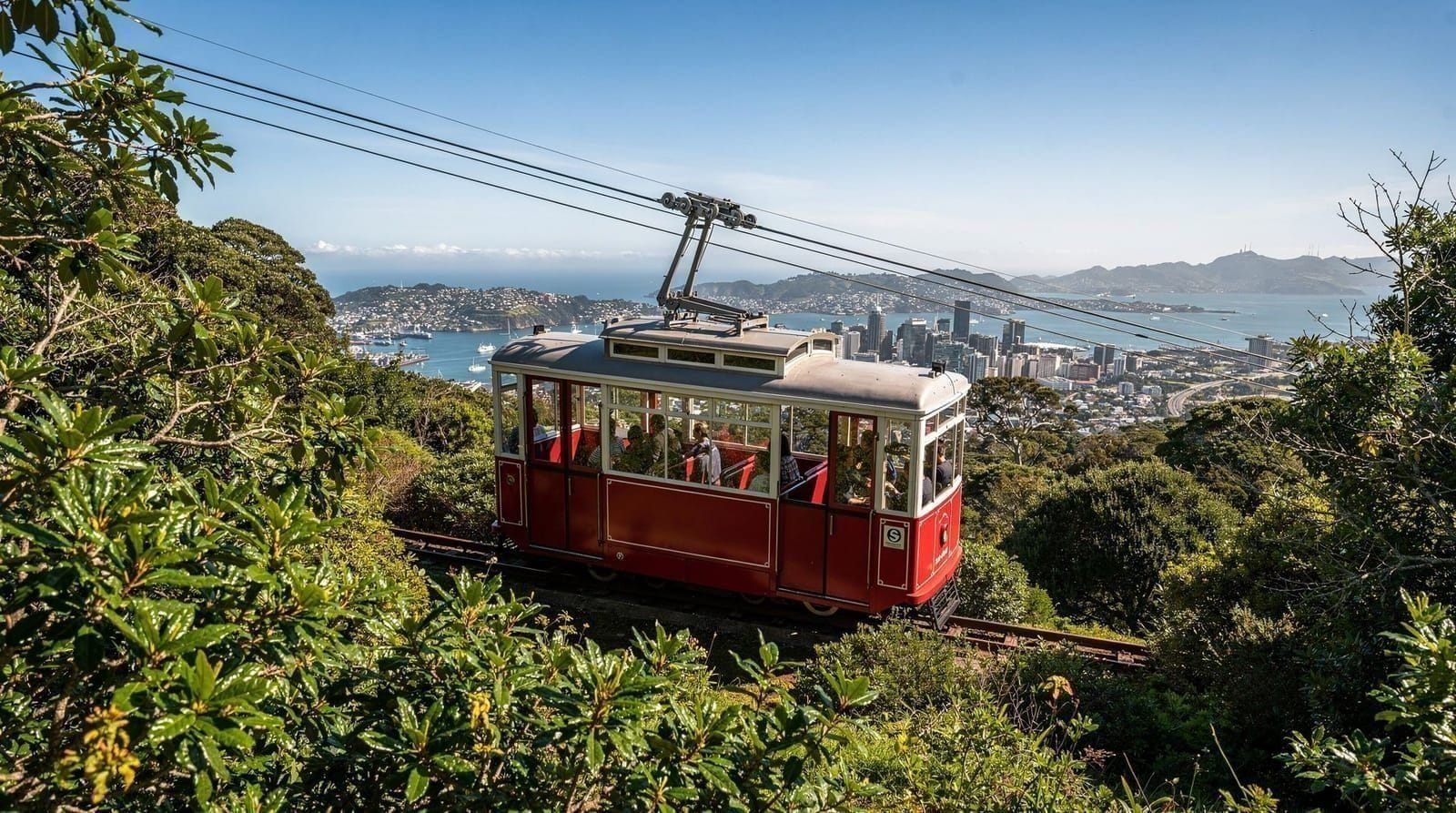
The garden’s original 1868 site was chosen partly for scientific reasons — early colonial botanists used it to trial which introduced tree and plant species would actually survive Wellington’s wind and rainfall before recommending them for wider planting around the young settlement. Several of the oldest specimen trees near the upper Kelburn entrance date from those first experimental plantings, gnarled and weather-shaped after more than a century and a half of exposure to the same winds that challenge visitors today. The cable car itself, opened in 1902 to serve a new residential subdivision in Kelburn, only later became closely associated with the garden as a visitor entrance — originally it was built for commuters, not tourists, and that transport-first history still shows in how directly the upper terminus drops you into the garden’s formal section rather than a purpose-built tourist gateway.
Wellington City Council has managed the garden since the city’s earliest days, and it holds “Garden of National Significance” status, a recognition reserved for a small number of New Zealand gardens judged to have outstanding heritage, design or botanical value — a reasonable stamp of credibility for a green space that’s easy to underestimate on a first, rushed visit.
Getting there: cable car or on foot
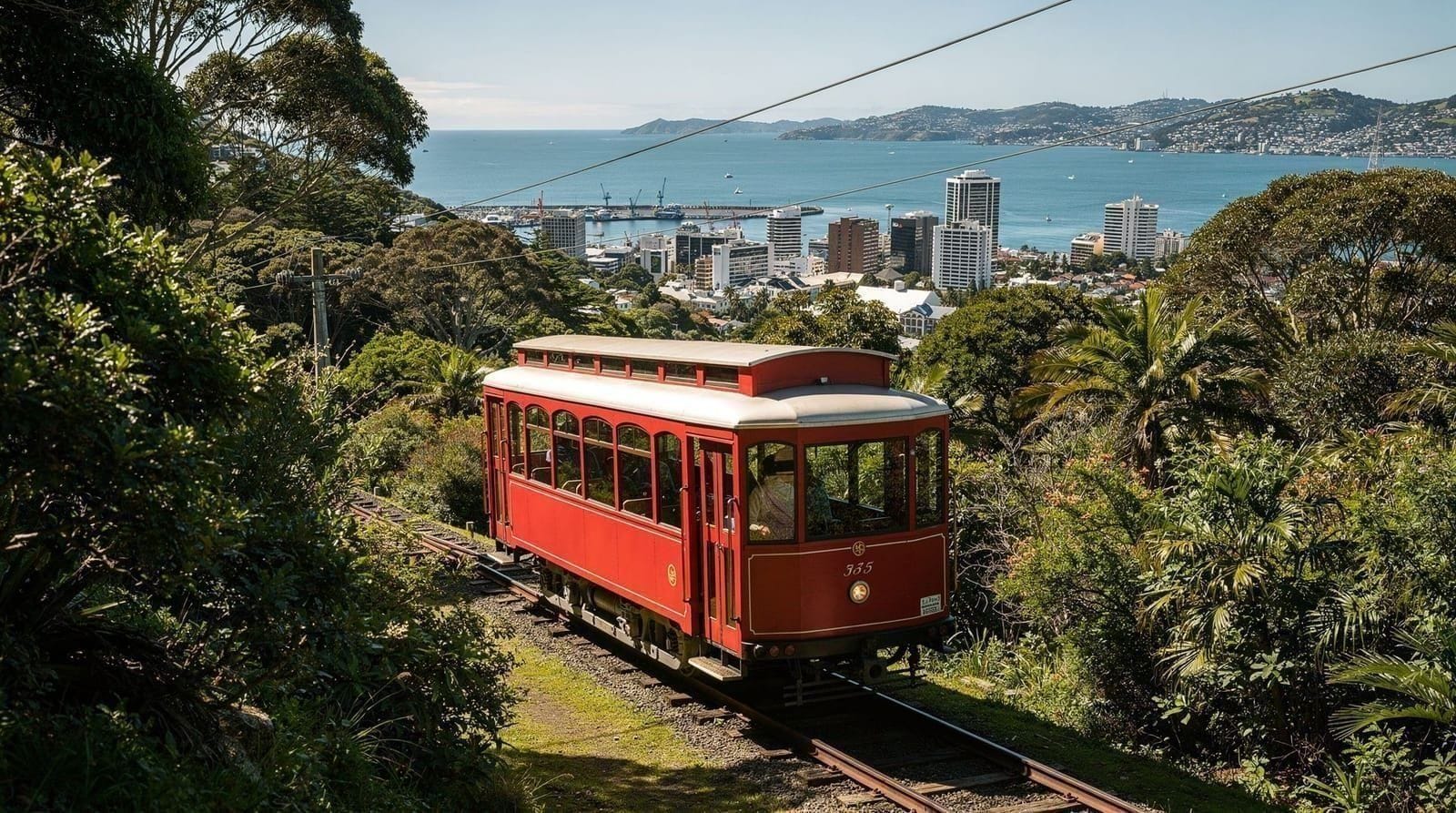
The overwhelmingly popular route is the Wellington Cable Car , a five-minute ride from Lambton Quay up to the Kelburn terminus, which sits right at the garden’s upper entrance next to the Cable Car Museum and the Carter Observatory (Space Place). A return ticket currently runs NZ$9-11, and most visitors ride up, walk down through the garden, and skip the return trip entirely — which is both the scenic option and, if you’re only paying for one leg, the better value one.
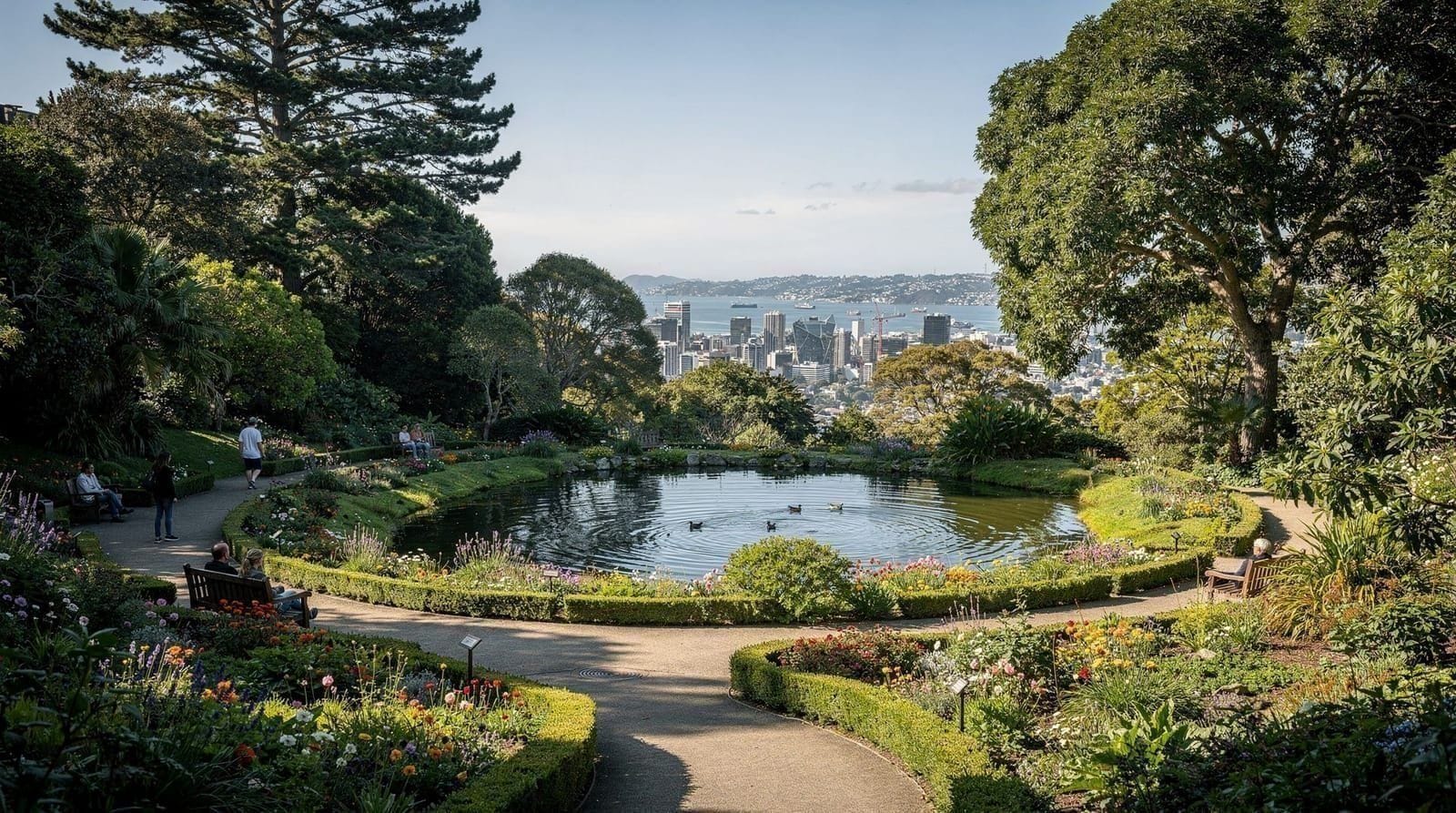
If you’d rather skip the cable car altogether, several free street entrances lead in directly: Glenmore Street and Upland Road on the Kelburn side, and Bolton Street or Salamanca Road nearer the CBD. Walking in from Bolton Street means climbing rather than descending, which is a reasonable trade if you’re already up for the exercise and want to save the cable car fare for elsewhere — the cable car ticket is genuinely worth it for the descent regardless, since the views over the harbour from partway down the garden slopes are some of the best free vantage points in the city.
How the garden fits into a wider Wellington itinerary
For visitors mapping out a two or three-day stay in the city, the Botanic Garden works best slotted into a lighter, lower-cost morning or afternoon rather than treated as a headline destination in its own right. A common pattern: cable car up first thing, a slow walk down through the garden to Bolton Street, then a coffee and browse on nearby Lambton Quay before the afternoon’s paid attractions — Te Papa, Weta Workshop, or a harbour walk — take over. It’s also a sensible choice for a lower-budget day, since beyond the optional cable car fare, there’s genuinely nothing to spend here, which matters if you’re also budgeting for pricier attractions elsewhere in the city on the same trip.
Layout and what to see
The garden divides loosely into a handful of distinct zones. Near the Kelburn/cable car entrance, the Truby King Rose Garden is the most photographed formal section, with several hundred rose varieties at their peak in December and January. Just below it, the Discovery Garden targets families with hands-on planting beds and a children’s play area, while the Duck Pond nearby is a reliable stop for younger kids wanting to feed ducks (bread isn’t recommended by garden staff — bird-safe seed is sold at the visitor centre kiosk in season).
Further down the hill, the garden shifts into denser native forest reserve, with self-guided trails winding through tōtara, rimu and tree fern stands that give a genuine sense of what pre-European Wellington’s hillsides looked like. This section sees far fewer visitors than the rose garden and formal beds, and it’s the part most tourists miss entirely — worth the detour if you have an extra 30-40 minutes.
Near the CBD-end exit, the garden opens into Bolton Street Memorial Park, a colonial-era cemetery relocated and preserved when the motorway was built through the original burial ground in the 1960s — a quietly interesting stop for anyone curious about the city’s 19th-century history, and a natural link if you’re continuing on to Old St Paul’s or the Parliament and Beehive precinct nearby.
Native birds you might spot along the way
Unlike the strictly fenced sanctuaries at Zealandia further out in Karori, the Botanic Garden isn’t predator-controlled, so its bird life is a mix of resilient natives and common introduced species rather than the rarer, protected wildlife found behind Zealandia’s fence. That said, tūī and kererū (the large native wood pigeon) are both regularly seen and heard in the garden’s taller native trees, particularly in the forest reserve sections, their distinctive wingbeats and calls carrying well through the quieter lower valley. Fantail (pīwakawaka) are a near-constant, curious presence along the shadier bush trails, often flitting close to walkers rather than keeping their distance, and silvereye flock through the flowering sections in cooler months. It’s a gentler, more incidental wildlife encounter than a dedicated sanctuary visit, but a genuine one worth watching for as you walk.
Seasonal highlights
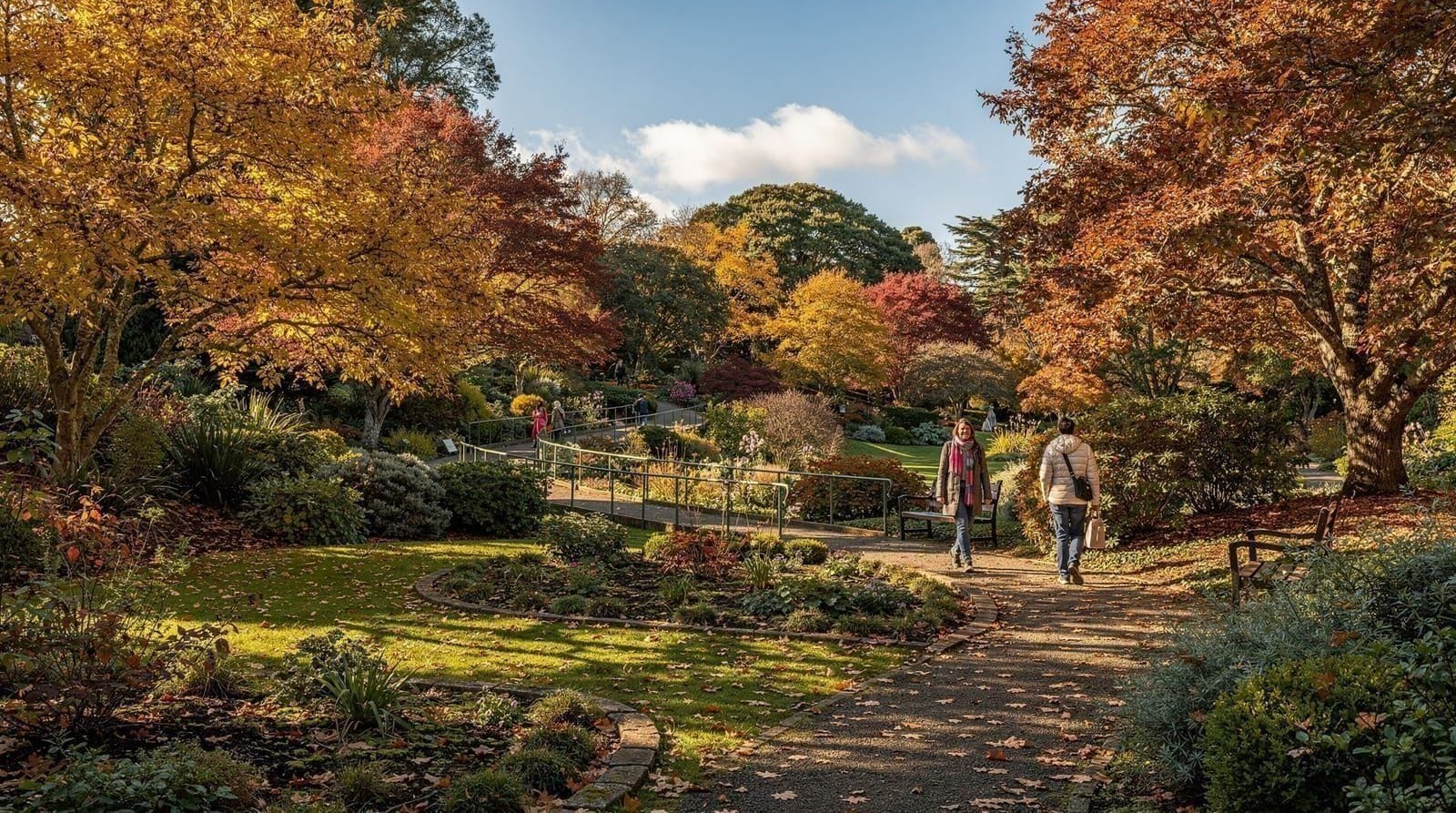
Spring (September-November) brings tulip and daffodil displays in the formal beds near the Kelburn entrance, timed to bloom through October, alongside blossom on the garden’s ornamental cherry and magnolia trees. Autumn (March-May) is arguably the most photogenic season, when deciduous trees around the rose garden and lower slopes turn gold and copper — this is also the season our Wellington in autumn guide recommends generally for the city, since mild temperatures and thinner crowds make garden walking genuinely pleasant rather than a windswept chore.
Summer sees the roses at full bloom through December and January but also brings the year’s biggest crowds and Wellington’s strongest winds funnelling up the exposed upper slopes — bring a windproof layer even on a warm day. Winter is the quietest season by far; the formal beds go dormant, but the native forest sections stay green year-round, and a clear winter’s day up on the exposed ridge lines can deliver some of the sharpest harbour views of the year, wind permitting.
Space Place and the Cable Car Museum
Two small attractions sit right at the garden’s upper entrance and are easy to combine with a visit. Space Place (the Carter Observatory) runs planetarium shows and, on selected clear evenings, public stargazing sessions through its telescope — worth checking ahead if astronomy interests anyone in your group, since evening sessions depend on weather and bookings fill early in winter when the sky is darkest earliest. The Cable Car Museum, free to enter, sits in the old winding-house building and covers the cable car’s history since 1902 with a couple of preserved original cars — a five-minute diversion rather than a destination in its own right, but a pleasant complement if you’ve just ridden up.
Guided tours and garden events
Wellington City Council and volunteer groups run occasional free guided walks through the garden, typically focused on a specific theme — the rose collection during peak bloom, the native forest restoration areas, or the garden’s historic tree specimens — though these run on an irregular schedule rather than a fixed daily timetable, so checking ahead through the visitor centre or the council’s events listings is worth doing if a guided angle appeals more than a self-directed wander. The garden also hosts occasional evening events during summer, including outdoor concerts and, in some years, sound-and-light installations timed around the festive season — a different, considerably busier character to the garden’s usual quiet daytime pace.
For photographers, the rose garden in full December-January bloom and the native forest section in soft early-morning light are the two most rewarding times to visit with a camera; the formal beds photograph best on an overcast day, when Wellington’s often-harsh midday light is softened, while the harbour-view sections partway down the hill reward a clear afternoon when visibility across the water is at its best.
Practical information
The garden itself never closes and charges no entry fee; only Space Place, guided garden tours (run occasionally by Wellington City Council, check ahead for dates) and the cable car itself carry a cost. The main paved paths are stroller and wheelchair accessible near the top and bottom entrances, though the steeper native-forest trails in the middle sections are not. Toilets and a small café sit at the Kelburn/Treehouse Visitor Centre end; there’s little else in the way of food inside the garden itself, so plan to eat before, after, or back down on Lambton Quay or Cuba Street.
Is it worth your time?
Honestly, yes, and more than most visitors give it. The garden’s reputation as a quick cable car afterthought undersells it — treated properly, with a walk through the native forest section rather than just the rose garden near the entrance, it’s a genuinely worthwhile two-hour outing that costs nothing beyond the cable car fare. It doesn’t have a single knockout feature the way Zealandia or Te Papa does, which is precisely why it’s easy to underrate — there’s no single “must-see” moment pulling you through, just a genuinely pleasant, varied green space in the middle of a capital city, best enjoyed at an unhurried pace rather than rushed between other attractions.
Pair it naturally with a cable car and hikes day if you want to extend the walking further into Kelburn and the town belt, or treat it as the calm, free counterpart to a paid-attraction-heavy day covering Te Papa or Weta Workshop. Either way, budget more time than the cable car’s five-minute ride up suggests you’ll need.
Comparing the garden to Wellington’s other green spaces
The Botanic Garden isn’t the city’s only significant green space, and it’s worth knowing how it stacks up against the alternatives. Zealandia, a predator-fenced ecosanctuary further out in Karori, charges admission but delivers genuinely rare wildlife (kiwi, tuatara) the unfenced Botanic Garden can’t offer. Mount Victoria trades formal gardens for a single dramatic summit view, reached by a steeper climb. Oriental Bay’s waterfront green space suits a beach-adjacent stroll rather than a bush walk. None of these compete directly with the Botanic Garden’s specific mix of free access, formal gardens and native forest reserve — most visitors with more than a day or two in the city end up doing at least two of these rather than choosing just one.
Accessibility for prams and wheelchairs, in more detail
Beyond the general note above, it’s worth being specific about which parts of the garden work well for wheeled access. The sealed paths from the Kelburn cable car terminus down through the Truby King Rose Garden and Discovery Garden are gently graded and manageable for most prams and manual wheelchairs. The native forest reserve trails in the middle sections involve unformed surfaces, tree roots and steeper grades unsuitable for wheels. If full accessibility matters, the Bolton Street entrance at the bottom offers the flattest, most level walking of any part of the garden, though it misses the more dramatic upper sections and the cable car connection entirely.
Frequently asked questions about Wellington Botanic Garden guide
Is the Wellington Botanic Garden free?
Yes, entry to the garden itself is free with donations welcomed at the Treehouse Visitor Centre. The only cost most visitors pay is the separate cable car ticket up to the Kelburn entrance, currently NZ$9-11 return.How long do you need at the Botanic Garden?
Budget 1.5-2 hours for the main walk from the cable car terminus down through the rose garden and Discovery Garden to the Bolton Street end. Add another hour or two if you want to properly explore the native forest reserve trails or linger in the rose garden during summer bloom.What's the best time of year to visit?
Spring (September-November) brings tulips and blossom in the formal beds, while autumn (March-May) turns the deciduous trees near the Truby King Rose Garden gold and red. Summer sees the roses at their fullest but also the biggest crowds; winter is quiet but the native bush sections stay green year-round.Do you need the cable car to visit the garden?
No — you can walk in for free from several street entrances including Glenmore Street and Waipiro Street, or via the Bolton Street Memorial Park at the CBD end. The cable car is simply the fastest, most scenic way in if you're starting from Lambton Quay and don't want to climb the hill on foot.Is the Botanic Garden good for kids?
Reasonably — the Duck Pond and the play area near the Truby King Rose Garden are popular with younger children, and the Space Place observatory sits within the grounds for older kids interested in astronomy. It's not a dedicated children's attraction like the zoo, but it's a pleasant, low-cost stop on a family day.Can I bring a picnic into the Botanic Garden?
Yes — the garden has several open lawn areas suited to a picnic, particularly near the Duck Pond and the lower Bolton Street end. There are no restrictions on bringing your own food, and it's a genuinely good, free way to spend a couple of hours on a fine day.How does the Botanic Garden compare to Zealandia?
They're different experiences rather than competitors — the Botanic Garden is free, unfenced formal gardens plus some native bush, best for a relaxed walk; Zealandia is a paid, predator-fenced ecosanctuary built around seeing rare native wildlife like kiwi and tuatara. Many visitors do both, on separate days.
Top experiences
Bookable activities with verified prices and instant confirmation on GetYourGuide.