Katherine Mansfield House guide
What is Katherine Mansfield House and is it worth visiting?
Katherine Mansfield House and Garden, at 25 Tinakori Road in Thorndon, is the restored childhood home of Katherine Mansfield, New Zealand's best-known short-story writer, open Tuesday to Sunday 10am-4pm with entry around NZD 10 for adults. It's a genuinely worthwhile hour for anyone with an interest in Mansfield's writing or nineteenth-century colonial domestic life, though it's a modest, quiet stop rather than a headline attraction.
A quiet counterpoint to Wellington’s bigger attractions
| Where | 25 Tinakori Road, Thorndon, short walk from the CBD |
| Cost | Around NZD 10 for adults; free for children |
| Hours | Tuesday-Sunday, 10am-4pm; closed Mondays |
| Time needed | 45 minutes to an hour |
| Best for | Literature fans, quiet second/third-day stops |
Most first-time Wellington visitors build their itinerary around Te Papa, the cable car and perhaps Weta Workshop, and rightly so — those are genuinely the city’s headline draws. Katherine Mansfield House occupies a different niche entirely: a quiet, specialist stop that rewards a specific interest rather than broad mass appeal, more comparable in scale and audience to a smaller regional literary museum than a must-see national attraction. Knowing this going in helps set the right expectations — this is a genuinely worthwhile hour for the right visitor, not a headline attraction competing directly with Te Papa or the cable car for a place on every itinerary.
New Zealand’s most significant writer, and the house she grew up in
Katherine Mansfield House and Garden, at 25 Tinakori Road in the Thorndon neighbourhood a short walk from Parliament and the CBD, preserves the childhood home of Katherine Mansfield (1888-1923), the short-story writer most New Zealanders and international literature students alike recognise as the country’s single most significant literary figure. This is the genuine family home — restored and furnished to reflect the late-Victorian period Mansfield actually grew up in, rather than a reconstruction built on the site after the fact — and it offers a modest but genuinely evocative window into both her early life and the wider domestic reality of colonial Wellington in the 1890s.
Who was Katherine Mansfield, and why she matters
Mansfield left Wellington as a young woman for Europe, where she spent most of her adult writing life, and it was there that she produced the modernist short fiction — collections including The Garden Party and Other Stories, Bliss and Other Stories, and numerous individually celebrated stories — that established her international reputation and influenced contemporaries including Virginia Woolf, with whom she had a documented, sometimes rivalrous literary relationship.
Her innovations in narrative structure and psychological interiority were genuinely ahead of their time, and her work remains studied in literature courses well beyond New Zealand. She died of tuberculosis in France in 1923 at just 34, cutting short a career that had already reshaped the short-story form. Visitors with even passing familiarity with her writing tend to get considerably more from this house than those arriving without context — reading a story or two beforehand, even something short like “The Garden Party” itself, meaningfully changes what the rooms and garden mean once you’re standing in them.
A stop for a longer stay, not a rushed one
Our Wellington in 3 days itinerary has more natural room for a considered stop like this than a tightly packed two-day visit, worth checking if you’re deciding how much unhurried, off-the-main-trail time to build into a longer Wellington stay.
A short detour from Parliament and the waterfront
Thorndon’s position just north of Wellington’s CBD means the house is a genuinely short detour from a Parliament visit or a wider waterfront day, rather than a separate trip requiring its own dedicated outing — worth factoring into an itinerary that already has you in the Thorndon area for other reasons.
What’s inside the house
The rooms are furnished and arranged to reflect the period of Mansfield’s childhood, giving a genuine sense of upper-middle-class colonial Wellington domestic life in the late nineteenth century — the kind of household that produced a writer whose later fiction repeatedly returned, often critically, to exactly this social milieu. Personal artefacts, period furniture and interpretive material trace both Mansfield’s specific family history and the broader context of colonial New Zealand domestic life for a family of the Beauchamps’ social standing (Mansfield was born Kathleen Mansfield Beauchamp). It’s a quieter, more intimate kind of historical experience than a large museum — closer to stepping into a specific, carefully preserved moment than browsing a broad chronological sweep.
The Beauchamp family and Thorndon’s colonial elite
Katherine Mansfield was born Kathleen Mansfield Beauchamp into a prosperous colonial family — her father, Harold Beauchamp, went on to become a prominent Wellington banker and businessman, and the family’s social standing placed them firmly within Thorndon’s colonial professional class at a time when the neighbourhood was one of the city’s more established residential areas rather than the quieter, more purely heritage-focused suburb it’s become today. Understanding this social context matters for reading the house properly: Mansfield’s later fiction, much of it set in thinly fictionalised versions of colonial New Zealand society, drew directly and often critically on exactly this milieu, making the house a genuine primary source for understanding the world her writing responded to and, in places, pushed back against.
Mansfield’s own Wellington and New Zealand-set stories
Several of Mansfield’s most celebrated stories draw directly on her New Zealand childhood and the Thorndon milieu the house preserves. “Prelude” and “At the Bay,” two of her most significant works, are set in a fictionalised version of the Beauchamp family’s later Karori home and draw heavily on her own childhood experience of colonial New Zealand domestic and family life, while “The Garden Party,” perhaps her single best-known story, engages directly with the class tensions of exactly the kind of prosperous colonial household the Thorndon house represents. Visitors who read even one of these stories before or after visiting tend to find the connection between the physical house and Mansfield’s fiction considerably more vivid than those who visit without this context — the museum’s own interpretive material often makes these connections explicit, but doing some of that reading beforehand deepens it further.
The Society preserving the house
The house is preserved and operated under the stewardship of a dedicated society established specifically to maintain Mansfield’s birthplace as a heritage site and literary museum, reflecting a broader pattern in how New Zealand has approached preserving sites connected to its relatively small number of internationally significant cultural figures. The house’s survival wasn’t inevitable — like many colonial-era timber buildings in a rapidly redeveloping twentieth-century city, it faced genuine risk of demolition or unsympathetic alteration before its heritage and literary significance was formally recognised and protected, a reminder that heritage preservation in a young, fast-growing city often depends on deliberate, sustained advocacy rather than happening automatically.
The garden
The property’s garden, restored to reflect period plantings, gives the house additional context beyond its interior rooms and is worth a slower walk-through rather than a quick pass — several of Mansfield’s stories and letters reference the family garden directly, and seeing the physical space that shaped that writing adds a layer many visitors find genuinely affecting, particularly those who’ve read her work closely beforehand.
Opening hours and what it costs
The house is open Tuesday to Sunday, 10am-4pm, and closed Mondays along with most public holidays, including Christmas Day, Boxing Day, New Year’s Day and Easter Friday — worth checking before a visit if your Wellington stay falls around any of these dates. Entry pricing has shifted over recent years and varies by source; budget roughly NZD 10 for adults, with reduced rates typically available for seniors and students and free entry for children, though checking current pricing directly with the house before visiting is sensible given periodic revisions.
How long to budget
Around 45 minutes to an hour covers the house and garden at a comfortable pace without feeling rushed. This is a modest-scale colonial villa, not a sprawling estate, and the visit rewards a focused, unhurried look rather than requiring a half-day commitment — a genuinely different pacing to a visit to Te Papa or a full Thorndon heritage walk.
Why Thorndon specifically produced this kind of household
Thorndon’s status as one of Wellington’s earliest and most established colonial-era neighbourhoods is directly connected to why a household like the Beauchamps’ settled there rather than elsewhere in the young city. As Wellington’s administrative and commercial centre developed through the nineteenth century, Thorndon’s proximity to the government and business district made it a natural home for the city’s emerging professional and merchant class, and the neighbourhood’s surviving villas — Katherine Mansfield House among them — reflect that specific social history considerably more than the CBD’s own commercial core, which has been rebuilt and redeveloped far more extensively over the following century and a half.
Is this worth visiting if you haven’t read Mansfield’s work?
Honestly, it works reasonably well even without prior familiarity, purely as a window into nineteenth-century colonial Wellington domestic life and the kind of household that could produce internationally significant writing from a relatively small, remote settler city. That said, the experience is genuinely richer for visitors who arrive with at least a passing sense of who Mansfield was and what she wrote — the house becomes considerably more than a period-furnished villa once you understand what left this specific building and went on to reshape the modernist short story. If literary heritage isn’t a strong personal interest, this is a reasonable but skippable stop rather than an essential one on a tight Wellington itinerary; visitors with limited time should prioritise Te Papa and the NZ Parliament tour first if choosing between Thorndon’s several culture-and-history options.
Combining with the rest of Thorndon’s heritage precinct
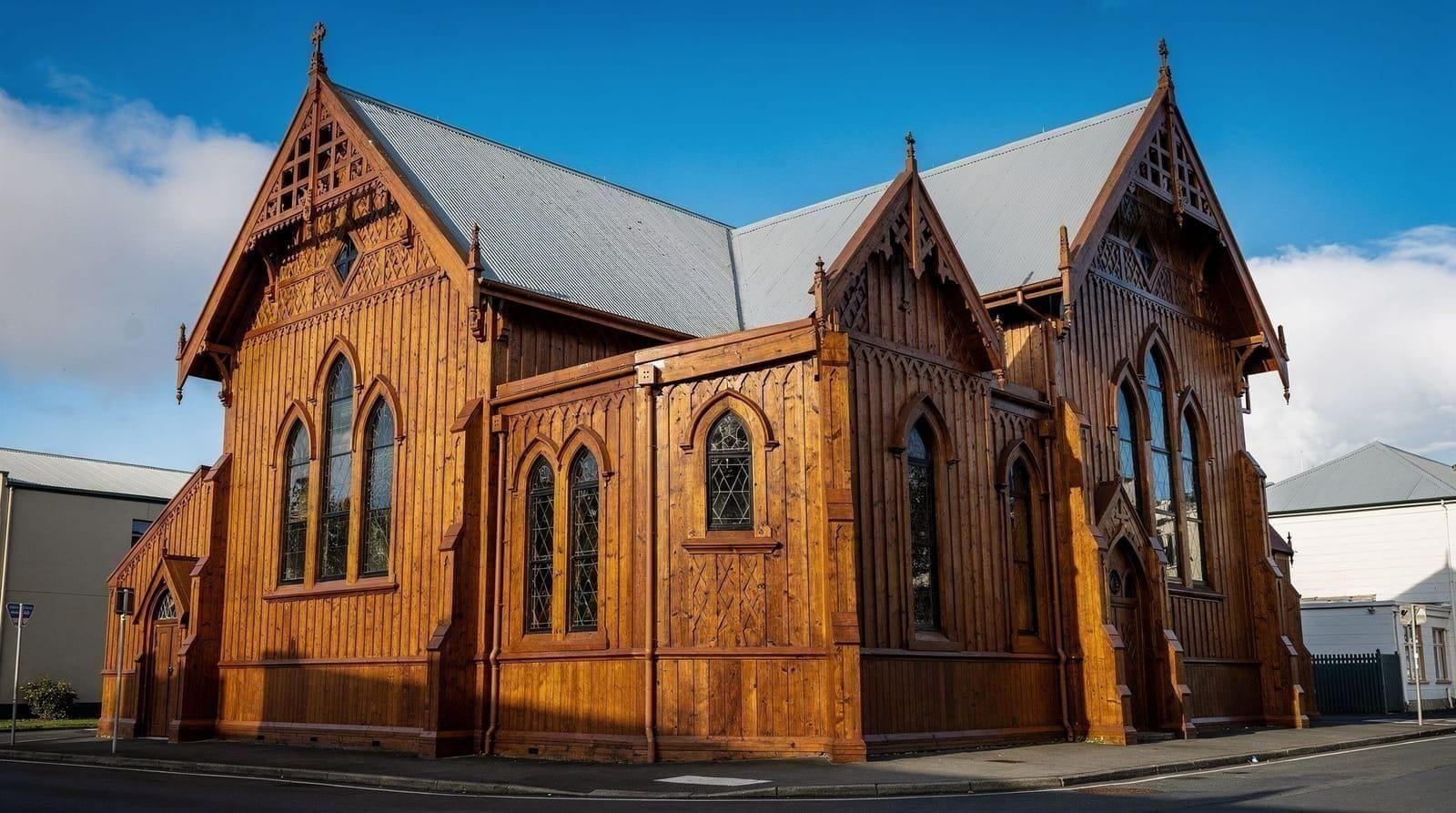
The house sits within easy walking distance of several of Wellington’s other free or low-cost heritage stops, making it a natural component of a Thorndon-focused history morning rather than a standalone destination requiring its own dedicated trip. Old St Paul’s, a striking timber Gothic Revival church, and the free NZ Parliament and Beehive tour both sit a short walk away, and combining all three into a single half-day gives a genuinely rounded picture of Thorndon’s layered civic, religious and literary history without needing transport between stops.
A rainy-day option, with a caveat
Katherine Mansfield House is fully indoor at its core, making it a reasonable wet-weather stop, though the garden’s part of the experience naturally suffers in heavy rain the same way any outdoor component would. It’s a modest, quiet addition to a rainy-day itinerary rather than a headline pick — see our rainy-day things to do in Wellington guide for the fuller list of indoor options if you’re building a full wet-weather day and want something with more scale than a single writer’s house can offer alone.
A suggested route through the rooms
Rather than wandering the house without structure, a sensible visit moves room by room roughly in the order a Victorian household itself would have been used — the more formal front rooms first, where the family would have received visitors, through to the more private domestic spaces further back, before finishing in the garden. This sequencing mirrors how the house’s own interpretive material is generally organised, and it gives a genuine sense of the household’s social structure — which rooms were for show, which were purely functional — in a way that jumping between rooms at random doesn’t convey as clearly.
Combining with a wider literary Wellington trail
Beyond the house itself, Wellington doesn’t have an extensive formal “literary trail” the way some larger cities do, but a few connected stops reward visitors with a genuine interest in Mansfield and New Zealand’s literary heritage more broadly. Wellington’s central library and several of the CBD’s independent bookshops stock a reasonable range of Mansfield’s work and biographical material, worth a browse either before your visit (to prepare) or after (having just seen the house, a good moment to pick up a collection of her stories). Combining the house with a broader Thorndon heritage walk taking in Old St Paul’s and the NZ Parliament tour gives a fuller sense of the neighbourhood’s layered civic, religious and literary history across a single unhurried morning.
Practical visiting tips
Limited on-street parking is available near the house, though Thorndon’s residential streets can be tight, and visitors without a car will find the walk from the CBD genuinely pleasant along Tinakori Road’s well-preserved colonial streetscape. The house’s heritage construction means some rooms involve original, uneven flooring and doorways rather than a fully modern, flat-floored accessible layout — worth checking directly with the house if mobility is a specific concern for your visit. Photography is generally permitted inside, though flash is discouraged near any light-sensitive period textiles or paper artefacts on display.
Where this fits in a wider Wellington visit
For most first-time visitors, this house is a considered addition to a longer stay rather than a first-day priority — see the fuller things to do in Wellington list for how it ranks against the city’s bigger attractions. It pairs particularly well with the City Gallery and Museum of Wellington for visitors building a dedicated culture-and-heritage day around the CBD’s smaller, quieter museums rather than only its headline sights.
A modest scale that’s part of the appeal, not a shortcoming
It’s worth reframing the house’s small scale as a genuine feature rather than a limitation compared with the city’s larger attractions. Where a visit to Te Papa or even the Museum of Wellington asks you to cover real physical ground across multiple galleries, Katherine Mansfield House rewards a completely different kind of attention — slow, focused, contained within a single modest villa rather than spread across floors. For visitors who’ve spent several days moving briskly between the CBD’s bigger sights, an hour here can be a genuinely welcome change of pace precisely because of how contained and unhurried it is by comparison.
Getting there
Thorndon sits a comfortable walk north of the CBD, and Tinakori Road itself is a pleasant, tree-lined residential street worth a slow wander in its own right, lined with well-preserved colonial-era villas that give a sense of what much of pre-earthquake, pre-motorway Wellington once looked like before large sections of the older city were cleared for twentieth-century development. Our Wellington neighbourhoods guide covers Thorndon’s specific character in more depth if you’re deciding how much time to allocate to this part of the city relative to the CBD’s busier core.
Mansfield’s international legacy today
Beyond New Zealand, Mansfield’s work continues to be studied, anthologised and adapted internationally, and the house occasionally hosts visiting scholars, literary events and commemorative programming connected to anniversaries of her birth or death, or to specific publications and adaptations of her work gaining fresh international attention. Checking the house’s current events calendar before a visit is worth doing if you have a specific academic or literary interest, since these occasional events can add considerably more depth than a standard self-guided visit alone provides.
What the visitor book reveals about who comes here
Houses like this one typically keep a visitor book near the exit, and a browse through past entries at Katherine Mansfield House — where allowed — often reveals a genuinely international spread of visitors: literature students on a specific pilgrimage, general New Zealand tourists who added the stop on a whim after seeing it mentioned in a wider guide, and the occasional academic or biographer researching Mansfield specifically. That range is a useful reminder that the house rewards multiple different kinds of visitors for different reasons, not solely committed literary enthusiasts — a general interest in nineteenth-century colonial domestic life is enough to get genuine value from an hour here, even without deep prior knowledge of Mansfield’s specific writing.
Who this suits
This suits literature enthusiasts, anyone with a specific interest in Mansfield’s work or New Zealand’s literary history, and visitors building a slower, more neighbourhood-focused Thorndon morning rather than rushing between the CBD’s headline sights. It suits less well travellers with only a single day in Wellington and no particular literary interest, who are better served prioritising Te Papa, the cable car and the waterfront over a modest house museum, however genuinely well preserved it is.
A final honest note on priorities
If forced to choose between this house and any of Wellington’s bigger attractions on a genuinely time-constrained trip, prioritise Te Papa, the cable car and the waterfront first, and treat Katherine Mansfield House as a considered addition for a second or third day, or for visitors specifically drawn to literary heritage. It’s a genuinely good use of an hour, just not at the expense of the city’s more essential first-time sights.
A note on accessibility and booking ahead
Unlike Wellington’s larger attractions, Katherine Mansfield House doesn’t require advance booking for a standard self-guided visit — you can simply turn up within opening hours, which makes it an easy, low-friction addition to slot into a Thorndon morning without pre-planning. Group visits or anyone wanting a guided rather than self-guided tour should check directly with the house in advance, since guided options and group capacity are more limited than the walk-in self-guided visit most travellers default to.
Frequently asked questions about Katherine Mansfield House guide
Who was Katherine Mansfield?
Katherine Mansfield (1888-1923) is widely regarded as New Zealand's most significant literary figure, a modernist short-story writer whose work — including collections like The Garden Party and Other Stories — influenced writers such as Virginia Woolf and remains studied internationally. She left Wellington for Europe as a young woman and spent most of her adult writing life abroad, dying of tuberculosis in France at just 34.What are the opening hours and entry fee?
The house is open Tuesday to Sunday, 10am-4pm, and closed on Mondays and most public holidays including Christmas Day, Boxing Day, New Year's Day and Easter Friday. Entry fees have varied over recent years; budget roughly NZD 10 for adults, with discounts for seniors and students and free entry for children, and check current pricing directly since it's periodically revised.How long do you need to visit?
About 45 minutes to an hour covers the house and garden properly, since it's a modest-scale colonial villa rather than a sprawling estate. It's a focused, quiet visit best suited to a specific interest in Mansfield or nineteenth-century Wellington domestic life rather than a must-see for every visitor.Is the house the actual building Mansfield grew up in?
Yes — this is the genuine family home where Mansfield spent part of her childhood in Thorndon, restored and furnished to reflect the period, rather than a modern reconstruction or a monument built after the fact on the original site.Is it suitable for visitors without a specific interest in literature?
It works reasonably well as a broader window into nineteenth-century colonial Wellington domestic life even without prior knowledge of Mansfield's writing, though visitors with some familiarity with her work generally get considerably more out of the visit than those going in cold. Reading a short story or two of hers beforehand meaningfully changes what the house means to you.