Wellington Cable Car ticket review: is it worth it?
Wellington: Return Cable Car Ticket
What the Wellington Cable Car actually is
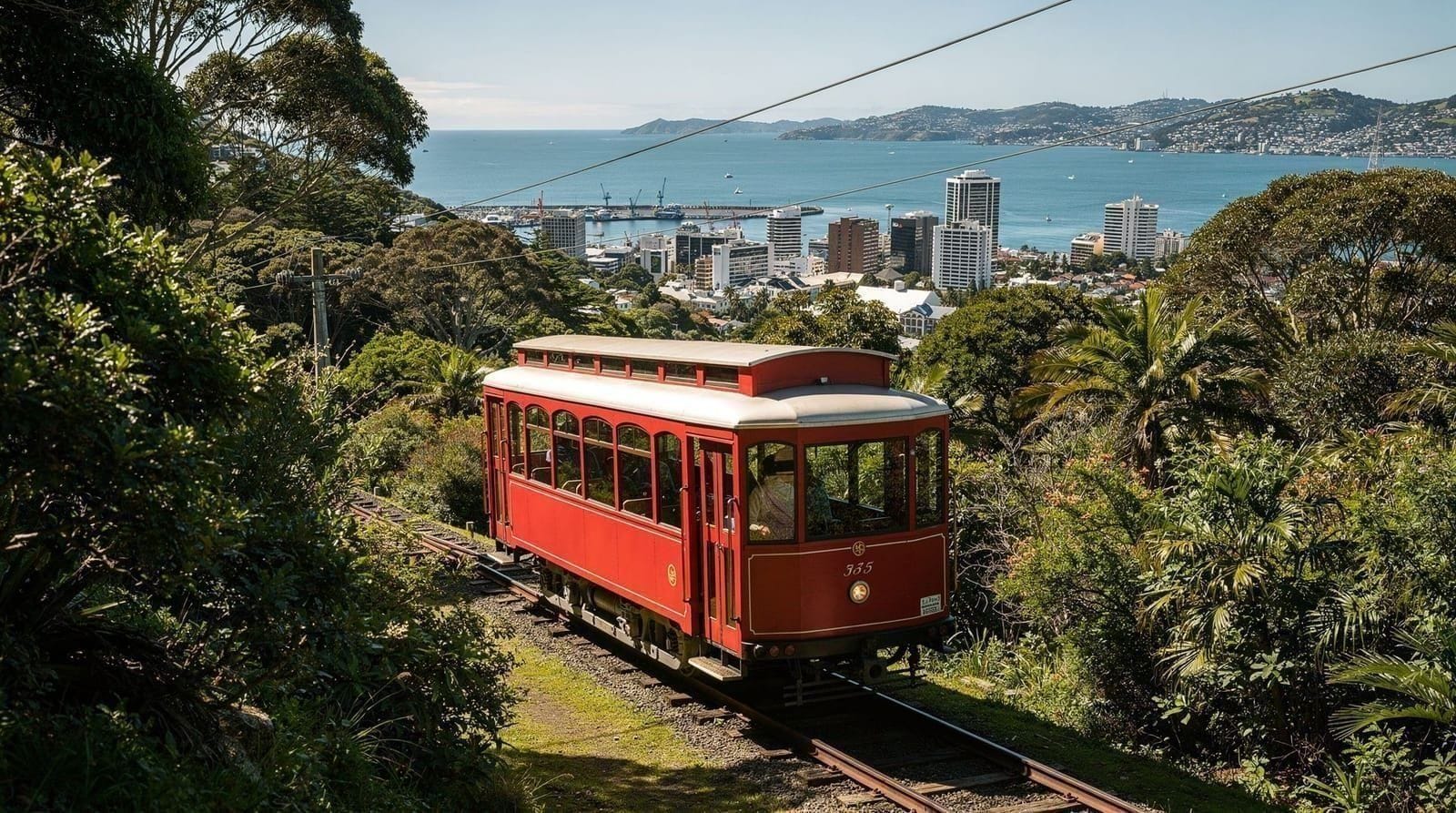
The Wellington Cable Car is a funicular railway that has connected Lambton Quay in the CBD to the hilltop suburb of Kelburn since 1902, rebuilt and modernised over the decades but still running the same short, steep route. It’s not a tourist novelty built for visitors — it’s genuine public transport that Kelburn residents and Victoria University students use daily, which gives the ride a slightly different character to purpose-built tourist funiculars elsewhere: functional, a little utilitarian inside the cars, and all the more charming for it.
The Wellington Cable Car return ticket covers a same-day round trip: up from Lambton Quay through two intermediate stations to the top terminus in Kelburn, and back down whenever you’re ready, with no fixed return time. The ride itself takes about five minutes each way, climbing roughly 120 metres over 600 metres of track — short enough that the whole exercise, ride included, rarely takes more than 15 to 20 minutes if you go straight up and straight back down.
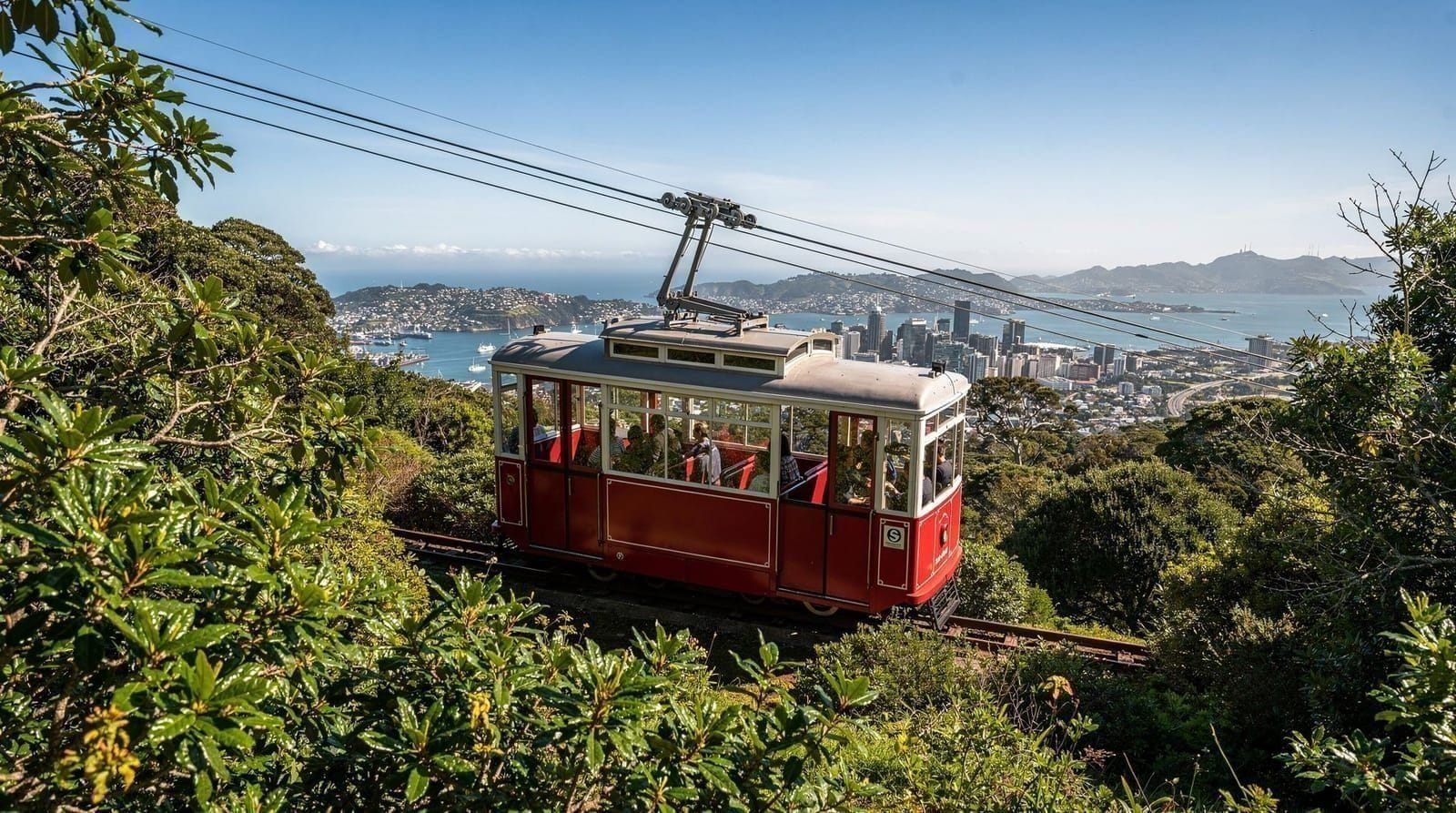
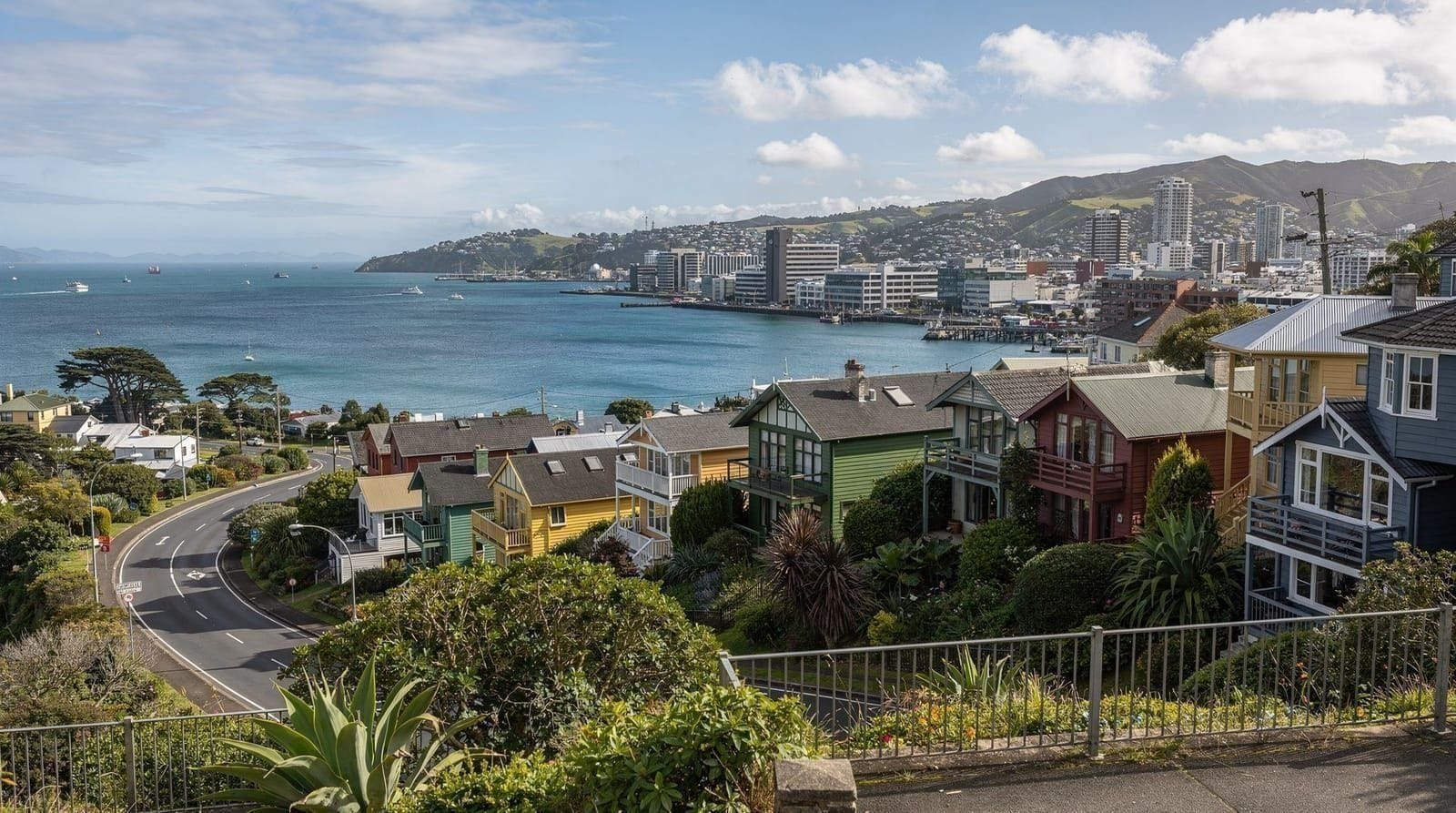
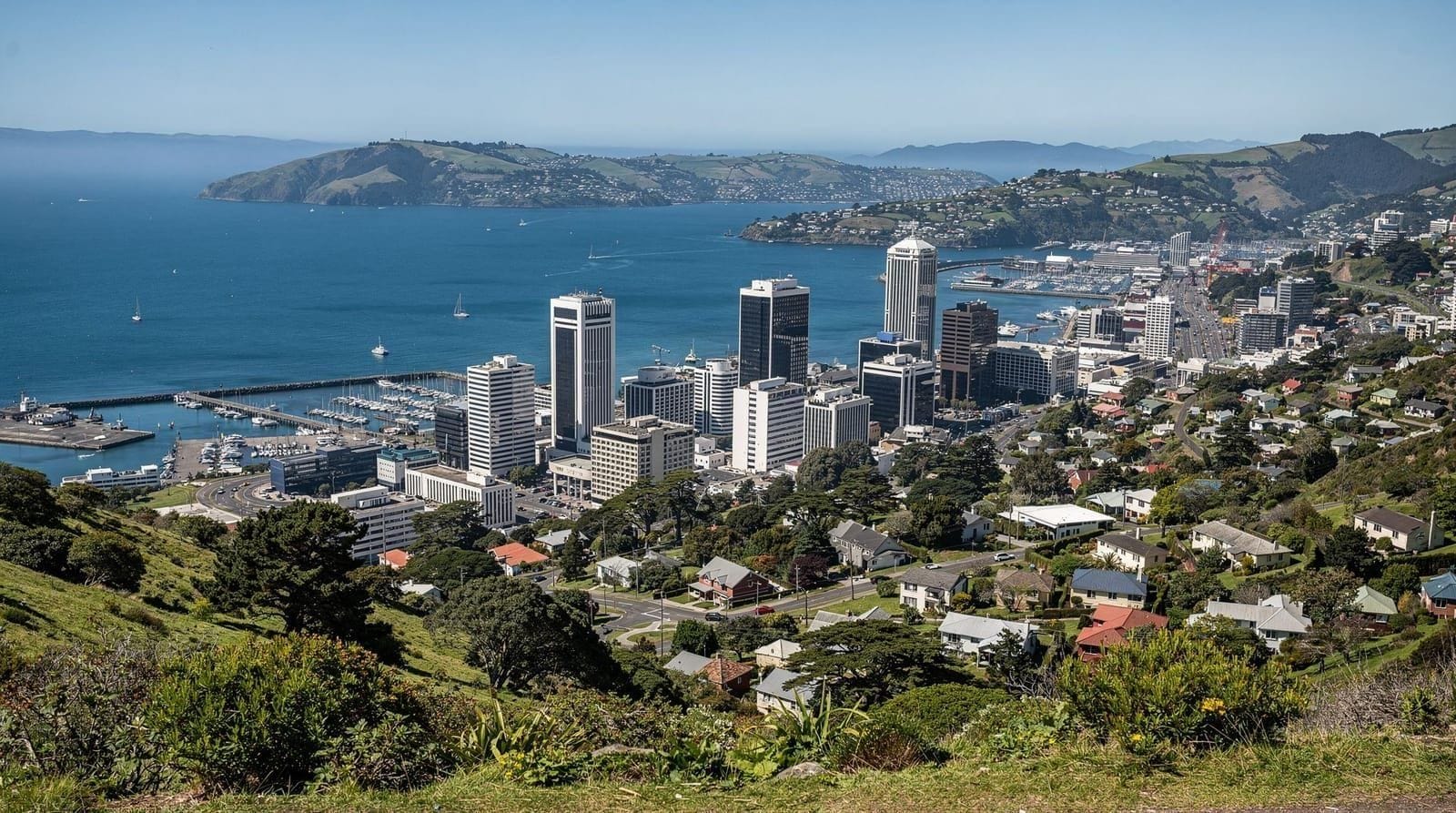
What you’re really buying is the view. The cable car climbs above the CBD rooftops with the track cutting through short tunnels and open cuttings, and the payoff at the top is a genuinely excellent panorama over the harbour, the city, and — on a clear day — out toward the South Coast. It’s one of the best value-for-money viewpoints in the city, and one of the first things almost every visitor to Wellington does, usually within their first day.
| Where | Lambton Quay (bottom) to Kelburn (top), central Wellington |
| Cost | NZD 10–12 return, adult; roughly half for one-way |
| Time needed | ~5min ride each way; 60–90min total with the top and garden |
| Getting there | Short walk from most central Wellington hotels |
| Best time | Before 10am for calm conditions and light crowds |
The original line opened in 1902 as a cable-hauled system using a water-balance counterweight, replaced in 1979 with the Swiss-built cars still in service today. That 1979 rebuild is why the ride feels efficient and modern in the cars themselves while the overall concept — a steep funicular linking the harbour-side CBD to a hillside university suburb — remains distinctly of another era. It’s a small but genuine piece of Wellington’s transport history rather than a novelty built purely to move tourists up a hill, and that history is part of what makes the ride worth doing even for visitors who’d normally skip a “just a lift up a hill” attraction elsewhere. The current Swiss-built cars are notably compact compared with larger funicular systems overseas, which adds to the ride’s slightly quirky, small-city charm rather than detracting from it — this is a working piece of transport infrastructure rather than a purpose-built tourist showpiece, and most visitors find that authenticity part of the appeal.
Getting to the Lambton Quay terminus
The bottom terminus is tucked just off Lambton Quay, Wellington’s main shopping street, and is genuinely central — most CBD hotels and the railway station are within a 10 to 15 minute walk, and it’s an easy stop to fold into a morning of shopping or sightseeing without a taxi or bus. If you’re staying further out, Wellington’s compact CBD and frequent bus network make reaching the terminus straightforward from most accommodation, and there’s no need to book ahead or arrive with significant buffer time given how frequently the cars run.
A typical visit, step by step
Most visitors start at the Lambton Quay terminus, tucked just off Wellington’s main shopping street and an easy walk from most central hotels. Tickets are sold at a small kiosk or via app, and boarding is straightforward — no assigned seating, just a queue for the next departure. The car pulls out and climbs steadily, passing through two intermediate stations (Talavera and Clifton Terrace, mainly used by locals rather than visitors) before a short tunnel section that gives way to open views as you approach Kelburn.
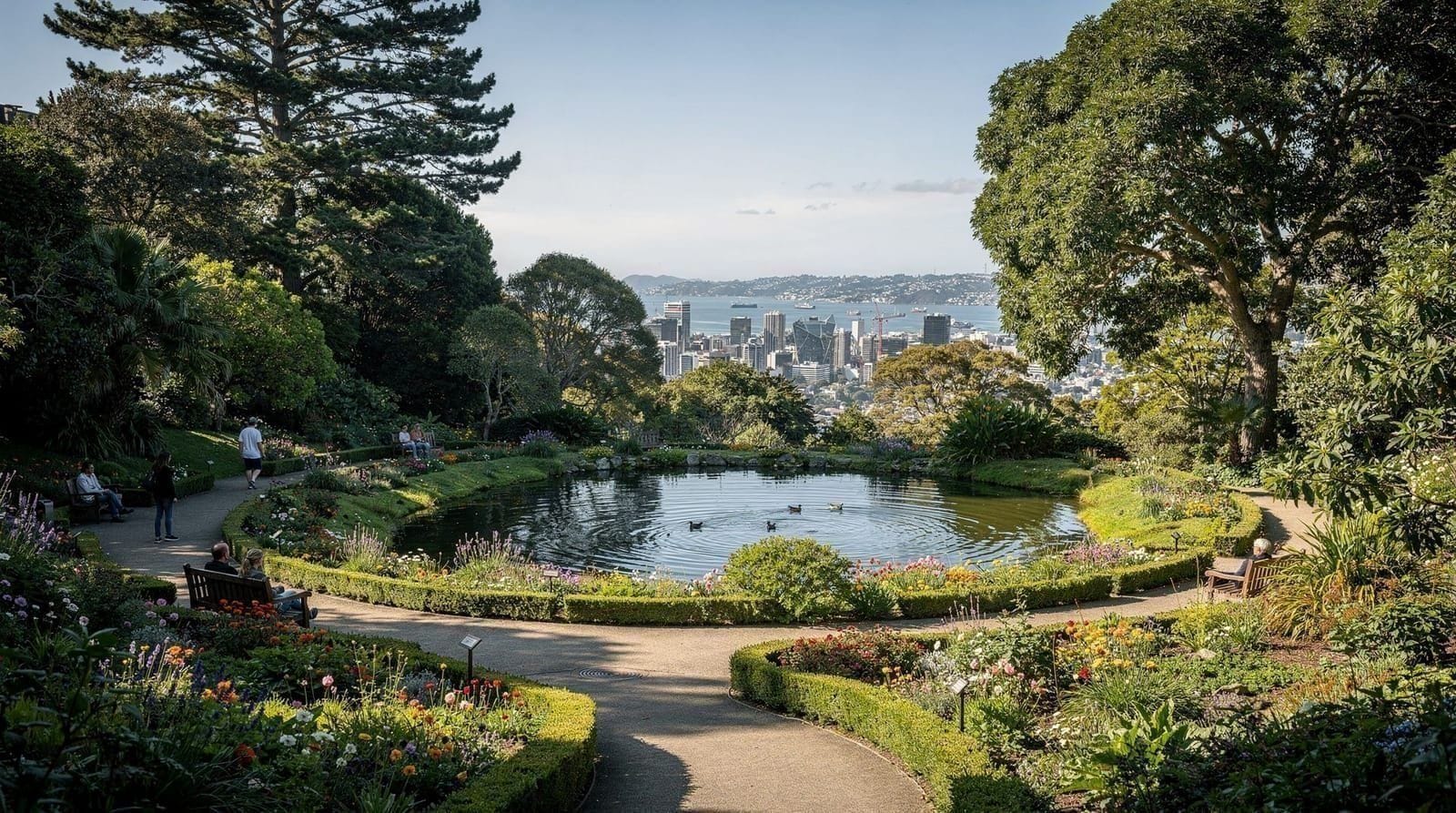
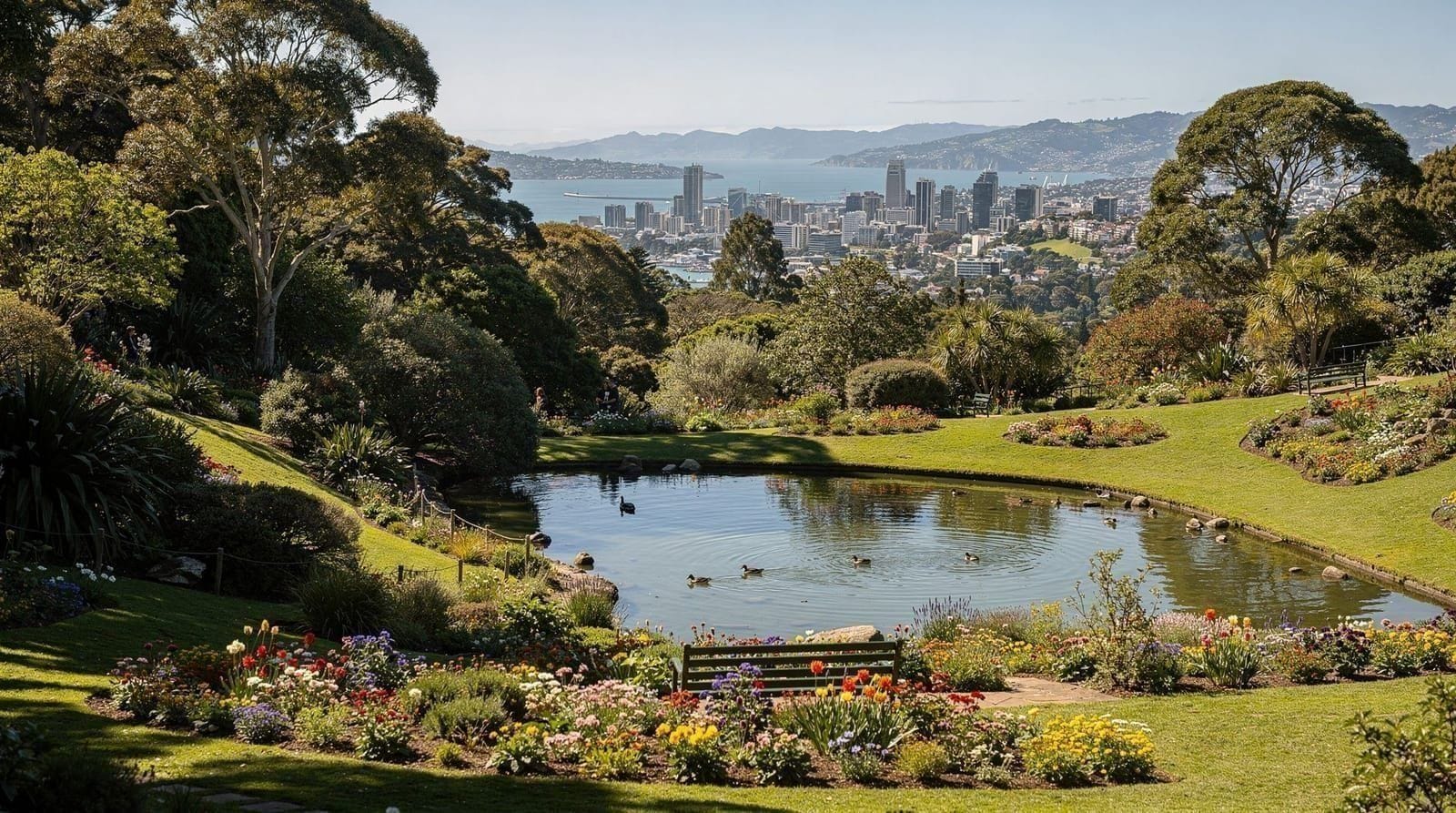
At the top, most people spend 20 to 40 minutes exploring before heading back down — enough time for the free Cable Car Museum, a stroll along the lookout platform for photos, and a peek into the adjoining Botanic Garden entrance. Add a proper wander through the garden itself, and the whole outing comfortably fills 60 to 90 minutes without ever feeling rushed.
What it costs and what’s included
A return ticket typically runs around NZD 10 to 12 for adults, with children and concession fares priced lower — modest by Wellington standards, and considerably cheaper than most guided tours or attraction tickets in the city. One-way tickets are available too, at roughly half the return price, useful if you plan to walk down through the Wellington Botanic Garden rather than riding back.
The ticket covers transport only. It does not include entry to the free Cable Car Museum at the top terminus, nor to the Botanic Garden itself — both are free anyway, so this isn’t really a downside, but it’s worth knowing you’re not double-paying for anything by combining the ride with either stop. If you want a version that bundles the cable car with a broader guided introduction to the city, the walking tour with museum and cable car ticket and the guided city tour with cable car ticket both fold the ride into a longer, commentated route rather than leaving you to explore the top station on your own.
Trips run at frequent intervals throughout the day — roughly every 10 minutes during peak times, a little less often outside them — so queuing is rarely a major issue outside of cruise-ship days or peak summer afternoons, when it’s worth allowing a bit of buffer time.
For a family of four doing the return ride once, expect roughly NZD 35 to 45 total at typical adult and child rates — genuinely modest against almost any other paid Wellington attraction, and cheap enough that most visitors don’t think twice before boarding. Compare that to a half-day guided city tour bundling the ride with wider commentary, which runs closer to NZD 50 to 55 per adult — a reasonable upgrade if you want context and narrative rather than just the ride and a self-guided wander at the top.
Cable car vs the free walk up — head to head
| Cable car | Walking up through Kelburn | |
|---|---|---|
| Cost | NZD 10–12 return | Free |
| Time | ~5min each way | ~20–25min each way |
| Effort | None | Moderate, sustained uphill |
| Accessibility | Step-free, stroller/wheelchair friendly | Not suitable for wheelchairs |
| Novelty | Historic funicular since 1902 | Pleasant, well-signposted route |
Accessibility and practical logistics
The cable car itself is step-free at both ends, with cars designed to accommodate wheelchairs, strollers, and luggage without difficulty — a genuine advantage over the alternative Kelburn walking route, which involves a sustained, moderately steep climb unsuitable for wheelchair users and hard going with a loaded stroller. This accessibility is one of the strongest practical arguments for paying for the ride rather than walking, independent of fitness level or time pressure.
The top terminus and surrounding lookout platform are similarly accessible, as is the adjoining Botanic Garden entrance, making the whole cable car plus garden combination one of the more accessible half-day outings in central Wellington for visitors with mobility considerations.
Is it worth it — the honest verdict
For the price, yes. At roughly NZD 10 for a return ticket, the cable car is one of the cheapest experiences in Wellington relative to the view and novelty it delivers, and it’s genuinely quick — you can fit it into a lunch break or a gap between other plans without derailing your day. The historic charm of riding a working funicular that predates most of the city’s modern skyline adds something a purpose-built viewing platform or lift wouldn’t.
The honest caveat: if you’re reasonably fit, not travelling with a stroller or mobility considerations, and not short on time, walking up through Kelburn takes only 20 to 25 minutes along a pleasant, well-signposted route and costs nothing. You’ll get essentially the same lookout, arrive a bit more out of breath, and save yourself the ticket price. The cable car earns its cost through convenience and the novelty of the ride itself rather than because there’s no other way up — there is, and it’s free.
Who this suits
This suits families with young children or a stroller, older travellers or anyone who’d rather not tackle a steep 20-minute climb, and first-time visitors who want an easy, low-commitment orientation activity early in their trip. It’s also a sensible choice if your schedule is tight and you want the view without spending 40-plus minutes on the round-trip walk.
It suits less well budget-conscious independent walkers who are comfortable with a short uphill stretch, and anyone visiting Wellington on a genuinely packed single day where every dollar and every minute is being weighed against a longer list — in that case, the free walk up through Kelburn (or down from it, if you start your day at the top) probably serves you just as well.
Tips for visiting
Ride up and walk down through the Botanic Garden rather than riding both ways — it turns a simple return trip into a proper half-morning outing, taking in the rose garden, the Old St Paul’s-adjacent paths, and a gentle descent back toward the CBD. Go early on a clear morning if photography matters to you; Wellington’s famous wind can make the top platform genuinely blustery by midday, and haze builds over the harbour later in the day.
Check the timetable before a Sunday or public holiday visit, since service can run on a slightly reduced schedule outside weekday peak times. If you’re combining the cable car with a wider look at the city rather than doing it standalone, pair it with a stop at Wellington Botanic Garden and a walk along Oriental Bay or through Cuba Street & Te Aro afterward — the cable car sits conveniently close to both.
Best time of day and season
Morning departures, ideally before 10am, tend to offer the calmest conditions and clearest light for photography at the top lookout — Wellington’s notorious wind typically builds through the afternoon, and a genuinely still morning at the top platform is worth prioritising if the view is your main reason for going. Autumn (March to May) and spring bring milder crowds than the summer cruise-ship season, when queues at the Lambton Quay terminus can stretch longer than usual around mid-morning arrivals. Winter mornings are often crisp and clear, though pack a proper jacket — the exposed lookout platform feels the wind more than street level.
| Time | Conditions | Crowds |
|---|---|---|
| Before 10am | Calmest, clearest light | Quietest |
| Midday–afternoon | Wind typically builds | Busiest, especially cruise-ship days |
| Mar–May, Sep–Nov | Milder, fewer cruise-ship crowds | Moderate |
| Dec–Feb | Warm but busiest terminal queues | Highest |
Combining the cable car with a longer walk
The cable car and hikes guide covers a few short trails that start or finish near the top terminus, useful if you want more than a five-minute ride and a photo — options range from a gentle Botanic Garden loop to a longer ridge walk with even better harbour views than the terminus itself offers.
Alternatives to consider
If your main goal is simply “get the best view of Wellington harbour,” it’s worth comparing the cable car against other viewpoints before committing. Mount Victoria offers an arguably even better 360-degree lookout, reachable by road or a steeper walking track, and our best views in Wellington guide ranks the main options against each other honestly.
For a version of the ride bundled with wider city context — history, architecture, and neighbourhood commentary from a local guide rather than exploring the top station solo — the guided city tour with cable car ticket is the better fit, and it pairs naturally with an itinerary like Wellington in 2 days or a first Wellington in 1 day plan.
If you’d rather skip paid transport altogether, the free walking route up through Kelburn is well documented in our Wellington cable car visitor guide, alongside practical details on timetables, accessibility, and the free museum and garden that bookend most visits. Whichever way you go up, riding down (or walking down) through the Botanic Garden is the one thing almost every local recommends doing before you leave.
For visitors staying multiple days who want to see the cable car as one stop among several rather than a dedicated outing, it slots naturally into a broader first-day orientation loop — combine it with a wander through Cuba Street & Te Aro for lunch and coffee, then finish along the waterfront as the afternoon light softens. That kind of loop, with the cable car as the morning anchor, is a genuinely efficient way to cover several of Wellington’s best-known central sights without excessive backtracking, and it’s the structure most of our Wellington in 1 day and Wellington in 2 days plans are built around.
Compare the standalone ticket against the bundled walking-tour options below to see which fits your available time.
Compare alternative tours
Frequently asked questions about Wellington Cable Car ticket review: is it worth it?
How much does the Wellington Cable Car cost?
A return ticket for adults typically runs around NZD 10 to 12, with one-way tickets roughly half that. Children and Snapper card holders usually get a discounted rate. It's one of the cheapest rides in the city relative to the view it delivers.How long does the cable car ride take?
The ride itself is short — about five minutes each way, covering roughly 600 metres and 120 metres of elevation between Lambton Quay and Kelburn. Most of your visit time is spent at the top and at the intermediate stations, not on the cable car itself.Is the cable car ticket worth it compared to walking up?
If you're reasonably fit and not carrying luggage, walking up through Kelburn takes about 20 to 25 minutes and costs nothing — you get exercise and can stop wherever you like. The cable car's value is convenience, historic charm (it's been running since 1902 in one form or another), and getting older travellers, families with a stroller, or anyone short on time to the same lookout without the climb.What's at the top of the cable car?
The top terminus in Kelburn sits right beside the Cable Car Museum (free entry) and the upper entrance to Wellington Botanic Garden, with a lookout platform giving a genuinely excellent harbour panorama. Most visitors combine the ride with a wander through the Botanic Garden and walk back down through it rather than riding back immediately.Does the cable car ticket include the museum or garden?
No. The Cable Car Museum is free and separate, and the Botanic Garden is free to enter — the cable car ticket only covers the ride itself. Some GYG-bundled options combine the cable car with a wider walking tour or museum stop, which is worth comparing if you want more than just the ride.Is the cable car ride scenic or just a means of getting up the hill?
Both — it's a genuinely functional funicular used by Kelburn commuters and students, not a purpose-built tourist ride, which gives it an authentic, unpolished character. The views open up gradually through the tunnel sections and the final approach into Kelburn, and most riders find the five minutes worthwhile purely for the outlook at the top.How busy does the cable car get and when should I avoid it?
Cruise-ship days and peak summer mid-mornings see the longest queues at the Lambton Quay terminus, since large groups often arrive in short bursts. Riding early, before 10am, or later in the afternoon generally avoids the worst of it, and departures run roughly every 10 minutes, so even a busy queue usually clears within a couple of cycles.