Wellington coffee culture, explained
The “coffee capital” claim is genuinely earned
Wellington’s self-declared status as New Zealand’s coffee capital isn’t just civic pride — the city has one of the highest concentrations of independent roasters and cafés per capita of any city its size, and the quality bar at an ordinary neighbourhood café here is noticeably higher and more consistent than the equivalent stop in Auckland or Christchurch. For a visitor, that means genuinely excellent coffee is easy to find almost anywhere in the CBD, not just at a handful of destination cafés.
| Where | Cuba Street and wider Te Aro precinct |
| Typical flat white | Around NZD 5–6 |
| Best time | Weekday mornings before 9am for fewer crowds |
| Etiquette | Tipping optional; a tip jar for loose change is common |
| Pair with | Brunch, a roastery visit, or the evening craft-beer trail |
Why Wellington specifically became the coffee city
The city’s café culture grew out of a wave of independent roasters and owner-operated cafés from the 1990s onward, concentrated in the compact CBD and especially around Cuba Street and Te Aro, where a dense, walkable footprint let a genuine café scene develop rather than one spread thin across a sprawling city. That density is still the defining feature today — a short walk in central Wellington passes multiple independent cafés rather than requiring a deliberate detour to find one.
What makes a Wellington flat white different
The flat white itself — a New Zealand and Australian invention roughly contemporaneous with the city’s café boom — is treated with real seriousness here: milk texture, bean origin and roast profile all get more attention at an ordinary Wellington café than the same drink typically receives elsewhere. Locals are also opinionated about their regular order and their regular café in a way that reflects genuine daily ritual rather than casual habit, and tip jars (loose change, NZ$1-2) are a quiet but real part of the culture rather than an expectation.
Where to actually experience it
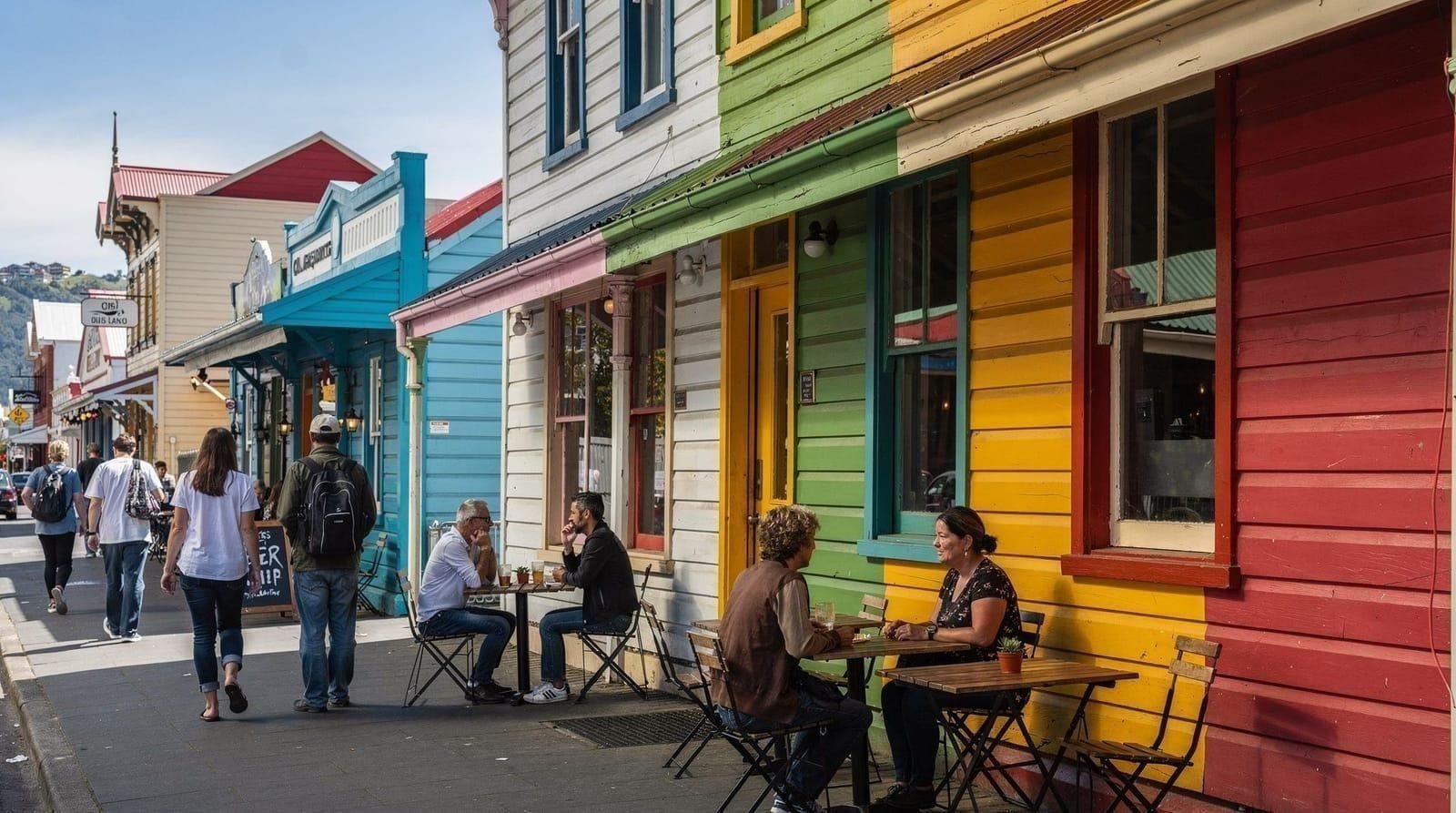
Cuba Street and the wider Te Aro area are the strongest single concentration of the city’s café culture, with independent roasters, laneway cafés and a genuinely high baseline quality across dozens of options within a short walk of each other. Our Wellington coffee capital guide names specific standout cafés rather than treating the whole street as interchangeable, and Cuba Street food guide covers the wider food scene around the same strip.
Brunch as the coffee culture’s natural extension
Wellington’s brunch scene runs on the same independent-café infrastructure as its coffee culture, and the two are best experienced together rather than as separate outings — a late-morning brunch at one of the city’s better cafés is as much a coffee experience as a food one. Our best brunch in Wellington guide names the specific spots worth prioritising if brunch is part of your plan.
How it compares to Melbourne, the other “coffee city”
Visitors familiar with Melbourne’s laneway café scene will find genuine common ground in Wellington — both cities built their reputations on independent, owner-operated cafés rather than chains, and both take flat whites and milk texture seriously as a point of local pride. Wellington is smaller and the scene is more concentrated within a compact CBD rather than spread across sprawling inner suburbs, which arguably makes it easier for a short-stay visitor to sample widely without much travel between stops.
A guided way to taste your way through it
If you’d rather have a local guide take you through the specific cafés, roasters and food stops worth prioritising than wander and hope, this taste of Wellington food tour covers several of the city’s best-regarded spots in a single guided outing. This 3-hour walking food tour is a similar alternative if you’d rather compare formats before booking.
What locals actually order
A flat white remains the default order for most Wellingtonians, though long blacks and filter coffee have both grown in popularity at the more specialty-focused roasters over recent years. Oat and other alternative milks are widely available without the friction some cities still create around them, reflecting the city’s generally progressive, detail-oriented approach to the whole coffee experience.
Craft beer as the culture’s evening counterpart
Wellington’s café culture has a genuine evening equivalent in its craft-beer scene, concentrated in many of the same Cuba Street and Te Aro blocks — the city treats both coffee and beer with a similar level of independent, small-batch seriousness. Our Wellington craft beer trail covers the evening half of this same cultural thread if you want to experience both sides of the city’s drinking culture during your visit.
Timing your café visits
Popular cafés on Cuba Street get genuinely busy on weekend mornings, particularly during the recommended autumn (March-May) visiting season when the city is otherwise quieter than summer — arriving before 9am or after the peak 10am-noon brunch window avoids most of the wait. Weekday mornings are considerably calmer if your schedule allows the flexibility.
The role of independent roasters versus chains
Chain coffee outlets exist in Wellington but play a much smaller role in the city’s daily coffee culture than independent, often owner-operated roasters and cafés — locals actively choose independent options as a default rather than treating chains as the convenient fallback the way some other cities do. This preference is part of why quality stays consistently high across the CBD rather than concentrated in a handful of destination cafés.
What a typical roastery visit looks like
Several Wellington roasters operate cafés directly attached to their roasting facilities, letting visitors watch the roasting process and sometimes buy freshly roasted beans to take home — a step beyond simply drinking the coffee that’s worth seeking out if you want a deeper look at the culture than an ordinary café visit provides. These roastery cafés cluster mostly around Te Aro and the wider Cuba Street precinct, the same area that anchors most of the city’s café scene generally.
Coffee culture and Wellington’s weather
The city’s near-constant wind and variable weather have shaped the café culture in a practical way too — indoor, sheltered seating is prioritised over exposed outdoor tables at most serious Wellington cafés, a contrast to fair-weather café cultures elsewhere that lean heavily on pavement seating. This is worth knowing if you’re picturing a leisurely outdoor coffee; a sheltered indoor spot is usually the better bet regardless of season.
Buying beans to take home
Most of the city’s better roasters sell bagged beans directly from their cafés, and it’s a genuinely good, compact souvenir if you want to bring a piece of Wellington’s coffee culture home rather than just photographs. Check airline liquid and food import restrictions for your destination country before buying in bulk, since some countries restrict bringing in unroasted or even roasted coffee beans.
Sustainability and sourcing
A number of Wellington’s independent roasters place real emphasis on direct-trade sourcing and sustainability credentials, publishing origin details for their beans rather than treating sourcing as a marketing afterthought — worth asking about at a roastery café if ethical sourcing genuinely matters to your choice of where to drink. This attention to sourcing is broadly consistent with the same detail-oriented approach the city brings to milk texture and roast profile.
Comparing Wellington’s main café precincts
Not every part of the city offers the same café experience, and knowing the differences helps you choose where to base a café-focused morning:
| Precinct | Character |
|---|---|
| Cuba Street / Te Aro | Densest concentration, laneway cafés, roastery cafés |
| Waterfront | Scenic views, more tourist-oriented, still solid quality |
| Mount Victoria | Quieter, neighbourhood feel, fewer crowds |
| Oriental Bay | Beachfront cafés, relaxed weekend brunch spot |
Our Oriental Bay and Mount Victoria lookout guides both cover the wider neighbourhood context if you’re planning a café stop alongside sightseeing in either area.
A café crawl as its own mini-itinerary
For visitors who want to treat coffee as the main activity rather than an add-on between sights, a self-guided café crawl along Cuba Street works well as a slow, unhurried morning: pick three or four cafés within a few blocks of each other, order something different at each rather than repeating the same drink, and treat the walk between them as part of the experience rather than a logistics problem to minimise. This pairs naturally with a wander through Cuba Street itself, and our free things to do in Wellington guide has other low-cost ways to fill the rest of the day around it.
Coffee culture as a lens on the wider city
Spending time in Wellington’s cafés is arguably one of the best low-cost ways to get a genuine sense of the city’s character beyond its formal attractions — conversations overheard at a counter, the specific playlists cafés choose, and the general unhurried pace of a Wellington coffee break all say something real about local life that a museum visit alone doesn’t capture.
Frequently asked questions about Wellington’s coffee culture
Is Wellington’s coffee genuinely better than Auckland’s or is it just reputation?
The density and consistency of good independent cafés is measurably higher in Wellington’s compact CBD than in Auckland’s more spread-out layout, which is the fairest basis for the comparison rather than claiming every individual café is superior.
Do I need to tip at Wellington cafés?
No — tipping isn’t expected in New Zealand generally, though many cafés keep a tip jar for loose change, which is appreciated but entirely optional.
What’s the best time of day to experience the café scene without crowds?
Weekday mornings before 9am or after the 10am-noon brunch rush are noticeably calmer than weekend mornings, particularly during the busier autumn travel season.
Can I buy Wellington coffee beans to take home as a souvenir?
Yes — most of the city’s better roasters sell bagged beans directly from their cafés, a compact and genuinely good souvenir, though it’s worth checking your destination country’s food and biosecurity import restrictions before buying in bulk.
The bottom line
Wellington’s coffee-capital reputation holds up to scrutiny — the density, consistency and genuine local seriousness about coffee here exceed what most visitors will have experienced in other New Zealand or Australian cities of comparable size. Building even a single unhurried café stop into each day of your visit, rather than treating coffee purely as fuel between attractions, is one of the simplest ways to experience a genuine slice of local Wellington life.